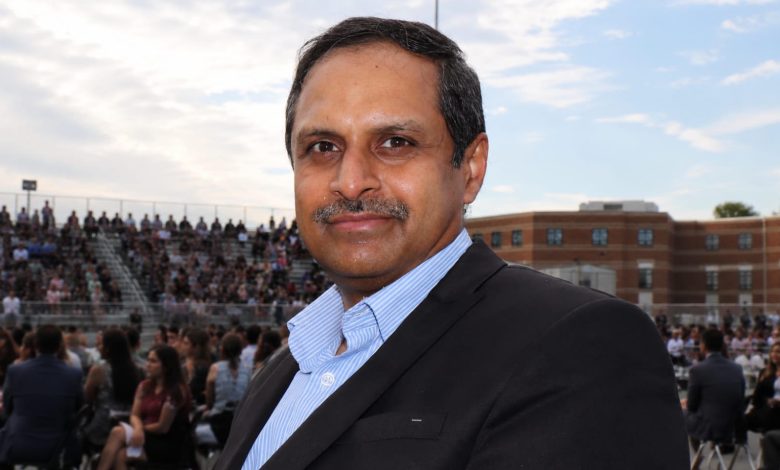
Most modern healthcare organizations are rapidly shifting to digital and data-driven models to improve how healthcare information is collected and used for better decision-making. However, data used in these models frequently comes from different sources and in different formats; hence, adopting new technologies creates the challenge of building systems that can securely manage large volumes of information. These systems must also support interoperability, meet regulatory requirements, and remain reliable at scale. Meeting or surpassing these challenges requires expertise that brings together cloud architecture, data systems, interoperability, and emerging AI capabilities. This is where the work of technology experts like Aditya Swaprakash Gadepalli has become particularly relevant. He is a technology leader who has focused on applying these technologies to complex enterprise and healthcare environments throughout his career.
Aditya Swaprakash Gadepalli has been focused on a problem that is becoming increasingly important to digital healthcare: ‘how to modernize complex technology systems while making data more connected, secure and usable’. His work brings together cloud architecture, healthcare interoperability and artificial intelligence. This combination makes him a technology specialist in an area where several major trends in healthcare are now converging.
Building the Systems Behind Digital Healthcare
Some of the most important work in digital healthcare happens behind the applications that users see. It involves the architecture that stores information, moves it between systems, and keeps it secure.
Technology architect Aditya Swaprakash Gadepalli has spent more than two decades working in this area, with experience spanning enterprise architecture, cloud computing, data systems, security and application modernization across Azure, AWS and multi-cloud environments.
A recurring challenge in this work is modernizing legacy systems without disrupting the information and processes they support. In one case-management modernization project, Gadepalli developed the architectural blueprint for moving a system based on Oracle Siebel CRM and OpenText Documentum from self-hosted infrastructure to a cloud-native Azure environment.
The project involved approximately 4 terabytes of case data and 10 terabytes of documents. The migration was designed to preserve data integrity while enabling a zero-downtime cutover. The modernized platform also incorporated AI capabilities for case triage, automated data entry and workflow assistance.
The architecture brought together cloud services, secure APIs, data migration, workflow automation and AI rather than treating modernization as simply an infrastructure migration.
Aditya Swaprakash Gadepalli explains that modernization is not simply about moving an application from one environment to another. “The architecture has to preserve the business processes and information that make the system useful while creating a foundation for new capabilities”, he says.
A Healthcare Interoperability Challenge
Healthcare creates a particularly complex data-integration problem. Information may originate from hospitals, government programs, laboratories, and other organizations, often using independently designed systems.
Healthcare interoperability standards such as HL7 FHIR provide a framework for exchanging information between these environments. Gadepalli has recently become a member of the HL7 FHIR Workgroup and is working on applying his cloud architecture experience to healthcare interoperability.
His work on the CMS Innovation Support Platform includes the modernization and cloud migration of its Central Data Exchange to AWS. He has also led the development of an integrated FHIR environment combining the Firely FHIR Server, open-source terminology services, and an enterprise Inferno validation framework.
The architecture is designed to handle FHIR data at scale while supporting US Core and USCDI interoperability standards. The framework is described as the first end-to-end FHIR orchestration framework within CMS-CMMI.
The challenge in healthcare goes beyond allowing two systems to exchange information. Data needs to retain its meaning as it moves between systems, while the receiving environment must be able to validate and protect it.
Aditya Swaprakash Gadepalli’s work brings cloud infrastructure, FHIR standards, validation and data services together within the same architecture.
“Interoperability is useful only when information remains understandable and trustworthy as it moves between systems,” he says. “Standards, validation and security therefore have to be considered as part of the architecture.”
Connecting Healthcare Data With AI
Once healthcare information can be exchanged reliably, the next question is how organizations can use it more effectively. Artificial intelligence has created new possibilities for healthcare data, but AI systems remain dependent on reliable and accessible information. Fragmented or poorly validated data can limit their usefulness.
Within the CMS environment, Gadepalli worked on integrating GenAI, agentic AI, and enterprise LLM orchestration with AWS-based FHIR data pipelines. The architecture incorporated intelligent retrieval and serverless AI patterns for functions including automated validation, interaction with FHIR data and recovery of FHIR data into the Firely server.
The significance of the architecture lies in how AI was connected to existing data systems. Rather than treating AI as a standalone application, the approach linked it with structured healthcare data, interoperability standards, and the infrastructure responsible for managing that information.
This also illustrates why cloud architecture has become increasingly relevant to healthcare AI. AI can provide new ways to analyze and interact with information, but the underlying data architecture determines whether that information can be accessed reliably and securely.
Expertise Built Before the AI Wave
Gadepalli’s work in AI and digital healthcare builds on a longer career involving complex technology systems.
While working with Intel and McAfee, he worked across cloud security, machine learning, enterprise applications, and large-scale data systems. One of his projects involved designing an application-risk framework for a Cloud Access Security Broker platform. The framework incorporated about 40 risk factors and generated machine-learning-ready datasets for early risk identification.
He also worked on automated URL classification and analysis, using large-scale data and machine learning to identify patterns for security, compliance, and product teams. Earlier cloud modernization projects included migrating mainframe applications to Azure, designing data flows for downstream systems and introducing encryption for sensitive information.
These experiences provide context for his later work in healthcare technology. Long before generative AI became a major industry focus, his work included combining data, machine learning, security and enterprise infrastructure to address complex operational problems.
This combination is relevant to digital healthcare, where cloud infrastructure, data security, interoperability and AI increasingly function as interconnected parts of the same technology ecosystem.
Research and the human side of technology
Gadepalli’s technology work has also extended into research, particularly around usability and human interaction with complex systems.
His work includes an IEEE paper on improving the usability of error dialogs. He also presented research on standardizing manufacturing error dialogs at the Taiwan Association for Artificial Intelligence conference. Other research examined user-centered design in high-volume manufacturing environments.
This research provides another perspective on Gadepalli’s work. Building complex systems is not only about infrastructure and performance. The systems also have to work for the people who depend on them. This principle has relevance in healthcare, where technology is used by clinicians, administrators, engineers, and other professionals.
The Infrastructure Challenge in Digital Healthcare
As more healthcare organizations are adopting AI, the challenge is increasingly moving beyond the technology itself. AI applications need access to reliable data, while that data often remains spread across systems that were built at different times and for different purposes. Connecting these systems requires cloud infrastructure, common data standards, validation, and secure information exchange.
The CMS work illustrates how these pieces can be brought together through AWS, FHIR-based interoperability, and AI-enabled services. As the healthcare sector continues to modernize, building this underlying infrastructure will be essential to making digital tools work across complex environments. The focus, ultimately, is not on adopting another technology, but on creating systems in which data can move securely, retain its meaning and support new applications at scale.