AI coding agents are no longer impressive simply because they can generate code.
That capability has rapidly become table stakes. The most capable systems can now inspect repositories, trace execution paths, edit multiple files, execute tests, interact with external tools, and prepare pull requests with minimal human intervention. In many cases, they can complete substantial portions of the software development workflow autonomously.
As a result, the central question facing engineering teams has changed.
The challenge is no longer whether an AI system can write code. It is whether organizations can define where agent execution ends and trusted software change begins.
That distinction may become one of the most important architectural decisions teams make as coding agents become increasingly integrated into software development.
The Shift From Code Generation to Change Execution
The first generation of AI coding tools largely operated inside the editor. They accelerated autocomplete, generated boilerplate, and helped engineers write individual functions faster. Their outputs remained suggestions rather than actions.
Modern coding agents operate at an entirely different level.
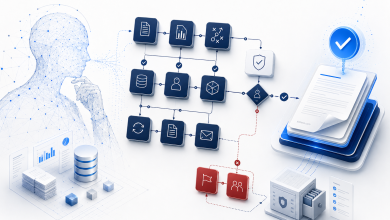
They can read tickets, inspect repositories, navigate code paths, execute commands, modify files, run tests, and prepare production-ready changes. Increasingly, they function less like assistants and more like junior engineers operating inside a controlled environment.
This changes the risk profile completely.
A poor code suggestion is easy to ignore. A flawed change that passes tests and appears reasonable can be significantly harder to detect.
As agent capabilities expand, software engineering becomes less about generation and more about execution control.
Defining the Trusted Change Boundary
Every engineering organization already maintains implicit trust boundaries.
Developers may explore solutions freely, but production deployments require reviews. Systems may access development environments, but not production databases. Automated workflows may create pull requests, but not merge them automatically.
AI coding agents require a similar framework.
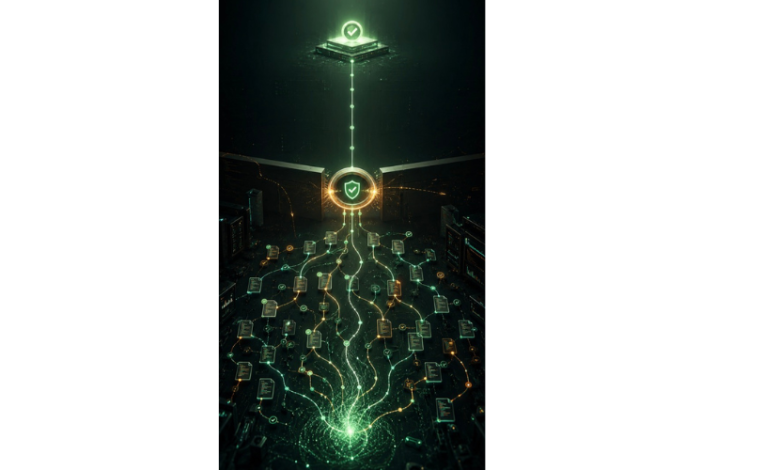
The trusted change boundary is the point at which agent-generated work transitions from experimentation to operational reality.
Before reaching that boundary, an agent can inspect code, propose fixes, execute tests, and prepare changes. Beyond it, those changes begin affecting systems, users, and business operations that organizations depend upon.
The questions quickly become architectural rather than technical:
- Should an agent be allowed to modify source files directly?
- Can it execute destructive commands?
- Should it access operational telemetry?
- Can it update dependencies automatically?
- Is opening a pull request acceptable?
- Is merging one acceptable?
- Who ultimately decides whether a change belongs in the correct layer of the system?
These are governance questions disguised as engineering questions.
Why Passing Tests Isn’t Enough
One of the most common misconceptions surrounding coding agents is that successful execution is equivalent to correct reasoning.
In practice, agents are often highly effective at identifying local defects while missing broader system dynamics.
Consider a distributed event-processing pipeline experiencing data consistency issues. A coding agent may successfully identify an exception handling flaw, introduce dead-letter queue support, add observability metrics, and create regression tests that all pass successfully.
The proposed change may be technically sound.
Yet the actual production issue might stem from a schema evolution problem between services rather than the code path the agent repaired.
In that situation, the agent has solved a legitimate problem without solving the correct problem.
This distinction matters because software systems operate through contracts, ownership boundaries, and architectural decisions that often exist outside the repository itself.
Tests can verify implementation behavior. They cannot always verify architectural correctness.
The Three Layers of Effective Agent Workflows
Organizations experimenting successfully with coding agents increasingly separate workflows into three distinct layers.
Execution Layer
This is where agents perform mechanical engineering work:
- Repository inspection
- Code modification
- Build execution
- Test execution
- Documentation generation
This layer benefits most directly from automation.
Context Layer
This layer contains the information agents require beyond the repository:
- Issue trackers
- Runtime telemetry
- API contracts
- System documentation
- Schema definitions
- Operational metrics
The challenge here is balance. Too little context leads to poor decisions. Too much unrestricted access creates unnecessary risk.
Approval Layer
This is where the trusted change boundary is enforced.
Pull request reviews, policy checks, CI pipelines, deployment controls, and human oversight all exist within this layer.
Importantly, this is also where engineering judgment remains most valuable.
A test suite can determine whether code behaves correctly under known conditions. It cannot always determine whether the organization is solving the right problem in the right place.
Where Coding Agents Excel—and Where They Don’t
Coding agents are exceptionally effective at local execution tasks.
They excel at:
- Tracing call chains
- Generating focused patches
- Creating tests
- Producing structured summaries
- Accelerating repetitive repository work
They remain significantly weaker at:
- Understanding system ownership boundaries
- Evaluating architectural trade-offs
- Distinguishing contract failures from implementation failures
- Assessing long-term design implications
- Recognizing when critical context is missing
This is not a limitation of coding agents alone. It reflects a broader truth about software engineering.
Building software and changing software are not identical activities.
Designing for Trust
The most successful organizations will likely avoid framing coding agents as replacements for engineers.
Instead, they will treat them as execution systems operating within carefully designed trust boundaries.
That means allowing agents to inspect, modify, and validate changes while ensuring that architectural decisions, ownership questions, and production trust remain governed through explicit approval processes.
The goal is not full autonomy.
The goal is to compress the mechanical middle of software engineering while preserving human judgment where it creates the most value.
AI coding agents are already capable of making meaningful changes to software systems. The organizations that benefit most from them will not necessarily be the ones that remove humans from the process fastest.
They will be the ones that design the trusted change boundary most thoughtfully.