
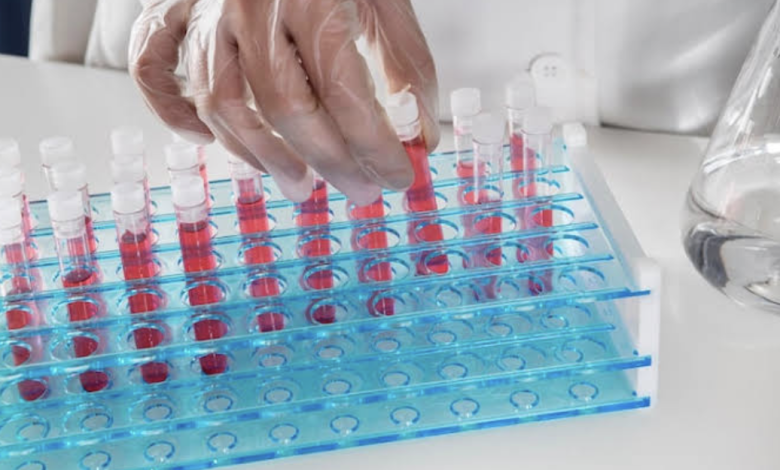
Artificial intelligence is transforming biomedical research at an unprecedented pace. From accelerating drug discovery to identifying novel disease biomarkers, AI is enabling researchers to analyze complex biological datasets faster and with greater precision than ever before. Yet while computational models continue to evolve, their effectiveness still depends on one fundamental requirement: high-quality experimental data.
Behind every successful machine learning model lies reliable laboratory-generated evidence. Protein quantification remains one of the most important sources of this data, making enzyme-linked immunosorbent assay (ELISA) one of the most valuable analytical techniques in modern life science research. Despite advances in multi-omics technologies, ELISA continues to provide the reproducibility, sensitivity, and quantitative accuracy needed to validate discoveries before they can inform AI-driven decision-making.
Why ELISA Continues to Be a Research Standard
ELISA has earned its reputation through decades of consistent performance across academic, clinical, and pharmaceutical research. The technique uses highly specific antigen-antibody interactions combined with enzyme-mediated detection to accurately quantify proteins, cytokines, hormones, antibodies, and other biomarkers in biological samples.
Its enduring value lies in balancing analytical performance with practical laboratory workflows. Researchers can analyze serum, plasma, urine, saliva, tissue homogenates, and cell culture supernatants using standardized protocols that deliver reproducible quantitative results.
While technologies such as mass spectrometry provide broad protein profiling and rapid screening tools offer quick qualitative answers, ELISA occupies a critical position between these approaches. It combines accessibility with high analytical sensitivity, making it particularly well suited for biomarker validation, therapeutic monitoring, and translational research where precise quantification is essential.
AI Is Increasing the Need for Reliable Biomarker Data
Rather than replacing traditional laboratory techniques, artificial intelligence has significantly increased the demand for reliable experimental measurements.
Machine learning algorithms routinely identify candidate biomarkers from genomic, transcriptomic, and proteomic datasets. However, computational predictions alone cannot confirm biological relevance. Researchers must validate these discoveries using reproducible laboratory assays capable of accurately measuring protein expression levels across multiple samples and time points.
Longitudinal studies further highlight this dependence. AI models used to predict disease progression or treatment response rely on repeated biomarker measurements collected over weeks, months, or even years. Cytokines, inflammatory markers, neurotrophic factors, and endocrine hormones must be measured consistently to ensure computational models are trained using dependable biological data.
As pharmaceutical companies increasingly integrate AI into drug discovery pipelines, laboratories also face growing pressure to process higher sample volumes across multiple species. This places greater emphasis on validated assays with broad species compatibility, consistent lot-to-lot performance, and well-documented protocols.
For research teams supporting these workflows, access to comprehensive ELISA Kits becomes an important consideration. Broad assay catalogues covering thousands of biomarkers across human, mouse, rat, rabbit, bovine, porcine, and additional research species enable scientists to validate computational findings efficiently while maintaining confidence in data quality.
Selecting ELISA Kits for Modern Research
Choosing the appropriate assay extends beyond simply matching a target protein. Researchers should consider several factors that directly influence data quality and reproducibility.
Analytical validation remains one of the most important criteria. Kits with clearly documented sensitivity, specificity, precision, and detection ranges help reduce experimental variability while increasing confidence in published findings.
Species reactivity is equally important, particularly for translational research that progresses from animal models to human studies. Wide species coverage allows laboratories to maintain methodological consistency throughout different stages of a project.
Sample compatibility also contributes to workflow efficiency. High-quality assays should support commonly used biological matrices without requiring extensive optimization or protocol modification.
Finally, standardized kit components—including coated microplates, detection antibodies, calibration standards, substrates, and detailed instructions—help minimize operator variability and improve reproducibility across laboratories.
Ready-to-Use or Custom Assays?
As AI-driven discovery continues to identify novel biomarkers, researchers increasingly face decisions between commercially available assays and custom assay development.
Ready-to-use ELISA kits remain the preferred option when validated assays already exist for established biomarkers. They provide faster implementation, standardized protocols, and consistent performance that supports reproducible research.
Custom assay development becomes valuable when investigating newly identified proteins, uncommon species, specialized sample matrices, or unique analytical requirements. As computational biology continues uncovering previously unexplored molecular targets, demand for custom immunoassays is expected to grow alongside traditional catalog-based products.
Organizations capable of supporting both standardized and custom assay development enable research teams to move efficiently from computational discovery to experimental validation without disrupting project timelines.
Data Quality Begins Before AI Analysis
One often overlooked aspect of AI-powered research is that computational accuracy cannot compensate for poor laboratory data.
Improper sample handling, inconsistent assay execution, inaccurate standard curves, or poorly validated reagents introduce variability that can influence downstream statistical analysis and machine learning performance. Unlike isolated laboratory experiments, errors incorporated into AI training datasets may remain undetected until predictive models begin producing unreliable results.
For this reason, assay standardization should be treated with the same rigor as data preprocessing and model validation. Consistent protocols, validated reagents, appropriate controls, and careful quality assurance remain essential components of any research program integrating laboratory data with artificial intelligence.
Looking Ahead
Artificial intelligence will continue reshaping biomedical research by accelerating discovery, improving predictive modelling, and uncovering biological relationships that were previously impossible to detect. Yet every computational insight ultimately depends on accurate biological measurements generated in the laboratory.
ELISA remains central to this process because it provides the quantitative, reproducible protein data required to validate biomarkers, monitor disease progression, and support translational research. As AI expands the scale and complexity of biomedical investigation, reliable immunoassays will continue serving as the foundation upon which trustworthy computational analysis is built—demonstrating that while algorithms may transform how discoveries are interpreted, robust laboratory science remains indispensable to how they are made.