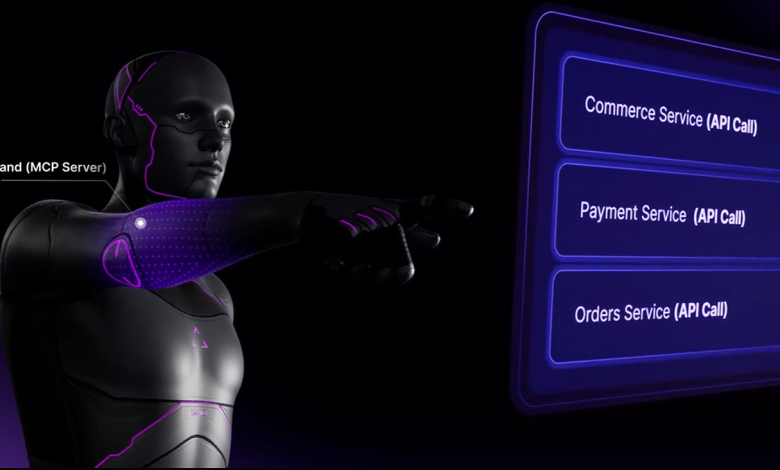
For decades, authentication has been one of the foundations of enterprise security. Organisations invested heavily in identity management, multi-factor authentication and access controls to ensure the right people could reach the right systems. Those investments remain essential as cyber threats continue to evolve. However, the way authentication is being used inside modern enterprises, particularly when it comes to non-human identities and agentic AI, is changing faster than many security strategies can keep up with.
Authentication has entered a new era
The €30 million GDPR enforcement action against Vodafone Germany last year demonstrates how regulators are beginning to view authentication failures. In this instance, weaknesses in customer authentication allowed unauthorised parties to gain access to customer eSIM profiles, creating opportunities for SIM-swapping attacks and wider compromise of customer accounts. Vodafone has since strengthened its authentication infrastructure, but the regulatory message was already abundantly clear. Shortcomings in authentication practices cannot be viewed as independent technical failures, but rather as part of wider governance failures.
AI agents are changing the rules
Organisations across every sector are deploying AI agents that connect to internal applications, cloud services and third-party platforms through APIs. These agents retrieve data, trigger workflows and make decisions without constant human involvement. And every single one of those actions depends on trusted authentication between systems.
However, traditional authentication was designed around human users. A person logged in, their permissions were checked and their activity could be monitored throughout a session. AI agents behave very differently because they can authenticate into multiple systems, execute thousands of API calls and interact with enterprise services continuously. The pace and scale of those interactions createsan entirely different governance challenge. One that becomes impossible without continuous visibility into what AI agents are accessing, what actions they are taking and whether those actions remainwithin approved boundaries.
Every meaningful action an AI agent performs ultimately happens through an API. The model itself may decide what to do next, but the API is what allows the agent to retrieve sensitive information, update records or initiate business processes. As organisations become more connected, APIs are becoming the operational backbone of enterprise AI. Salt’s latest research found that 47% of organisations have delayed production releases because of API security concerns, highlighting how closely innovation and governance have become linked.
Authentication is only the starting point
Authentication therefore becomes much more than confirming identity. Organisations also need confidence that every authenticated connection has appropriate permissions and that those permissions remain appropriate throughout an agent’s entire lifecycle. An AI agent with excessive privileges can still perform damaging actions while presenting perfectly valid credentials. From a security perspective, authenticated does not automatically mean authorised.
Regulators want evidence, not assurances
This distinction becomes important as regulators place greater emphasis on preventative controls. Recent GDPR enforcement actions have focused on whether organisations implemented appropriate governance before incidents occurred, rather than simply how effectively they responded afterwards. The EU AI Act follows the same philosophy by requiring continuous risk management, logging, monitoring and human oversight throughout the lifecycle of high-risk AI systems. These requirements extend beyond the AI model itself into the systems, APIs and services that agents rely upon to operate.
For many organisations, visibility remains the biggest obstacle. Security teams often struggle to identify every API operating across the business, let alone every AI agent interacting with those APIs. Salt’s research shows that only 23% of organisations have a fully automated, real-time API inventory, while just 8% consider their API security programme to be advanced. Those gaps only become more significant as AI adoption accelerates.
Visibility is rapidly becoming the foundation of effective governance
Organisations need to understand which AI agents exist, what systems they connect to, which APIs they invoke and what permissions those APIs expose. They also need continuous monitoring that identifies unexpected behaviour before it becomes an incident. Without that level of context, security teams are left making decisions with only part of the picture.
This challenge mirrors previous technology shifts. Virtualisation changed where workloads operated and cloud computing changed where applications lived. Security evolved by following those changes and building visibility into the new operational layers. AI agents represent another architectural shift because they move business logic and decision making across thousands of interconnected API calls.
The questions regulators are asking are evolving alongside the technology. They will expect organisations to demonstrate which systems were accessed, how access was authenticated, what actions were performed and whether those actions were appropriately governed. Those answers require continuous evidence rather than point-in-time assessments. Therefore, organisations that can demonstrate that visibility will be in a far stronger position when regulators come calling.
Authentication has always been about establishing trust between users and systems. In the age of AI agents, it is becoming equally important to understand what trusted systems are capable of doing once access has been granted. That requires governance across the entire execution path, from AI agent to API to enterprise application. As AI becomes embedded across the enterprise, authentication is evolving from an identity control into one of the most important foundations of AI governance.