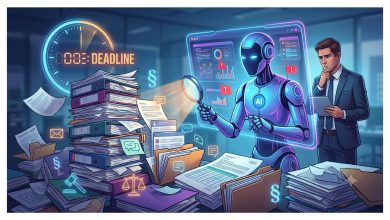
AI is cheap right now because of subsidies. When that ends, it will separate the teams that engineered for the real price from the teams that didn’t.
The AI conversation is stuck in the wrong place
A capable engineer with an afternoon and an API key can stand up a demonstration that, two years ago, would have looked like a sprint’s worth of work. This is a genuine shift, and I would not trade it for any earlier era of the field, but that ease is also the most misread signal in the industry right now. We read it as pure progress, when part of what we are looking at is a price, and right now, someone else is paying it.
Today’s token economics is a promotional rate. The market pays a few dollars to a few tens of dollars per million tokens for a frontier model, while the true cost to serve one (the GPU clusters, the power, the depreciation) runs well above that. The difference is a subsidy, underwritten by venture capital and the cloud giants bankrolling the labs. It is gym-membership pricing: set to build the habit, not to cover the visits. Reasoning models and agents now spend far more tokens thinking, checking, backtracking and holding context than the answer itself ever reveals, and on the flat-rate plans most people live on, that hidden consumption never reaches the bill.
At the end of the day, models are commodities. Usage is always a cost. Impact remains the north star.
The frontier is moving
Most enterprises are optimizing against the wrong frontier. They read their position as a clean trade-off, capability against cost, when they are in fact sitting at a Pareto-dominated point: overpaying for capability that buys them no extra outcome. As the tokenmaxxers will grudgingly admit, 10x spend doth not 10x impact buy. The day the subsidy moves — and that is a question of when, not if — today’s efficient point becomes tomorrow’sdominated one. Which side of that line a company lands on is being decided by the engineering choices it makes right now.
How to build
The engineering orgs best positioned for the repricing tend to share three traits, and they are patterns we have deliberately oriented around at Point Wild.
The first is that they measure outcomes, not consumption. It has become fashionable to celebrate how much a system does on its own: the calls it makes, the ground it covers without a human in the loop. But a self-driven system that is busy is not the same as a self-driven system that is moving the bottom line.
An AI agent does not hold the objective; it optimizes whatever it is pointed at. Left alone, it will drift toward more tokens and more autonomy, because nothing in its design resists that drift. The orgs that avoid this keep domain experts in the loop at the points that matter, holding impact metrics steady before they can quietly be replaced by activity metrics.
The second is investing upfront in custom where it earns its place. General-purpose models are fitted to general-purpose cases: the broad, clean, public distribution of everyone’s problems at once. They have, by construction, never seen the one thing that is yours. In this Year of our Lord Claude 2026, the only sustainably defensible moat lives in that long-tail gap: in your proprietary data.
The domain knowledge no off-the-shelf model has ever been trained on and no competitor can buy. A model is only ever a lens on the data it learned from. The orgs building durable advantages are grinding their models against the hardest, most specific distributions they own.
The third is building the harness with discipline. The interesting layer is no longer just the model or the prompt, but the environment around it: the tools, the constraints, the feedback loops that let a system do reliable work. The prevailing instinct is to build that environment toward full autonomy. The more resilient pattern is to distill domain expert knowledge into the system’s structure and insert checkpoints precisely where the real consequences are, keeping humans meaningfully in the loop rather than nominally so.
These three traits reinforce each other. An elaborate, beautifully gluttonous autonomous system (“hey! I am top of the token leaderboard!”) wrapped around a general-purpose frontier model is fragile in two directions: repricing can render its economics unviable, and the next model release can render its scaffolding obsolete. A system whose value rests on models trained on proprietary data and judgment kept in the loop is exposed to neither, while still capturing every gain the frontier throws off along the way.
Velocity is not direction
More is getting produced, but how much of it is reliably turning into impact? Developers using AI ship more code and close more tasks; adoption is past 90% in most surveys. None of that is in dispute. What most enterprises are struggling to show is the conversion: the point where all that extra volume funnels into outcomes that matter.
This is the same drift as the cost problem, one level up. A product team that begins its morning asking “what can we do with agents” instead of “what does the product need” has quietly swapped its objective function, and the agent will gleefully optimize the wrong one without complaint. AI can only amplify the seeds of what is already there. Pointed at a sharp problem, it compounds progress. Pointed at “use more AI,” it compounds activity instead, and quality is the first thing down the drain, paid out in rework, review burden, and defects no velocity metric is built to see.
The questions did not change
It is tempting, in a moment like this, to believe the ground has shifted beneath everything. In all the ways that count, it has not. AI has changed our answers. It has not changed our questions. The real problems and the discipline required to solve them remain anchored to impact and to cost, defined without reference to any agent. The subsidy did not change that. It only made it briefly possible to forget.
The teams that come out ahead when the price corrects will not be the ones with the most autonomy or the largest models. They will be the ones who never mistook a low price for a durable advantage, who pointed scarce, deliberate engineering at the questions that were always going to count, and built lean, intentional custom intelligence to power it. Access to intelligence is getting cheaper for everyone, and that is good news. What it cannot buy, at any price, is the discipline to aim it well.