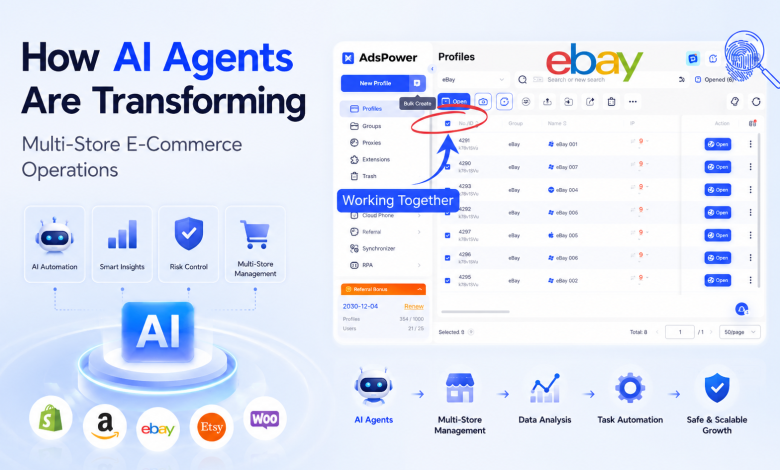
Running one online store is hard enough. Running one online store is hard work. Managing five, ten, or even fifty stores across different platforms, currencies, suppliers, and customer groups is another level entirely. That approach is starting to look outdated.
AI agents are quietly rewriting the rules of e-commerce operations. Instead of a person manually checking inventory across ten Shopify stores or logging into a dozen marketplace seller accounts one by one, an AI agent can now do the checking, the updating, and increasingly the decision-making, on its own. For founders, agencies, and automation teams managing multiple storefronts, this shift isn’t a nice-to-have anymore — it’s becoming the baseline expectation. This change is more than just about automating repetitive tasks. Modern AI agents can be used to track stock levels, adjust pricing, process orders and track performance on multiple platforms without human intervention. They work 24/7, which decreases manual labor, cuts down on expensive errors, and allows the team to adjust quickly to market dynamics. This degree of automation is becoming imperative for companies handling several accounts as a way to remain efficient, scalable, and competitive.
The Real Problem With Scaling Multiple Stores
Anyone who has scaled past two or three stores knows the pain points aren’t really about the products or the marketing. They’re operational. Every additional store adds:
- More logins to manage, each with its own security checks and session risks
- More listings to keep in sync across platforms
- More customer support tickets that need consistent tone and timing
- More pricing and inventory decisions that need to happen in near real time
- More risk of account flags, especially when multiple accounts are tied to overlapping IP footprints or browser fingerprints
This is where a lot of multi-store operations quietly fall apart. It’s not that the business model doesn’t work — it’s that the operational overhead grows faster than the team’s ability to handle it manually. A store owner running three shops might manage fine. Someone running thirty is, in practice, running a small logistics company just to keep the accounts alive and functioning.
Where AI Agents Really Fit In?

Inventory and pricing synchronization. This is especially valuable for sellers managing the same product catalogue across platforms like Amazon, eBay , Shopify, and various regional marketplaces, where keeping everything in sync manually can quickly become overwhelming.
Customer support triage. AI agents are able to read messages coming in, classify them by urgency, respond with a draft in the brand’s voice and only escalate those that genuinely require a human being. For a multi-store operation, this means rather than needing an agent per shop setup, one support workflow can actually manage dozens of storefronts.
Account and session management. This is arguably the least glamorous part of the job but one of the most operationally critical. Managing multiple seller or advertiser accounts without triggering platform risk systems requires each account to behave like it belongs to a genuinely separate operator — separate browser fingerprints, separate cookies, separate session behavior. Manually doing this across dozens of accounts is tedious and prone to error, the exact kind of repetitive, rules-based task that AI agents excel at automating.
Reporting and anomaly detection. Instead of someone pulling reports from 10 dashboards every morning, an agent can aggregate performance data, highlight any unusual drops in conversion or traffic, and display only what needs attention.
One thing about which many people have completely the wrong idea is how deeply important the Browser Layer really is.
Well, here is something that seems to get lost on many talk about AI powered agents for e-commerce: most of this automation still needs to take place in a browser context as that’s
This is where the infrastructure underneath the AI agent becomes just as important as the agent itself. Risk detection systems deployed on mainstream e-commerce platforms have clear, rigid rules: if an automated proxy logs into 20 distinct accounts using the same browser fingerprint, an alert will be triggered no matter how intelligent its decision-making logic is. This set of systems is purpose-built to identify abnormal patterns where behavior fingerprints such as device signatures and Cookies are reused across independent accounts.
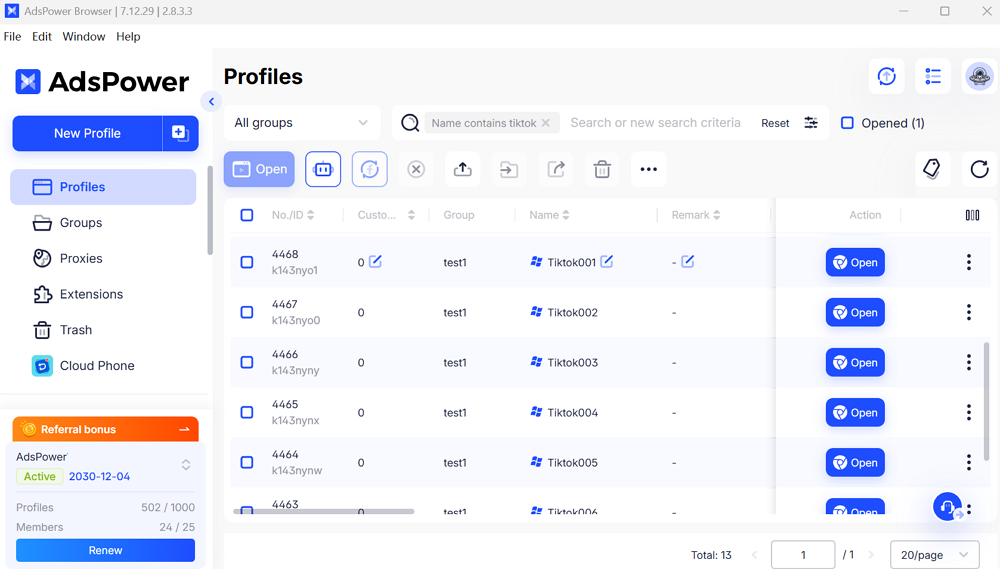
This is why serious multi-store operations pair their automation stack with an anti-detect browser. Tools like AdsPower browser, keep each account separate by maintaining its own browser fingerprint, cookies, and session information. This allows AI agents to work across multiple stores at the same time while ensuring every account appear as a unique and consistent online identity. Without that layer, even the most sophisticated AI agent workflow is operating on borrowed time — one fingerprint match away from a mass account suspension.
Multi-Account Management as the Operational Backbone
For agencies and operators managing client accounts, or for founders running their own portfolio of stores, the practical question isn’t “should we automate?” — it’s “how do we automate without putting every account at risk?”
That’s really a multi-account management problem before it’s an AI problem– AI agents can process tasks faster and manage a much larger workload than humans, but they perform best when operating in a secure, well-organised environment where each account remains separate. Proper multi-account infrastructure means:
- Each store or client account runs in its own isolated browser profile with a stable fingerprint environment
- Team members and automated agents can collaborate on the same accounts without cross-contaminating sessions
- Access rights can be granted, revoked, and audited on an account-by-account basis, without affecting the other accounts.
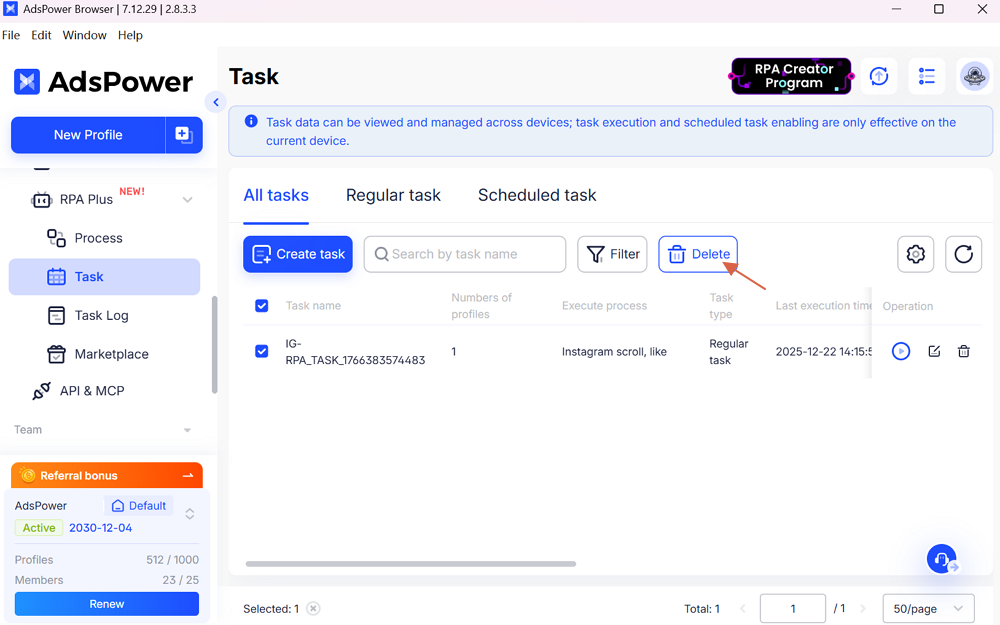
- The automation tools and AI can manage multiple profiles at once with scheduled tasks, securely saving businesses time without compromising the order of the operations.
- It works perfectly with popular AI agents, such as Claude, Codex, Cursor, etc.
What does this look like in routine?
Picture a mid-sized operation running fifteen Shopify and Amazon stores across three regions. Multiple online stores meant having to deal with daily inventory, pricing, customer inquiries, and ad performance—all in a manual manner—by a dedicated team a few years ago.
Now, an AI agent layer sits on top of that operation. It monitors stock and pricing continuously, drafts and sends routine customer responses, flags anomalies in ad spend, and compiles daily performance summaries — all while running inside isolated browser sessions that keep each store’s account activity separate and platform-compliant. This is not just a version of the future, it’s already happening.
Automating tasks at scale is not only about smart decision making, it’s about having a secure and reliable operating environment. Each of the AI agent sessions should be unique, as cookies, browser fingerprints, login credentials, and activity logs should not get mixed up in multiple seller accounts as they interact with them. This separation helps each store maintain a consistent digital presence, minimises risks of account conflicts, and enables AI agents to run multiple stores safely and efficiently.
The Bigger Shift

What’s going on in multi-store e-commerce is a reflection of what we’re seeing in a lot of digital ops work: automation and AI agents are taking over the repetitive, rules-based tasks, while humans focus on judgment calls, strategy, and outliers. The fastest-scaling stores from here won’t necessarily be the ones with the best products — they’ll be the ones with the right operational infrastructure, from account workflows to tools like AdsPower, that enables AI agents to do the heavy lifting safely across as many accounts and storefronts as a company needs.
For teams thinking about how to get there, the object is generally not the AI agent itself — it’s whether the underlying account and browser infrastructure can handle that level of automation without creating operational mistakes or triggering unnecessary platform risk. Build that foundation first, and the AI layer on top becomes much more powerful, and much less risky.