“Use AI to transform operations, but don’t break our existing workflows.” If you’re in a leadership role right now, that mandate probably sounds familiar. Boards want AI doing the heavy lifting, and your organization’s pilot looks impressive, with the test models performing well in controlled environments. Yet, as these autonomous systems move from testing into the messiness of production, something quieter keeps happening. The deployments stall, the ROI doesn’t materialize, and nobody can quite explain why.
In my conversations with enterprise leaders, the failure of any AI adopted by their businesses was seldom a lack of algorithmic intelligence, but rather a lack of what I’d call institutionalized doubt. A built-in mechanism to challenge what the AI is actually doing before it does it is advisable to every organization thinking about integrating AI into their tech stack.
Enter the adversarial agent
Consider how we handle high-stakes decisions in the human workforce. A good trial lawyer argues both sides of a case before advising a client, or a chief surgeon seeks a formal second opinion before going into the operating room. We subject our staff to peer reviews, audits, and compliance checks, so why don’t we do the same for our business’ machines?
In most organizations, autonomous AI systems are allowed to act as solitary decision-makers, trusted until an error forces a human to intervene. That’s a governance gap and, in a world where these agents are touching IT infrastructure, operations, and employee workflows, it’s a gap that could get expensive very quickly.
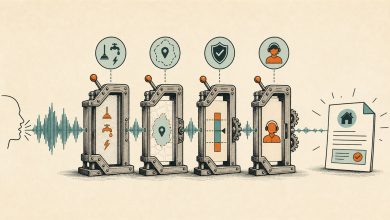
The fix isn’t especially complicated, either. Pair every operational AI agent with an adversarial counterpart whose sole job is to push back. Think of the adversarial agent as a built-in digital devil’s advocate. While the primary agent executes, the adversarial agent plays skeptic, questioning assumptions, looking for drift or bias, and flagging issues before any action is taken.
Consider an IT agent who decides to push a global software patch to fix a laptop slowdown. The adversarial AI acts as a sophisticated digital saboteur, deliberately feeding the IT agent edge cases and tricky, conflicting data points from old devices or poor network connections. It essentially tries to trick the IT agent into making a bad deployment. If the IT agent blindly pushes the patch anyway, the adversarial AI flags the flaw, proving that the solution wasn’t grounded in objective reality.
That structured friction is the difference between an AI that acts fast and an AI that acts right, which would make all the difference when it comes to an organization’s reputation and financial responsibilities.
Three things to get right from the start
Building this kind of adversarial architecture isn’t just a technical exercise. Rather, it’s an operating model decision that directly affects productivity, cost, and risk. Based on what we see working with enterprise customers, three principles separate the implementations that succeed from those that don’t.
Align the level of challenge carefully. A passive adversarial agent becomes a rubber stamp. An overly aggressive one creates artificial gridlock and wipes out the efficiency gains you deployed AI to achieve in the first place. Think of calibration like operational governance. It is something that you tune continuously, not something you set once and then leave alone without any further checks or tweaks.
Move beyond sentiment to real experience. AI can’t automatically fix a problem based on how employees feel. Instead, it needs to know what is actually broken. While surveys show frustration, they don’t reveal technical root causes. The right approach is to connect the AI to real-world work performance rather than abstract IT metrics. This gives the AI the clear, factual data it needs to accurately diagnose a problem and fix it without human intervention.
Feed both agents with the data directly from trusted and original sources. This one matters more than most organizations realize. According to Gartner, 85% of AI projects fail due to poor-quality data, and 63% of organizations either lack or are unsure whether they have the right data management processes for AI at all. Generic inputs produce weak, error-prone outputs. Both agents need real-time, high-frequency telemetry gathered directly from the enterprise edge to make their dialogue meaningful.
The data reality
We see this challenge clearly through the lens of Digital Employee Experience (DEX) and endpoint telemetry, with DEX platforms collecting tens of thousands of data points per endpoint, capturing what is actually happening across devices, applications, networks, and user behaviors, even offline. This massive stream of data provides the objective ground truth required to make adversarial AI work in actual practice.
When an adversarial framework is grounded in this kind of high-frequency, structured first-party data, the system stops guessing and starts validating. It closes the execution visibility gap, which is the dangerous space between what IT monitors on a distant server and what an employee actually experiences at their desk. In environments where we’ve seen this done well, help desk ticket volumes drop by up to 25% and mean time to resolution compresses by 75%. Those gains happen because the system eliminates the re-diagnosis cycle before it starts, freeing human teams to focus on the complex problems that actually need them.
Governing the machine workforce
The future of enterprise scale isn’t simply about deploying more AI agents. It’s about building the infrastructure to govern autonomous systems safely with the same precision that we already apply to our in-house teams.
Just as HR systems emerged in the 20th century to manage the recruitment, compliance, and performance of human employees, DEX platforms are becoming the foundational governance layer that ensures our modern digital workspaces actually work for the people using them.
So if your organization is accelerating AI deployment to cut costs and drive efficiency, there’s one question worth asking first: who is challenging the machine’s assumptions? Institutionalizing doubt and backing it with deep, contextual first-party data is what turns AI from an expensive gamble into a vetted, resilient asset that delivers sustained, measurable results across entire enterprises.