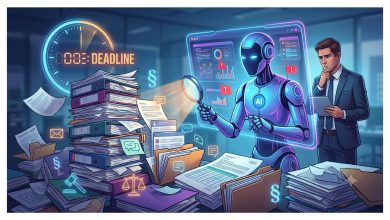
Artificial intelligence is forcing web design into one of the biggest transitions the industry has faced since the rise of mobile browsing. Tools that can generate layouts, write code and produce content in seconds are changing how websites are built, who builds them, and what clients expect to pay for them.
For many designers, the shift feels less like a new trend and more like a structural change to the profession itself. Conversations that once focused on frameworks, aesthetics or user experience are increasingly about automation, pricing pressure and long-term relevance.
A recent survey found that three quarters say AI-driven competition has already affected their business, while 76% describe AI as the biggest challenge facing the industry over the next decade. The numbers reflect a profession in transition rather than one in decline.
The concern is not simply that new tools exist, but that they are changing the definition of the job. When software can generate layouts, content and even full websites on demand, designers are being pushed to show where human expertise still makes the difference.
From creative craft to automated output
For much of the web’s history, design was both a technical skill and a creative craft. Building a site meant understanding layout, typography, performance, accessibility and code, while also translating a client’s ideas into something that worked on screen. Even relatively small projects required enough expertise to make professional designers essential.
That balance has been shifting for years, but artificial intelligence is accelerating the change. Website builders and templates reduced the technical barrier, and generative tools are now reducing the creative one as well. Layouts, colour schemes, copy and even images can be produced automatically, often in seconds.
The result is not that design has become irrelevant, but that the basic act of producing a website is no longer the hard part. What once required experience can now be done by software, which changes how clients judge the time, cost and value involved.
Industry survey responses reflect that pressure. Many designers say AI-driven tools are already affecting the type of work they are hired for, particularly at the lower end of the market where speed and price matter more than originality.
As routine production becomes easier, the role of the designer is starting to move away from building pages and toward deciding what those pages should do. That shift may define the next phase of the profession more than any new technology itself.
The growing gap between expectations and reality
One of the biggest pressures designers describe is not the technology itself, but what the technology makes clients expect. When tools can generate a website in minutes, it becomes harder to explain why a professional project may take weeks. The gap between what looks easy and what actually takes work is getting wider.
Many designers say clients increasingly assume that most of the process can be automated. In industry polling, a large majority report that clients underestimate the real cost of web design, something often linked to the rise of AI tools promising instant results and lower prices.
The problem is not only about budgets. It is also about understanding what goes into a finished product. A page can be generated quickly, but building something reliable, accessible and effective still involves planning, testing and refinement.
Managing expectations has become part of the job in a way it was not before. Designers now spend more time explaining the process, justifying timelines and showing why the difference between a quick build and a well-designed site still matters.
Why the industry remains stable
Despite the level of concern, web design is not disappearing. Many professionals say their earnings have remained stable, even as competition increases and entry barriers fall. The work is changing, but demand has not vanished.
Survey data reflects this mixed picture. While most designers say AI is increasing competitive pressure, a similar proportion say they still feel properly compensated for their work. That suggests the value of expertise has not been erased, even if the type of work clients pay for is shifting.
One reason may be that artificial intelligence is better at producing output than making decisions. Generating layouts or writing code is one thing, but understanding user behaviour, business goals and technical constraints is another.
Websites today are rarely standalone projects. They connect to analytics tools, marketing systems, payment platforms and performance requirements, all of which add complexity that automation does not remove.
Automation at the bottom, speciality at the top
Technology rarely affects every part of an industry equally. When production becomes easier, the simplest work usually becomes cheaper first, while more complex work becomes more valuable.
Creative fields have seen this pattern before. Photography, video editing and graphic design all went through periods where new software reduced the need for technical skill in basic projects, but increased demand for people who could deliver quality, strategy and consistency.
Web design appears to be moving in the same direction. Smaller, low-budget sites are increasingly handled by templates or AI-driven tools, while larger projects still require experience and planning.
Designers themselves expect this trend to continue. In industry surveys, respondents say the biggest long-term disruption is likely to come from AI-powered self-design platforms and automated website builders, rather than from more experimental technologies such as augmented reality or the spatial web.
The biggest change may not be what websites look like, but who builds them and how much human input they require.
A changing role for designers
As automation takes over more routine work, the role of the designer is starting to shift. Instead of being hired only to create pages, many professionals say they are increasingly asked to help define what those pages should achieve.
Questions about user experience, performance, accessibility and conversion rates are becoming central to the job. Clients may be able to generate a layout themselves, but they still need guidance on how to make a site work effectively.
This pushes the profession closer to consulting than production. Designers who can explain why something works, not just how to build it, are often in a stronger position than those whose skills focus only on execution.
For some, that change feels like progress. For others, it feels like moving away from the craft that drew them into the industry in the first place. Either way, the definition of web design is becoming broader than it used to be.
The next decade of web design
Over the next ten years, web design may become more divided between automated production and specialist work. Simple sites will continue to get easier to build, and more of them will be created without professional designers. At the same time, businesses that depend heavily on their online presence will still need people who understand performance, usability and long-term growth.
This could make the profession smaller, but more focused. The most valuable skills may no longer be the ones that made web design popular in the first place, but the ones that help organisations use technology effectively.
Artificial intelligence will almost certainly remain part of the process. The question is not whether designers will use it, but how much of their work will still require judgment, experience and creativity.
For now, the people within the industry sit in the middle of that shift – under pressure, uncertain about the future, but still very much in demand.