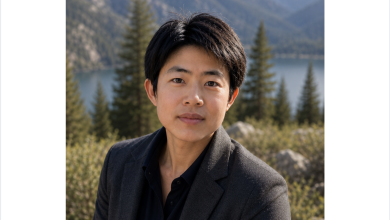
Much of the conversation around artificial intelligence in healthcare focuses on breakthrough diagnostics and drug discovery. Stefano Rosa believes some of the most meaningful near-term gains may come from a less visible area: reducing the administrative delays, denials, billing problems, and fragmented processes that prevent patients from receiving timely care.
Rosa’s perspective is shaped by a background that spans artificial intelligence, robotics, computational biology, biomedical engineering, and software development. After leaving a small town in Italy to study in the United Kingdom, he began exploring how intelligent systems could operate reliably in complex environments defined by incomplete information, unpredictable edge cases, and constant feedback. That experience now informs his work as co-founder of Choose Serene, where he is focused on applying AI-powered automation to healthcare operations and patient advocacy.
In this interview with AI Journal, Rosa discusses why administrative automation deserves greater attention, how resilient AI systems can support prior authorizations and appeals, and why human oversight remains essential when technology affects patient health and finances. He also examines the trust, incentive, and reliability barriers slowing adoption and shares his vision for a future in which patients have intelligent agents capable of checking coverage, identifying billing errors, managing authorizations, and challenging denials on their behalf.
Your journey has taken you from a small town in Italy to studying artificial intelligence and biomedical engineering in the UK before launching your own healthcare technology company. What inspired that path, and how did those experiences shape your vision for healthcare innovation?
Growing up in a small Italian town, I was inspired to read Ray Kurzweil’s ‘How to Create a Mind’ because of limited AI opportunities in Italy. The presence of DeepMind in the UK led me to study AI and robotics there, later expanding to medicine through biomedical engineering at Imperial.
In 2023, the launch of GPT-o1 convinced me of its transformative potential. At first, I was excited to help scientists use these models for experiments and discovering new molecules, hoping to make expensive pharma tools more accessible to everyone. But very quickly, I realized that the real need was somewhere else.
Last September, I met my co-founder, who had personally experienced how frustrating delays in healthcare can be. He shared how he faced the tough realities of a broken healthcare system, including the delays, the stress, and all the paperwork that often gets in the way of genuine care. We both recognized that healthcare today is challenging for everyone. Patients feel it, doctors are overwhelmed, and costs keep climbing. We set our goal to harness the power of cognitive automation to transform the patient journey, making it faster, smoother, and more compassionate.
You have a background spanning AI research, robotics, computational biology, and biomedical engineering. How have these disciplines influenced the way you approach solving real-world healthcare challenges?
These two fields are truly different, yet they often intertwine as new research sheds light on their connections. Biology and neuroscience focus on highly dynamic, feedback-rich systems that are still challenging to measure precisely. We often have to make educated guesses based on what we observe. Machine learning is perfectly suited to handle this complexity: it excels at finding signals within noisy, incomplete, and unpredictable data much like the real-world challenges we face. At Serene, this mindset influences everything we do. Healthcare workflows are often messy, full of variability, unexpected edge cases, broken handoffs, and slow or failing applications. Our goal is to take that chaos and turn it into something reliable. I can’t share all the details, but we’ve designed systems that thrive even in the worst-case scenarios, making them the norm. The key is to anticipate setbacks and build resilience from the ground up.
Many conversations about AI in healthcare focus on futuristic applications, but your work addresses practical operational challenges. Where do you believe AI can make the greatest impact for patients and providers today?
While tackling administrative hurdles might not sound as exciting as groundbreaking cures, it’s truly a vital part of progress. Stories like ‘We’ll cure cancer’ easily capture our imagination, but often, making administrative processes more efficient can fly under the radar. On the provider side, retiring workers and the many hours spent handling denials—sometimes hours each week—could be significantly reduced with AI that drafts and manages appeals. This change would give providers more time to focus on what they do best.
The next natural step is to wonder whether this improvement leads to better results—like lower burnout, reduced mental strain, and ultimately, fewer diagnostic errors. The first two are quite plausible and supported by growing evidence. The third one is still an open question: while it makes sense that reducing mental load could enhance diagnostic accuracy, we haven’t yet seen concrete evidence linking administrative automation directly to a decrease in diagnostic errors.
Administrative burden remains one of healthcare’s biggest challenges. How can intelligent automation improve the patient experience while allowing healthcare professionals to spend more time delivering care?
Patients often face frustrating delays with prior authorization requests sitting for days and billing issues that require their attention, which can be quite stressful. Clinicians spend countless hours on documentation and resolving claims disputes, much of which can actually be streamlined through automation like data extraction, matching payer criteria, submitting requests, and tracking them easily. But, of course, human judgment is still vital when it comes to understanding what a patient truly needs and explaining denials or tradeoffs. Research shows that automating parts of the documentation process not only reduces clinician burnout but also boosts their focus and attentiveness.
Healthcare organizations are increasingly investing in AI, but adoption remains uneven. What do you believe are the biggest barriers to successful implementation, and how can organizations overcome them?
AI initiatives are still in the testing phase mainly because of a few key reasons: trust, misaligned incentives, and imperfect automation. Since these systems can affect patient health and finances, companies are committed to delivering top-quality products. Insurers sometimes oppose full automation by creating friction, like in prior authorization processes, to protect their interests. Plus, many so-called “automation” tools haven’t quite lived up to expectations because they tend to be brittle and prone to issues in edge cases, requiring constant updating rather than true, reliable generalization. To improve this, new systems with transparent decision-making and human oversight are being developed to ensure responsibility and enable corrections. The logical next step is to start with simple administrative tasks, prove their reliability, and build trust gradually before moving on to more critical challenges.
Looking ahead, what emerging technologies or trends do you believe will have the greatest influence on the future of patient-centered healthcare, and what role do you hope companies like Serene will play in that transformation?
Currently, insurers and providers have the say over coverage, costs, and payments. However, when AI agents take over administrative tasks, it opens up new opportunities for patients. In the next 5-10 years, imagine everyone having their own agent to check coverage, handle prior authorizations, spot billing mistakes, and even appeal automatically. Serene is here to make that a reality, offering compassionate advocacy for patients whenever they face denials or delays. Our goal is to make sure no one has to struggle alone to get the care they deserve.