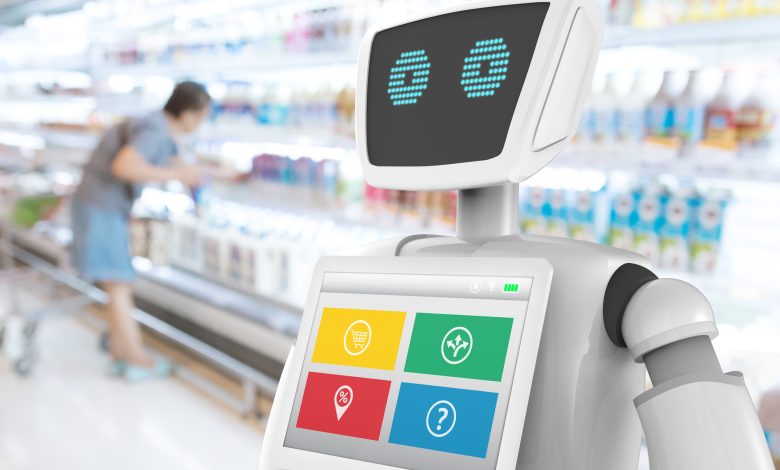
The UK retail sector is already experiencing significant shifts in AI innovation and integration in 2026, with giants like Tesco and Marks & Spencer recently making headlines for deploying AI-powered personalisation in their loyalty programmes earlier this year.
These advancements promise a new era of customer experience, but implementing a truly successful AI system is not as simple as identifying an area for innovation and simply implementing AI. Success hinges on a foundational truth: AI is only as powerful as the data feeding it, with mobile endpoints being the single most overlooked source of real-time operational data powering AI.
We know that British shoppers want AI. SOTI’s retail industry report, Retail Tech Assessment: Opportunities for Enhanced Consumer Experiences, found that 57% of consumers want to see more technology-enhanced shopping experiences. Similarly, over half (52%) of UK consumers prefer shopping in stores that use technology to make the shopping experience more personalised, and 55% agree that retailers should use AI to improve the items that are recommended to them in store.
Retailers are already recognising this and making direct moves to support these sentiments. However, with only 28% of UK customers currently using the AI features in retail apps to personalise their shopping experience, there remains a significant opportunity for growth.
The Critical AI Blind Spot
Organisations are investing heavily in AI but many still lack visibility into what is happening at the operational level. This creates a critical blind spot. AI systems excel at analysing large volumes of historical or consumer data, but they often can’t answer simple, real-world operational questions.
For example, a traditional AI system might predict a spike in warehouse inventory demands but it cannot tell you why a warehouse scanner failed on the shop floor, why a delivery app is underperforming or where frontline workflow inefficiencies are occurring in real time. Most organisations are simply missing this live, operational data from the frontline, leaving their AI strategies disconnected from day-to-day realities.
Bridging the Gap with Operational Intelligence
To bridge this gap, the retail industry must take a closer look at their fleets of devices and put effective layers of data infrastructure in place that capture real-time endpoint intelligence, such as battery health, connectivity drops and app performance.
When AI is fed with this level of frontline operational intelligence, the outcomes become exponentially more accurate, relevant and impactful. Retailers can move from reacting to device downtime to proactively predicting and preventing it, ensuring seamless customer service.
The consequences of neglecting to put these layers in place are significant, from unplanned downtime that frustrates employees and consumers, and increased exposure to cyber threats, to greater operational complexity. As industries continue to innovate with AI, the question is whether they are building on solid ground or leaving critical gaps that could compromise long-term progress and, even worse, their customers’ trust.
Cyber Risks Are No longer a “What If” But a “When”
Last year served as a stark reminder of the risks that an insecure system presents, with several high-profile retail brands suffering the consequences of data breaches, from operational downtime to financial loss and reputational damage.
These data breach incidents underscore a significant concern that essential safeguards, like vendor oversight, secure data architecture, robust device management and proactive threat detection, remain inadequately addressed. Without rectifying these foundational gaps, the industry’s ability to innovate safely and sustainably with AI is seriously compromised.
With these incidents fresh in consumers’ minds, it’s no wonder that cybersecurity remains a key concern, with SOTI’s research highlighting that 84% of consumers in the UK are concerned about at least one data privacy or security issue when entering personal details online or via in-store devices.
When asked how global retailers experiencing security breaches influences their shopping habits, 69% of shoppers admit it would impact their purchasing decisions and 85% think twice before shopping at retailers that have experienced a cyberattack, highlighting the ongoing importance of trust and security in the retail sector.
Ultimately, without complete visibility into endpoint health and operations, ensuring the robust data security required to win consumer trust is impossible.
Future-Proofing the AI Foundation
Given the current maturity of the AI market, establishing this data foundation is the ultimate future-proofing opportunity. Many organisations are investing heavily in AI today without the right operational data foundation in place, limiting the long-term viability of their initiatives.
Before retailers can fully leverage AI, they must have a solid operational backbone that integrates all systems securely and taps into the wealth of data generated by warehouse scanners, in-store POS systems and frontline devices. By capturing this operational data now, businesses are preparing their environments for much more effective and powerful AI outcomes in the future.
As retailers push ahead with AI, the real measure of progress will not just be the sophistication of their algorithms but how intelligently they capture and utilise the frontline data that powers them.