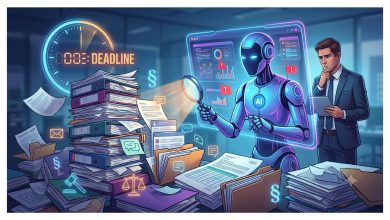
At the beginning of the year, markets reacted to speculation of an oncoming “SaaS-pocalypse”. AI vendors claimed that large parts of enterprise software estates could be replaced with AI agents. This debate has now reached the boardroom. CIOs are questioning whether hundreds of licensed tools are still needed to support core workflows – or whether AI can reduce that requirement.
That question points to a clear opportunity to rationalise the enterprise stack. Large enterprises are today using 625 applications on average. The multitude of SaaS subscriptions that organisations rely on leads to duplication, rising licence costs and fragmented user experiences. Against this backdrop, agentic workflows could reduce complexity, lower licence costs and create more agile, streamlined operations.
Finding the Right Balance Between SaaS and AI agents
The future of enterprise software will undeniably be more AI-driven, but organisations need to strike the right balance when shifting work to agents. Core systems of record, such as ERP, CRM, and finance platforms will still be needed to underpin operations, even as AI is introduced to streamline workflows around them. It is within these surrounding workflow layers – often built around repetitive, rules-based human tasks – that the biggest opportunity for transformation lies.
To have the greatest impact, organisations need to identify areas where workflows are predictable, data already resides within core systems, and processes span multiple platforms. Looking ahead, here are five core areas where AI agents can help enterprises reduce their reliance on SaaS:
- Business Intelligence and Analytics
AI agents can change how organisations interact with data, enabling natural-language queries across systems of record. By reducing reliance on dashboard-heavy reporting tools, they can make it easier for employees to access insights without navigating complex interfaces. Instead of relying on specialist analysts or pre-built reports, business users can ask questions directly and receive context-rich answers in real time. This not only speeds up decision-making, but also democratises data analytics across the organisation. - Workflow and Process Automation
Many SaaS tools exist primarily to route tasks between people and systems. AI agents can take this further, dynamically interpreting instructions and coordinating workflows across platforms, reducing manual intervention and improving efficiency. Rather than following fixed rules, these agents can adapt to changing inputs and priorities, enabling more flexible and responsive processes. This is particularly valuable in environments where workflows are complex, cross-functional and time-sensitive. - Customer Service Operations
AI agents can streamline customer service by automating triage, routing and routine response handling across channels. In sectors such as insurance and healthcare, this can include first-line claims intake or handling policy updates before escalating more complex cases. By handling high-volume, low-complexity interactions, AI allows human teams to focus on more nuanced or sensitive issues – improving response times, reducing operational pressure, and delivering a more consistent customer experience. - Integration and Data Movement
Instead of relying on multiple integration tools, AI-driven orchestration can interpret events and trigger actions across systems. This enables more intelligent coordination between platforms such as ERP, CRM, and other operational systems. Rather than building and maintaining rigid integrations, organisations can adopt a more flexible approach where AI understands context and manages interactions dynamically. This reduces technical overhead while improving the speed and reliability of data flows. - Operational Decision Support
AI agents can enhance decision-making by analysing enterprise data in real time and generating actionable recommendations. In areas such as supply chain, risk and finance, this can reduce reliance on standalone tools designed purely for reporting or forecasting. By continuously monitoring data and identifying patterns, AI can surface insights that might otherwise be missed, helping teams act more quickly and confidently. This creates a more proactive, data-driven approach to managing operations.
For enterprises, the challenge is working out where AI agents can simplify the software landscape without putting governance or operational resilience at risk. This requires a clear understanding of existing application estates and the workflows they support. Trusted technology partners can play an invaluable role here, helping IT leaders to rationalise their SaaS portfolios, eliminate redundant licence layers, and redesign processes around AI-driven orchestration.
Rebalancing the enterprise technology stack
The shift is gaining momentum – and with open-source tools such as OpenClaw enabling business users to create their own AI assistants, enterprises will want to speed up the shift away from SaaS. At this time, they need to focus on how these agents are coordinated, governed and scaled across the enterprise – ensuring they operate in a controlled, consistent, and secure way.
Ultimately, the goal is not to replace software for its own sake, but to create a simpler, more effective operating environment. Organisations that take a considered, targeted approach will be best placed to unlock long-term value.