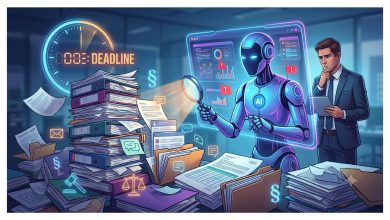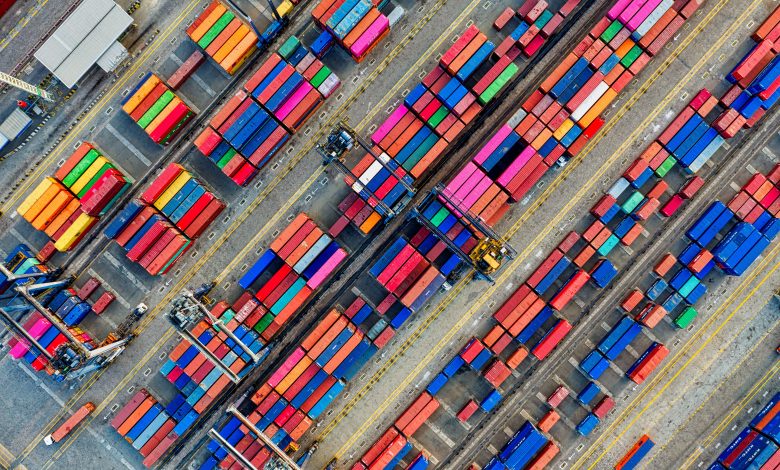
Supply chains are among the most complex operational systems in modern business. They span global supplier networks, logistics infrastructure, distribution centers and retail channels, all operating under volatile demand and constant disruption.
For decades, supply chain technology relied heavily on statistical forecasting models. These models generated demand predictions that planners used to guide replenishment and inventory decisions. While useful, this approach left a significant gap between prediction and action.
Today, artificial intelligence is closing that gap by transforming supply chains from forecasting-driven systems into autonomous decision platforms.
The Limits of Forecasting-Centric Supply Chains
Traditional supply chain planning systems are built around demand forecasting. Statistical models estimate expected demand based on historical sales patterns, seasonal trends and promotional effects. These forecasts feed into planning tools that determine replenishment quantities and distribution strategies.
While this architecture has served enterprises for decades, it struggles with modern retail dynamics.
Consumer demand has become increasingly volatile due to e-commerce growth, omnichannel fulfillment and rapidly shifting product trends. Forecast accuracy alone cannot fully address these challenges because the real problem lies in decision complexity.
A supply chain managing millions of SKUs across thousands of locations must continuously balance multiple competing constraints:
- inventory availability
- transportation capacity
- warehouse throughput
- supplier lead times
- demand uncertainty
The number of possible decisions grows exponentially, far beyond what human planners can optimize manually.
From Predictions to Decisions
The next generation of AI-driven supply chains shifts the focus from prediction to automated decision-making.
Instead of generating forecasts that humans interpret, modern systems use machine learning models as inputs to decision optimization engines. These engines evaluate multiple operational constraints simultaneously and recommend actions such as inventory allocation, replenishment timing and distribution routing.
This approach transforms supply chain management from a reactive planning exercise into a real-time optimization problem.
AI systems can continuously evaluate millions of potential outcomes using reinforcement
learning, simulation models and probabilistic optimization techniques. As new demand signals arrive—online orders, store sales or supplier delays—the system dynamically adjusts decisions across the network.
The Role of Real-Time Data Infrastructure
Enabling this level of automation requires significant advances in data infrastructure.
Supply chains generate massive volumes of operational events: purchase orders, shipment updates, inventory movements and sales transactions. AI-driven decision systems must ingest and process these events in near real time to maintain accurate operational state.
Modern architectures rely heavily on streaming data platforms and distributed analytics systems. Event-driven pipelines continuously update inventory positions, demand signals, and logistics constraints across the network.
This real-time data layer allows decision engines to operate with current information rather than relying solely on historical planning cycles.
AI-Augmented Planners, Not Fully Autonomous Systems
Despite the growing sophistication of AI systems, human expertise remains critical in supply chain operations.
Rather than replacing planners entirely, AI platforms increasingly function as decision intelligence systems. They generate recommended actions while allowing planners to evaluate trade-offs and intervene when necessary.
For example, an AI system may recommend redistributing inventory between distribution centers to prevent stockouts. Planners can review the recommendation, evaluate cost implications, and approve or modify the action.
This hybrid approach combines machine-scale optimization with human judgment, creating more resilient operational systems.
Building the Supply Chains of the Future
Enterprises seeking to modernize supply chain operations must rethink both technology and organizational structures.
Key capabilities include:
- unified operational data platforms
- machine learning pipelines for demand and supply signals
- decision optimization engines
- simulation environments for evaluating policies
Perhaps most importantly, organizations must shift from treating AI as a forecasting tool to viewing it as a decision infrastructure.
The future supply chain will not simply predict what customers might buy. It will autonomously adapt inventory flows, logistics strategies, and replenishment policies in response to real-time conditions.
In an era of increasingly complex global commerce, that level of intelligence will become a defining competitive advantage.