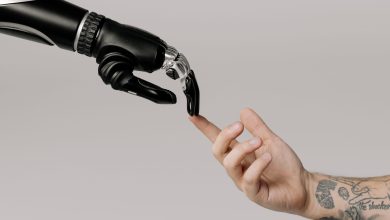
For the past two years, the dominant narrative around artificial intelligence has been one of replacement. Writers fear AI generated content. Designers and illustrators worry about image generators, and musicians watch algorithms compose songs in seconds. The assumption is simple: if AI can create, creators become less valuable.
But that assumption doesn’t hold up, and there’s quite a bit of research to support that. What’s actually happening is that creators now have a second way to earn from the exact same skills they’ve spent years building, without compromising or devaluing their craft. In fact, the value of human created content is increasing.
Human creativity isn’t going anywhere
Let’s start with the part people worry about most: will AI replace human art? The research says no, and not by a small margin.
A study out of Columbia Business School found that when the same piece of art was labeled as AI generated versus human made, people valued the AI labeled version 62 percent lower. People were willing to accept that the AI art showed real skill and nuance, but they still saw it as less creative and less valuable in dollar terms.
Research from Rotterdam School of Management found something similar. When researchers told participants a piece of art was AI generated, it significantly reduced how much they were willing to pay for it and how creative they thought it was. People simply hold onto the idea that human hands and human judgment mean something, and that belief shows up directly in what they’re willing to pay.
This matters because it tells us something important: teaching AI systems is not a replacement for making original work. It’s a separate track entirely. The market itself keeps drawing a line between the two, and creators don’t need to choose one over the other.
Adding value to the creative economy
While human made work holds its value, a separate market has been building alongside it: the business of teaching AI systems how to do things well.
This isn’t a niche trend. The market for AI training data is projected to grow from around $3.9 billion in 2026 to $8.45 billion by 2030, and the broader intelligent training data services market is on a similar trajectory, expected to climb from about $4.1 billion in 2026 to $8.27 billion by 2030. That growth is being driven by one simple fact: AI systems are only as good as the human expertise that shapes them, and companies are paying well for that expertise.
And the pay is genuinely good, especially in visual AI, which is exactly where creators already have an edge. Remote image annotation and image QA roles are regularly listed at $50 to $86 an hour for people who can evaluate visual quality with real judgment, not just tag objects in a photo. That’s the kind of work a photographer, designer, or video editor is already trained to do, just applied to a new client.
Most of this work is part time and project based by design. It’s built to sit next to someone’s existing career, not replace it, which is exactly the point.
Creators can do both, and that’s the actual story
This is where the narrative needs to shift. Creators aren’t becoming trainers instead of creators. They’re creators who now have the option to also be trainers, on their own schedule, for extra income, while their creative work continues exactly as it did before.
A designer who understands why one layout works and another that doesn’t help an AI system learn to tell the difference and get paid for that judgment on a Tuesday evening, then go design a client’s brand the next morning. A photographer can spend a few hours a week evaluating image quality for a training platform and still shoot weddings every weekend. A writer can help build examples of strong versus weak prose for an evaluation project and still write the novel they’ve been working on for years.
None of that requires giving anything up. It requires recognizing that the same judgment a creator has built over years of practice happens to be valuable in a second market, one that didn’t exist five years ago. In addition to this second market, the new tools created as a result of it could very well be used to enhance the creative workflow and process.
Why this distinction matters
If we tell creators that their future is to become AI trainers, we’re telling them their creative work is being phased out. That’s not true, and the data doesn’t support it. Human made work keeps a premium in the market precisely because it’s human made.
The more accurate narrative is that creators now have a new, flexible income stream available to them that didn’t exist before, one that pays well and asks for the same expertise they already have. It’sadditive, not a replacement. Original creative work isn’t losing ground. It’s just no longer the only way for a creator’s skill to earn a living.
The question isn’t “will AI replace what I do?” It’s “is there a way to also get paid for what I already know?” For a growing number of creatives, the answer is yes.