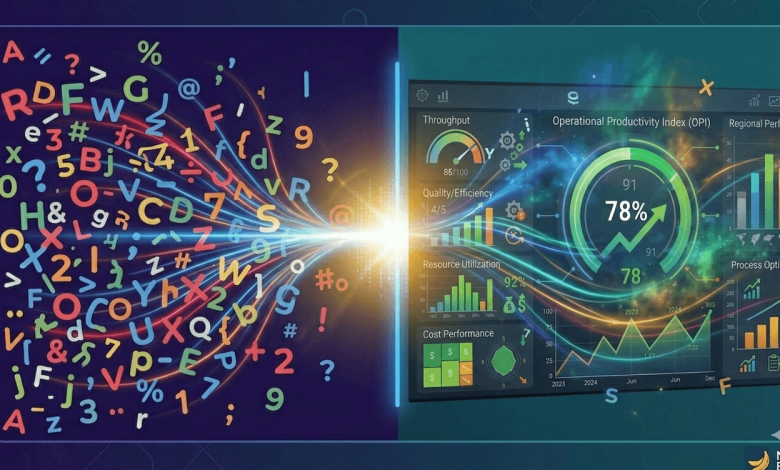
As AI adoption accelerates, a central concern is emerging: why do so many initiatives fail in day-to-day execution?
Organizations remain heavily focused on technological capability, while the human factors that determine whether adoption is meaningful, or merely ceremonial, receive far less attention.
The signals are everywhere. Deloitte’s recently published State of AI in the Enterprise revealed that workers’ access to AI tools has expanded rapidly, increasing by 50% in a single year, and yet fewer than 60% of those with access use AI in their daily work.
This is not a failure of effort. As we observed first-hand in our own experience, more often than not teams responsible for delivery are balancing the demands of day-to-day work, making it difficult to find bandwidth to even learn the uses of AI. And AI implementation initiatives are moving faster than teams can realistically integrate new tools into their workflows.
From Technology Rollout to Operating Model
AI reshapes tasks and workflows. But, more importantly, it redefines professional identity. These shifts require interpretation, prioritization, and continuous adjustment within teams.
Many organizations are still approaching AI as a deployment effort tackled with IT training, while the evidence increasingly points to a need to focus on the human factors within the operating system of how a business creates and delivers value.
In April of this year, Gartner reported on their CEO and senior business executives survey, which found that 80% recognize that AI will force operational capability overhauls. And in our view, to move from awareness to outcome, companies should invest in a “Translation Layer”: individuals who can bridge the distance between AI mandates and the operational realities of delivery. Otherwise, initiatives will remain at the surface level.
The Translators on the Ground
In interviews conducted across sectors, including financial services, design, and technology, we found that middle managers carried this responsibility – which is the most common scenario. They were the ones working at the ground level, interpreting direction, guiding their teams through uncertainty, and making decisions about how AI should be used by teams in their daily work.
In other cases, this translation function can also be carried out by product managers, project managers, or change leaders, depending on how the organization is structured. And sometimes, even attuned and engaged employees informally perform this work.
Regardless of the title, these individuals often need to reconcile aggressive timelines with the reality of team capabilities, stakeholder appetite and the cognitive load of change.
Adoption unfolds through perception, trust, and meaning. Teams engage when beliefs about new AI tools are grounded in evidence, concerns are validated in a safe environment, and individual value in the organization is clearly preserved.
It is precisely here that the “Translator” role extends beyond coordination. It brings the ability to turn user experience into technical requirements responsibly, while ensuring these requirements fit the work as it unfolds.
This is key to shaping strategic vision into specific, executable changes in how work gets done. An effective translation layer creates the conditions for teams to refine workflows, by testing, learning, and adjusting.
The Translation Layer in Action
In practice, strengthening the translation often starts with identifying where friction shows up in daily work: inconsistent usage of tools, workarounds outside formal processes, or hesitation tied to unclear risk boundaries and identity loss.
From there, the Translator ensures that the work is structured with the following steps:
- converting those observations into specific, actionable use cases for rapid
prototyping
- prioritizing based on impact and feasibility
- accounting for experimentation and iteration within operational work
- working with product and technology teams to validate user experience and refine
workflows iteratively - ensuring feedback loops are continuous rather than one-off
This is less about large-scale redesign and more about small, targeted adjustments that compound over time.
The Future of the Translation Layer
Ironically, this conversation is emerging at the same time many organizations are debating flatter structures and reducing middle management layers.
But watch out: the issue is less about hierarchy itself and more about preserving translation capacity inside the organization, drawing on those who are most relevant and qualified for the work.
AI transformation depends on individuals who can navigate between strategic direction and operational reality, understand how workflows function across teams, and identify where adoption breaks down in practice. In many organizations, middle managers still perform much of this work. In others, product managers, project leaders, or change specialists increasingly carry parts of the same function.
The role of the Translators extends beyond communicating decisions downward. They often contribute to reshaping strategy itself by surfacing operational hurdles early enough to adapt expectations, refine workflows, and renegotiate how AI is realistically embedded into work. For example, when leadership commits to a specific AI tool, the Translator identifies where the tool fits actual tasks, where it does not, and what changes need to happen to generate real outcomes that compound over time. This becomes especially critical in transformation initiatives, where adoption depends as much on adjusting organizational behaviour as deploying new technology.
And it is indeed possible that, as AI becomes more widely embedded in the workplace, this translation capability may be more distributed across organizations rather than concentrated in formal management layers. But regardless of structure, organizations still need people with enough contextual visibility and operational understanding to make strategy executable.
The Work Ahead
The next phase of AI transformation will be shaped by how effectively organizations connect capability to practice. The question is no longer whether organizations will adopt AI, but whether they are intentionally designing and preserving translation capacity inside the organization, which is what makes adoption real.
That happens at the ground level, through individuals who translate strategy into execution. If you cannot name who performs this work in your organization, that’s your answer.