“Assistive layer, not final authority” has become enterprise AI’s most overused sentence. Nowhere is that more true than in HR tech, where nearly every vendor pitching AI leans on some version of it, rarely explaining where accountability sits when something fails.
Mahe Bayireddi, CEO and co-founder of HR tech unicorn Phenom, doesn’t dispute the phrase. He just thinks nobody can explain how it actually works. And that gap matters more in hiring than almost anywhere else: a bad recommendation can cost someone a job, a promotion, or a shot at one — and increasingly, draw a regulator’s attention. For Bayireddi, the answer to where the human steps in can’t be a single company-wide policy — it has to be decided role by role, region by region.
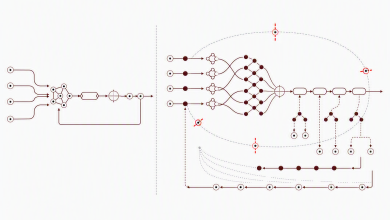
“We think about HR automation intelligence across five layers,” he tells me. “It depends on the company, the industry, the use case, the geography. Manufacturing recruiting in North America can run at level four. Nurse hiring tops out at level three. Hiring financial analysts in India can run at level five. You can’t run software as one universal global workflow anymore — that’s outdated. But that’s how it’s been built for thirty years.”
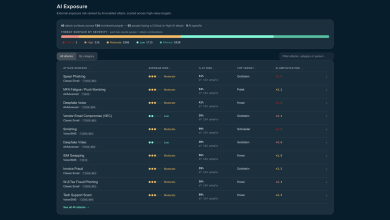
That push has collided with a hiring environment getting harder to trust. Gartner forecasts that as many as one in four global candidate profiles could be fake within two years, while Phenom customers reported imposter-candidate volumes rising 50% to 200% over the past year. Speed and trust, sold for years as complementary, are now openly in tension. Regulators have noticed: New York’s Local Law 144 already requires bias audits on automated hiring tools, and the EU AI Act classifies hiring algorithms as high-risk, subject to its strictest oversight.
Bayireddi resists treating automation as a single dial, as every use case carries its own balance of change and adjustment. “There are spots where you have a 30% change, and the question becomes: what’s the 70% adjustment you have to make?” he says. “That deliberate calibration is the leader’s job right now — not picking a model, but deciding what stays human.”
He notes that deciding what runs where isn’t just an architecture question; it’s a cost one. The goal isn’t to slow AI-powered deployment down, rather to be ruthless about where automation stops paying for itself. “For hiring a frontline job paying $17 an hour, why use an expensive frontier model burning tokens on that? A $400-an-hour role calls for a different technique entirely.”
Roughly a third of Phenom’s use cases run on frontier models, he says. Another third relies on fine-tuned and reinforcement-learning systems trained on data that never leaves the customer’s environment. The rest use simpler machine learning and retrieval-augmented systems. “The future isn’t one frontier model applied to every problem,” he says. “A smaller, fine-tuned model can do a lot more good.”
Where the Human Checkpoint Actually Sits in HR
When pressed on what “human in the loop” costs in practice, whether protecting human judgment has ever slowed Phenom’s hiring automation or cost revenue, Bayireddi says he draws a sharp line between two operating models.
“Every agent doesn’t need a human reviewing its output, correcting every error, approving every task. That slows the system down. You move into orchestration: guardrails are set, workflows are designed, and people review exceptions only. It comes down to use case — supervisory or orchestration,” he says. “Get that wrong, and human deployment in a supervisory model can climb even higher than today’s norm.”
Confusing the two is where companies misallocate labor and lose the productivity case for AI. “Every company has to reorient its workflows,” he says. “When you change tasks, your skills change. When you change jobs, your process changes. When you change work itself, your fundamental systems change.” With the correct automation, he claims, gains show up fast: 20% to 30% productivity, not from cutting people but from cutting cumbersome process work that wasn’t producing results.
AI Will Never Fully Understand Hiring Context
Bayireddi’s most direct admission is also his most consequential one for a company built on encoding human context into automated systems: there’s a layer of judgment AI may never reach. People operations, he explained, rests on three layers: business strategy, organizational culture, and the function connecting them. Strategy covers growth and contraction; culture covers how those goals get pursued. People operations brings the two together, creating the context that shapes hiring decisions.
That context has historically existed almost entirely in the heads of organizational leaders. Only recently have large language models begun translating it into something systems can act on. “Over the last two years, LLMs have helped translate maybe 30% to 40% of that context into a scalable format,” he says. “That’s already valuable. But it’s not a full understanding.”
That partial translation doesn’t transfer cleanly across a business, either, as he saw at Thermo Fisher. “We initially only automated manufacturing jobs there,” he says. “Then we realized it’s not just manufacturing — you have to go into revenue-generating jobs, then builder jobs. Each one is a different segment. How you hire, retain, and onboard fundamentally switches based on culture, business strategy, and HR operating model.”
It’s an unusual admission for the CEO of a context-encoding AI company, and also the clearest signal of where the technology’s edge actually sits.
Fewer Managers, More Recruiters
While other tech leaders warn publicly about flattening headcount as agentic AI deployment scales, Bayireddi has staked out the opposite position. He separates the software industry — which he says is shrinking management layers to speed up execution during its own reinvention — from every other sector. “That’s happening at every software company, whether it’s Google, Phenom, or anyone else,” he says.
Outside software, automation expands the candidate funnel rather than shrinking the recruiting team, he argues. His example is nurse hiring: a posting that once drew 50 applicants, of which fewer than 20 could be screened, now draws 120 — all screened without human intervention. “Previously, you picked one person from the first 20,” he says. “Now you’re evaluating all 120, and you pick from the top 15. The data you collect is dramatically richer.”
Recruiters aren’t simply removed; they’re retrained to redesign the workflow. “That’s a redistribution of HR work inside the new AI ecosystem,” he says. The winners, he says, make bold, narrow changes where the pain is sharpest, rather than wall-to-wall transformation at once. Roughly half the use cases won’t change much, he estimates; the rest will change dramatically.
Will Humans Ever Leave the Loop?
An important question for enterprise AI has been whether human oversight is a permanent feature of hiring or a temporary safeguard that disappears once the technology catches up. Bayireddi shared an analogy from outside enterprise software entirely.
“I believe recruiting will stop the day Tinder can find someone their life partner in five minutes,” he says. “I don’t think any technology will ever fit the right person perfectly, because we’re constantly evolving. The same is true for recruiting. AI is outsourcing intelligence. What’s left for humans is understanding and judgment.”
That distinction, he says, is about to reshape professional value. “Until now, people were paid for intelligence and pattern recognition,” he says. “Now you’re valued for understanding the problem well enough to direct the intelligent system. The jobs tied to pure intelligence will shrink. The jobs tied to understanding will amplify.”
The Control Layer Verdict
Bayireddi isn’t claiming AI will leave hiring untouched. Rather, he argues that the industry’s debate over whether AI agents replace humans assumes there’s one clear point where humans hand over control. What Phenom is actually selling is a system where the honest answer to “Is AI in control here?” is almost always, “It depends on the job.” That’s a harder message to sell in a boardroom than “augmentation, not replacement”. It’s also closer to reality, where many companies deploying agentic AI are likely to stumble.