
Across manufacturing sectors worldwide, the shift toward Industry 4.0 is no longer a strategic option under consideration. It is an operational reality being negotiated in real time, on factory floors that were often designed for a fundamentally different era of production. The convergence of connected devices, real-time data analytics, and intelligent automation is compressing what used to be decade-long transformation timelines into windows of two to three years.
In this article, we examine how digital transformation consultants are guiding manufacturers through Industry 4.0 adoption. We cover the specific barriers that stall progress, the technical and organisational competencies that distinguish effective consulting from surface-level advisory, how external expertise compresses deployment timelines, and what a rigorous measurement framework looks like once a transformation is underway.
The Current State of Industry 4.0 Adoption
The Push Toward Smart Manufacturing
Manufacturers are no longer debating whether to adopt Industry 4.0 technologies; they are negotiating the speed and sequence of that adoption. Facilities across multiple sectors are integrating IoT sensors, cloud-based analytics platforms, and automated quality control systems into production environments that were built around very different assumptions. In our experience working across industrial engagements, the operations that move earliest from periodic manual reporting to real-time data environments consistently outpace competitors on both cost efficiency and responsiveness metrics.
The shift is also being accelerated by external shocks rather than internal ambition alone. Global supply chain disruptions in recent years have exposed the fragility of production models built on long lead times and minimal visibility. Manufacturers with digital infrastructure already in place were able to reroute, replan, and adjust procurement in near-real time. Those without it were absorbing disruptions that their more digitally connected competitors had already navigated around. That contrast has concentrated executive attention on transformation in a way that efficiency arguments alone rarely achieve.
Key Barriers Slowing Adoption
Despite the momentum, meaningful structural obstacles remain across most manufacturing markets. Physical infrastructure is a genuine constraint wherever network latency and connectivity reliability fall short of what Industrial IoT deployments require, a challenge that is particularly acute in regional and remote locations across markets like Australia, parts of Southeast Asia, and rural North America. The economics of bridging that gap independently are prohibitive for mid-market operators who do not have the capital reserves of large-scale enterprises.
The skills challenge is equally significant and often underestimated in initial project scoping. Digital transformation demands a workforce capable of operating, interpreting, and iterating on systems that simply did not exist five years ago. Most manufacturers cannot source that capability from the external labour market quickly enough to match their transformation timelines. Internal upskilling is the practical path forward, but it requires structured investment and time horizons that many operations have not yet built into their planning.
A third barrier that rarely receives sufficient attention is organisational sequencing. Many manufacturers invest in technology before they have established the data governance frameworks, process documentation, or operational discipline that make that technology useful. The result is capable infrastructure running on inconsistent inputs, which produces unreliable outputs and erodes confidence in the programme before it has had the opportunity to mature.
What Digital Transformation Consultants Actually Do
Integrating Legacy Systems with Modern Infrastructure
The most common starting point in any industrial engagement is not a greenfield facility. It is a production environment built over decades, running a mix of equipment generations, with operational data locked inside proprietary systems that were never designed to communicate externally. The first task for any competent consultant is a rigorous audit of that technical landscape: what exists, what it can and cannot do, and where the highest-leverage integration points are.
The integration approach that consistently delivers the best outcomes is additive rather than replacement-oriented. Layering modern connectivity, edge computing, and data capture capabilities onto existing machinery preserves operational continuity and protects capital already deployed in physical assets. It also produces faster returns than wholesale infrastructure replacement, which matters significantly when justifying investment to boards focused on near-term cash flow. Specialists such as digital transformation consultants with hands-on industrial experience typically arrive with integration architectures that have already been stress-tested across similar equipment environments, which eliminates months of discovery that internal teams would otherwise spend learning by trial and error.
What most manufacturers do not anticipate is how much the integration work surfaces organisational problems that predate the technology. When data starts flowing across previously siloed systems, it often reveals that the underlying processes were never standardised in the first place. Addressing that is not a software problem; it is a process discipline problem, and consultants who flag it early save their clients from building accurate reporting on top of inaccurate inputs.
Strategic Roadmapping for Scalable Growth
Technology deployment without a commercial roadmap is one of the most reliable ways to create expensive technical debt. Consultants who understand industrial operations build transformation plans that sequence investments according to business impact, not technical elegance. The initial phases address the bottlenecks with the highest cost of inaction; later phases build on the data and capability foundations those early investments establish.
The sequencing failure we see most often is manufacturers investing in advanced analytics before they have reliable data capture. It is the equivalent of building a sophisticated reporting layer on top of incomplete records. The result is dashboards that look impressive but cannot be trusted, which undermines confidence in the entire programme. A well-structured roadmap inverts that sequence: data capture and quality first, then integration, then analytics, then predictive capability. Each layer depends on the integrity of the one beneath it.
Scalability planning also involves anticipating how the digital infrastructure will need to evolve as production volumes, product complexity, and market conditions change. A roadmap that accommodates today’s operation but cannot handle a 40 percent volume increase or a shift into new product categories will generate significant rework costs within three to five years. Consultants who have navigated multiple transformation cycles bring that longer horizon into the planning conversation from the outset, before architecture decisions have been locked in.
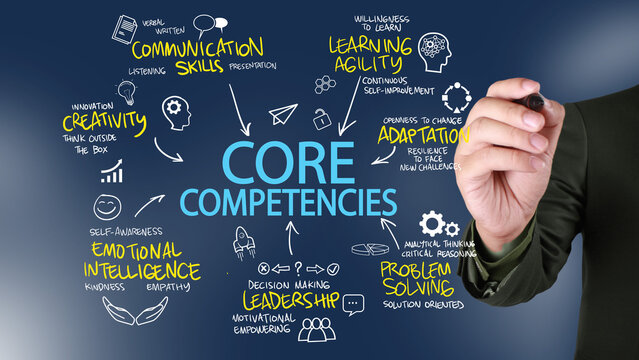
Core Technical and Human Competencies
IoT Integration and Data Analytics
Effective consultants working in industrial contexts need applied fluency with the full technology stack, not just familiarity with the concepts. That means hands-on experience deploying and configuring IoT sensor networks across diverse machinery types, integrating those data streams into platforms such as AWS IoT, Siemens MindSphere, or Microsoft Azure IoT Hub, and designing the data pipelines that transform raw telemetry into inputs that operations teams can act on.
The analytics layer is where much of the commercial value is generated, and it is also where many engagements stall. Descriptive dashboards that show what is happening on the factory floor are a useful starting point, but the more valuable applications are predictive: identifying equipment degradation patterns before they cause unplanned downtime, detecting process drift before it affects yield quality, and surfacing demand signals early enough to adjust production scheduling. The step from descriptive to predictive analytics requires both technical capability and operational credibility, because the models need to be trusted by the people on the floor before they will be acted upon.
Change Management and Cultural Alignment
The technical implementation of an Industry 4.0 programme is typically the more tractable half of the challenge. The human dimensions are where projects most often lose momentum. The pattern we see consistently is not dramatic opposition but quiet non-adoption: workers who were never meaningfully consulted during the design phase find workarounds that allow them to continue operating as they always have, and the new system gradually becomes a parallel overhead rather than an operational improvement.
Experienced consultants treat change management as a parallel workstream, not a phase that begins after go-live. This means involving frontline operators and supervisors in the design phase, building feedback mechanisms that give workers genuine influence over how new systems are configured, and demonstrating early that the technology improves daily working conditions rather than simply adding a monitoring layer. When workers understand that the system is designed to help them, not surveil them, the adoption dynamic changes materially. The workforce becomes an active participant in the transformation rather than a recipient of it, and the cultural shift that results is far more durable than anything that can be achieved through training alone.
The Case for External Expertise Over Internal Teams
Accelerating Deployment Timelines
Internal teams attempting a first-time Industry 4.0 implementation face a steep learning curve at precisely the moment when competitive pressure is highest. The time spent discovering which integration approaches work, which platform choices create long-term flexibility, and which sequencing decisions avoid costly rework is time that competitors with external support are spending on execution. Consultants who have navigated multiple deployments compress that learning curve substantially by bringing pattern recognition that internal teams simply have not had the opportunity to develop.
The proven frameworks that experienced consultants bring are not just process templates. They encode hard-won decisions about technology selection, vendor management, risk sequencing, and stakeholder communication that took years of real-world engagements to develop. Applying those frameworks means a manufacturer can move from initial scoping to first production data flowing through a new analytics environment in weeks rather than months, without burning the goodwill of the operations team in the process.
Risk Mitigation in Complex Implementations
The risks in industrial technology implementations are not theoretical. Downtime on a production line during a failed integration has direct, quantifiable cost. A poorly sequenced migration that disrupts ERP connectivity creates cascading problems across procurement, logistics, and finance simultaneously. These are not edge cases; they are common outcomes of implementations that proceed without the risk management discipline that experienced external specialists bring as standard practice.
Where internal teams typically manage risk reactively, responding to problems as they emerge, experienced consultants manage it structurally, by designing the implementation sequence to contain failure within boundaries that do not threaten production continuity. Phased deployments with validated rollback procedures, parallel-run periods where new and legacy systems operate simultaneously, and pre-defined escalation protocols are practices that most internal teams adopt only after they have experienced the cost of not having them. External specialists arrive with those protocols already built into their engagement methodology.
Adapting Industry 4.0 to Specific Market Conditions: An Australian Case Study
The principles of Industry 4.0 adoption are broadly consistent across manufacturing markets, but the specific obstacles and regulatory environments vary considerably by geography. Australia illustrates the localisation challenge clearly, and it is a useful case study for any manufacturer operating in a market with distinctive infrastructure constraints, regulatory frameworks, or supply chain structures.
Regulatory Compliance and Data Sovereignty
Australian manufacturers operating in regulated sectors face compliance requirements that global technology platforms were not always designed with in mind. The Australian Privacy Principles govern how personal and operational data can be collected, stored, and processed. Defence-adjacent manufacturers face additional requirements under the Defence Industry Security Programme. Food and beverage producers must maintain traceability systems compatible with the Export Control Act. These are not checkbox exercises; non-compliance carries serious operational and legal consequences that emerge well after the implementation phase.
Consultants with direct Australian market experience integrate compliance considerations into the architecture of a digital transformation from day one rather than retrofitting them after implementation. That approach is significantly less expensive and produces systems that are genuinely fit for the local regulatory environment rather than nominally compliant workarounds that accumulate risk over time.
Strengthening Regional Supply Chains
One of the less-discussed structural advantages of digital transformation for manufacturers in geographically dispersed markets is the improvement it enables in supply chain visibility and resilience. Real-time connectivity across a supplier network reduces the information lag that makes disruptions difficult to anticipate and respond to. In the Australian context, where a tier-two supplier operating in a regional location may be separated from a primary production facility by thousands of kilometres, that visibility converts what would otherwise be a multi-day information delay into an immediate operational signal.
The same logic applies to any market where supply chain geography creates information asymmetry. The manufacturers that have invested in digital connectivity across their supplier base consistently demonstrate faster recovery from disruption and lower safety stock requirements than those still relying on periodic manual reporting up and down the chain.
Measuring Outcomes and Sustaining Continuous Improvement
A digital transformation without a measurement framework is an infrastructure project, not a business improvement programme. The metrics that matter in an Industry 4.0 context differ fundamentally from traditional manufacturing KPIs, and that distinction is worth making explicit before a programme begins. Output volume as a standalone measure tells you nothing about the efficiency of the process that produced it. The indicators that drive genuine insight are composite: Overall Equipment Effectiveness, which integrates availability, performance, and quality into a single operational health score; predictive maintenance accuracy, measured by the ratio of predicted to actual failure events; and yield rate by product line and shift, which surfaces process variability that aggregate figures consistently obscure.
In terms of measurement approach, the contrast with traditional practice is significant. Reactive repair logs and monthly manual reporting cycles, which remain the standard in many facilities, create information gaps that make root cause analysis difficult and pattern recognition impossible. Real-time sensor streaming with automated alert thresholds, combined with granular machine-level consumption tracking, shifts the operational posture from reactive to anticipatory. That shift does not happen through technology alone; it requires the measurement framework to be embedded in daily operational reviews and connected to the incentive structures that govern supervisory behaviour on the floor.
Continuous improvement in a digital environment is a fundamentally different discipline from the periodic improvement reviews that characterise traditional manufacturing management. When operational data flows in real time, the feedback loop between identifying a process deviation and implementing a correction compresses from weeks to hours. Consultants who embed iterative development practices into their engagements, using sprint-based review cycles that surface improvement opportunities from live data rather than scheduled audits, help clients build the organisational capability to sustain performance gains long after the initial engagement concludes. The goal of any well-structured consulting relationship is to make itself progressively less necessary, not to create dependency.
Final Thoughts
The manufacturing organisations that will define industrial competitiveness over the next decade are not necessarily those with the largest capital budgets. They are the ones that move with clarity of sequencing, build their digital infrastructure on foundations that can evolve, and treat the human dimensions of transformation with the same rigour they apply to the technical ones. External expertise accelerates that trajectory by compressing the learning curve, structuring risk, and embedding the measurement discipline that turns a technology deployment into a sustained performance advantage. The question is not whether to engage that expertise, but how to select and structure that engagement to maximise long-term return rather than short-term activity.