AI content creation has moved quickly through several obvious stages.
First came writing assistants. Marketers, founders, creators, and agencies started using AI to draft outlines, captions, email sequences, ad copy, and product descriptions. Then came image generation, which gave teams a faster way to explore visual ideas without waiting for a full design cycle. More recently, AI video tools have pushed the same shift into motion: scripts can become clips, static images can become scenes, and long videos can be repurposed into short-form assets.
But one part of the content stack is still often treated as an afterthought: audio.
That is starting to change.
For years, sound was something many teams handled near the end of production. A video was edited, the caption was written, the export was nearly ready, and then someone searched for a background track. If the first option did not work, they searched again. If the music clashed with narration, they lowered the volume. If the track felt too generic, they accepted it anyway because the deadline was close.
That workflow was understandable when audio was a small part of the content mix. It works less well now that brands, creators, and marketing teams are publishing more video, more short-form clips, more product demos, more ads, and more social content than ever before.
In a world where AI is accelerating every other part of the creative process, audio cannot remain the final manual scramble.
AI Has Changed the Front End of Content Production
The biggest change in AI content creation is not that teams can generate more assets. It is that the early stages of production have become much faster.
A campaign idea can quickly become a set of headline options. A product message can become a script. A script can become a storyboard. A storyboard can become a short video concept. A single webinar or podcast can become smaller clips for social channels.
This speed creates new expectations. If the script can be drafted in minutes and the video can be assembled faster than before, the rest of the production workflow needs to keep up.
That is where many teams discover a gap.
They have tools for text. They have tools for visuals. They may even have tools for video editing and repurposing. But when it comes to music, the workflow often drops back into a slower pattern: search, preview, reject, download, test, adjust, repeat.
The result is a strange imbalance. The visible parts of content production become more automated, while the sound layer remains fragmented.
Why Audio Matters More Than Teams Realize
Audio is easy to underestimate because it usually works in the background.
Viewers may not always notice a good music choice consciously. But they often feel it. A product video can feel more polished when the track supports the pacing. A tutorial can feel easier to follow when the music stays out of the way. A short ad can feel more energetic when the rhythm matches the edit. A brand film can feel more confident when the sound does not fight the message.
The reverse is also true.
The wrong track can make a serious product feel unserious. Music that is too loud can weaken a voiceover. A generic stock loop can make a polished visual asset feel unfinished. A track with the wrong emotional tone can change how the message lands.
For marketing teams, this is not only a creative issue. It affects production speed, brand consistency, and the ability to test content across channels.
If a team is producing multiple videos each week, it cannot afford to make audio a separate search project every time.
The Stock Music Problem
Stock music libraries solved an important access problem. They made background tracks available to teams that did not have composers, producers, or dedicated audio budgets.
But access is not the same as fit.
The common stock music workflow creates several friction points:
- The search terms are often vague.
- The track may fit the mood but not the pacing.
- The intro may work, while the middle section does not.
- The music may compete with narration.
- Several teams may use the same recognizable track.
- Licensing details still need to be checked before publishing.
None of these issues make stock music useless. Many teams will continue using it. But as AI speeds up creative production, the limitations become more visible.
Teams no longer need only “a track.” They need music that can be shaped around the asset, the platform, and the message.
That is why the next step in AI content workflows is not just better video generation. It is better integration between text, visuals, motion, and sound.
Audio Briefs Belong Earlier in the Workflow
One practical shift is to move audio decisions earlier.
Instead of waiting until a video is nearly finished, teams can write a short audio brief alongside the script or storyboard. This does not need to be technical. It can be as simple as:
- What should the viewer feel?
- Should the music support narration or lead the energy?
- Should the track be calm, cinematic, playful, minimal, or upbeat?
- Are vocals useful, or would they distract?
- What platform will this be published on?
- Does the music need to loop, build, or stay subtle?
This kind of brief helps creators treat audio as part of the creative direction rather than a final decoration.
For teams producing frequent video content, an AI music generator can turn that brief into a more repeatable workflow. Instead of searching through unrelated tracks, creators can generate music around the mood, pace, and use case of the asset.
The important point is not that AI removes creative judgment. It does not. A human still needs to decide whether the result fits the brand, supports the edit, and leaves enough space for the message.
The value is that audio becomes easier to explore, test, and revise.
Where This Fits in Marketing Workflows
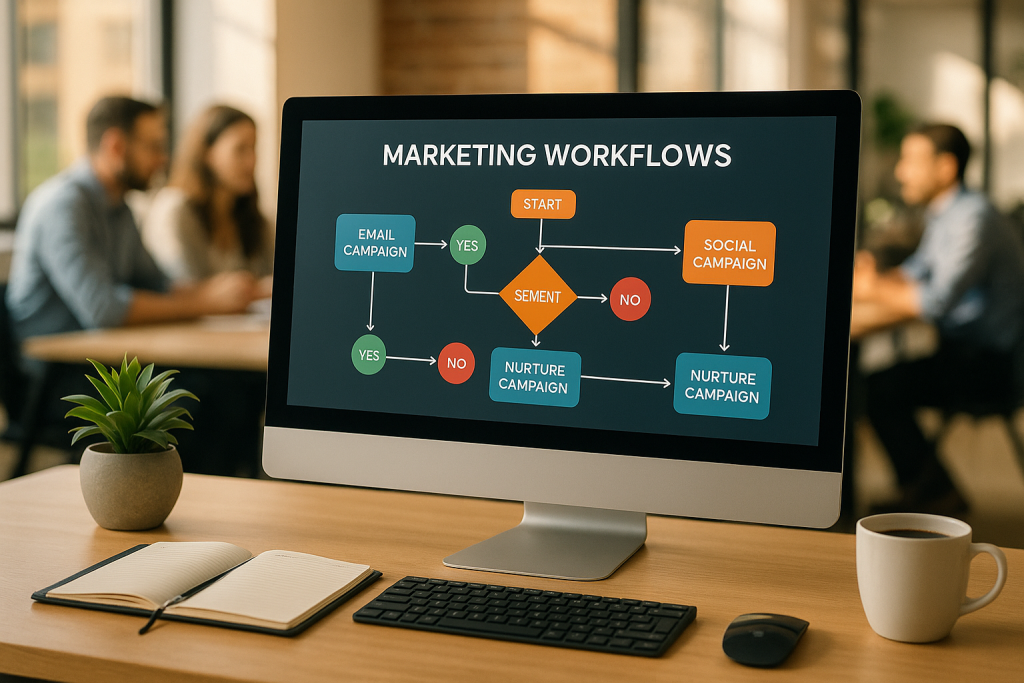
The teams most likely to benefit are not only music-focused creators.
The use cases are much broader:
- A SaaS company producing product walkthroughs
- An agency building paid social variations
- A founder creating short educational videos
- An ecommerce brand testing ad creatives
- A podcast team turning episodes into clips
- A game studio prototyping trailers or demos
- A YouTube creator building a consistent channel feel
In each case, audio affects how finished the content feels. It also affects how quickly the team can publish.
If a marketing team is already using AI to generate campaign angles, script variations, visual concepts, and video drafts, then music should not sit outside that system. It should be part of the same production logic.
That means saving audio briefs, reusing mood directions, testing different track styles, and documenting which types of music work best for different content formats.
Over time, this can become part of a brand’s creative operating system.
The Brand Layer of Sound
Brands have spent years building visual systems.
They define typefaces, colors, layout rules, image styles, motion guidelines, and tone of voice. Those systems help teams produce more assets without making every piece feel disconnected.
Sound deserves a similar level of attention, even if the system starts small.
Not every company needs a sonic logo. Not every creator needs a custom theme. But most teams that publish video regularly need some point of view on audio.
Should product demos sound clean and minimal? Should social ads feel energetic? Should explainers stay quiet under narration? Should brand videos feel cinematic or direct? Should podcast clips use the same recurring music bed?
These questions are not just artistic. They help teams make faster decisions.
Tools such as CraftMusic AI fit into this shift by making original music generation more accessible to creators and marketing teams that need audio for videos, demos, podcasts, games, ads, and social content.
The strongest teams will not use AI music randomly. They will use it inside a clearer creative system.
The Future Is Full-Stack Content Creation
The phrase “AI content creation” often gets reduced to one output: a paragraph, an image, or a video.
That view is becoming too narrow.
Modern content production is becoming a connected stack. Text shapes the idea. Visuals carry the message. Video creates motion and attention. Audio gives the asset emotional structure. Publishing workflows adapt the final piece to each platform.
When one layer is missing, the whole asset can feel weaker.
That is why audio is becoming the missing layer in AI content creation. It is not because every video needs a dramatic soundtrack. It is because sound has become part of how digital content feels complete.
As AI tools mature, the most useful workflows will not simply generate more content. They will help teams connect the creative layers that used to sit apart.
For marketers and creators, that means thinking beyond faster scripts and faster videos. It means building workflows where sound is planned, generated, reviewed, and improved with the same intention as every other part of the content.
The next competitive advantage may not come from producing the most assets. It may come from making every layer of those assets work together.