Artificial intelligence (AI) has made meaningful progress in understanding language, images, and patterns, yet much of today’s AI still interprets the world through flat representations. It processes pixels, labels, and sequences effectively, but often without a true sense of how information exists within space. This limitation becomes more apparent as AI moves beyond analysis and into environments where context, interaction, and decision-making matters, particularly in real-world settings where static interpretation falls short. This gap highlights a broader challenge where AI can recognize the world but may not have the data to fully understand it.
A new layer is beginning to address this gap: spatial intelligence. This enables AI to interpret depth, motion, and relationships within a scene, bringing its understanding closer to how people naturally perceive the world. As AI becomes more integrated into everyday tools and workflows, this capability is becoming increasingly important for delivering meaningful, context-aware outputs across environments where accuracy and adaptability are critical.
What Is Spatial Intelligence & Its Impact on AI
Spatial intelligence refers to an AI system’s ability to understand the structure and dynamics of environments in three dimensions. It includes recognizing depth, interpreting spatial relationships between objects, and tracking how those elements change over time. This expands AI’s perception from static recognition to a more complete awareness of environmental context and interaction.
Traditional computer vision has been highly effective at identifying objects and patterns within images. However, it typically operates within a two-dimensional framework, limiting how much context can be inferred from a scene. Spatial intelligence builds this foundation by incorporating geometry, perspective, and temporal information, allowing AI to better understand how elements exist and interact within an environment rather than simply identifying them.
This shift enables systems to move beyond understanding of entire scenes. Objects are no longer interpreted independently, but as part of a broader spatial system. This more complete understanding enables better reasoning, more accurate interpretation, and improved decision-making in situations where variables may interact simultaneously.
The addition of spatial intelligence shifts how AI behaves in three distinct ways:
- Spatial context significantly enhances how AI systems reason and make decisions. This means AI can move from pattern recognition to contextual interpretation, creating a more reliable foundation for decision-making, particularly in dynamic or complex scenarios with multiple variables.
- Spatial awareness also improves prediction. By interpreting motion and depth, AI systems can anticipate outcomes and changes within an environment rather than simply reacting to inputs. This is especially important in applications where timing, movement, and interaction play a critical role, such as instantaneous analytics, simulation, and autonomous operations.
- Equally important is how this impacts interaction. Systems that incorporate spatial understanding can present information in ways that are easier to interpret, because they align more closely with how people naturally process visual input. This has direct implications for how complex information is communicated, understood, and acted upon in professional environments, from data visualization to immersive collaboration, ultimately shaping how users trust and engage with AI-driven systems.
What’s Changed
Historically, AI development has relied heavily on static images and labeled datasets. While this approach has enabled significant progress in classification and recognition, it has also constrained how systems understand the complexity of real-world environments where context continuously evolves.
Recent advancements are shifting this paradigm. AI models are increasingly incorporating spatial data such as depth information, multiple viewpoints, and synchronized inputs captured at the same moment. This allows systems to construct richer, more accurate representations of the environments they interpret and reduces reliance on incomplete data sets.
One of the most important enablers of this shift is the use of multi-camera systems. Devices equipped with stereo or multi-lens cameras can capture the same scene from slightly different perspectives, allowing AI to infer depth and spatial relationships more precisely. This approach mirrors how autonomous systems, such as vehicles and robots, build an understanding of their surroundings in real time through spatial mapping.
The impact is significant. Instead of learning from isolated images, AI systems can learn from coordinated views of a scene, improving spatial reasoning, and reducing ambiguity. This creates a more reliable foundation for applications that depend on accurate interpretation of space, from navigation to content generation and interaction.
What makes this especially relevant today is that stereo cameras are no longer confined to specialized hardware. Most modern smartphones already ship with dual or multi-lens camera systems — hardware that is technically capable of capturing depth. Yet despite this, the software layer has largely failed to keep pace. Users can photograph the world in stereo but rarely have the tools to visualize or interact with it in depth. This significant gap between hardware capability and practical experience can be minimized by enabling depth-aware, immersive visualization from content captured on devices people already carry. The opportunity is not about new hardware; it is about unlocking the spatial intelligence that existing mobile cameras already make possible.
Applications in the Real World
Spatial intelligence is already influencing several technologies, often as an underlying capability rather than a visible feature.
In advanced vision models, it enhances depth perception, segmentation, and object tracking. This results in more accurate interpretations of complex environments and reduces ambiguity in cases where flat models may fall short.
In generative media, spatial awareness helps maintain consistency across perspective and motion, producing outputs that feel more coherent and grounded. As generative systems evolve, this ability to preserve structure across different viewpoints is becoming increasingly important for applications across content creation, simulation, and training.
Interfaces are also evolving, with digital experiences beginning to reflect depth and spatial relationships, allowing information to be interpreted more naturally. In many cases, this is less about introducing entirely new tools and more about enhancing existing ones with an added layer of spatial context that improves clarity and usability without increasing complexity for the end user.
In enterprise environments, this shift is already impacting workflows across design, collaboration, and communication. When digital content carries depth and relational context, teams can interpret complex information more quickly, align more effectively, and make decisions with greater confidence. This is especially true for industries that rely on visual data, such as healthcare, engineering, or manufacturing.
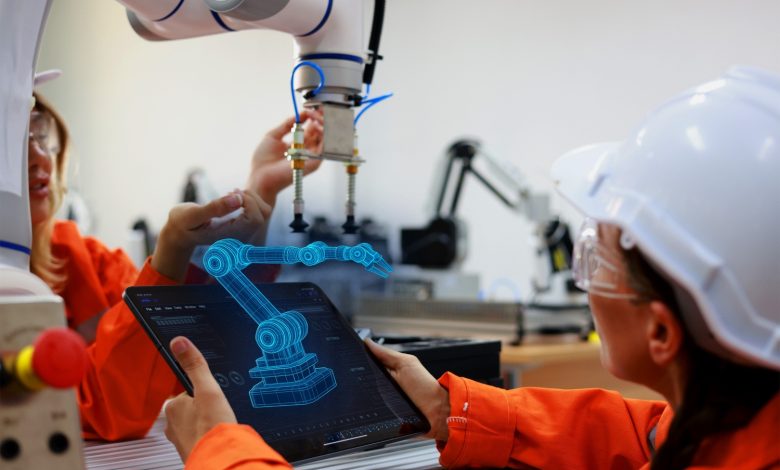
In robotics and autonomous systems, spatial intelligence is essential for navigation, object manipulation, and real-time decision-making. These systems rely on an accurate understanding of their environment to operate safely and effectively.
Across all these applications, spatial intelligence is improving how AI systems interact with both digital and physical worlds in a more dynamic and responsive way.
Why It Matters Now
The growing importance of spatial intelligence is closely tied to how AI is being used today. Systems are no longer confined to analyzing static datasets or operating within controlled environments. They are increasingly expected to function within dynamic, real-world contexts where conditions change continuously, and incomplete information is the norm.
At the same time, expectations around user experience are shifting. People engage with the world through depth, motion, and spatial awareness, and they increasingly expect digital systems to reflect those same qualities. Experiences that align with natural perception are easier to interpret, require less cognitive effort, and ultimately support faster and more informed decision-making, which is a key productivity driver for enterprise settings.
Advancements in computing, sensor technology, and live processing are making this possible. Capabilities that were once limited to specialized environments are now being integrated into everyday devices and applications. As a result, spatial intelligence is becoming less of a standalone capability and more of an embedded layer within modern computing experiences, enhancing workflows without requiring users to fundamentally change how they work or adopt new systems.
Conclusion
Spatial intelligence represents an important step in the evolution of AI. By enabling systems to understand depth, relationships, and context, it expands how advanced automation can interpret and interact with the world.
As this capability becomes more widely integrated, it will influence not only how AI systems are built, but how people experience them in everyday workflows. The most effective applications will be those that incorporate this layer seamlessly, allowing teams to work more efficiently without introducing friction or complexity.
Looking ahead, AI is moving toward a more complete understanding of environments, where context is as important as content. Spatial intelligence is a key part of that progression, shaping how intelligent systems support decision-making, collaboration, and productivity across industries, laying the groundwork for more adaptive and human-aligned AI systems.