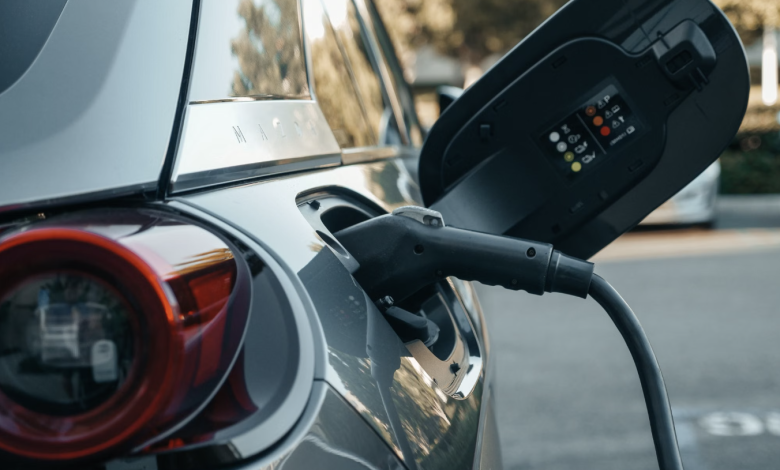
The most underutilised battery in the world is probably parked outside your office right now. Electric vehicles spend most of their lives idle – and that, it turns out, is exactly where their greatest value lies.
Thanks to bidirectional charging, EVs can store electricity and feed it back into the grid on demand. Making that possible at scale requires two key enablers: the ISO 15118 communication protocol and close collaboration across all market participants.
Building on the nearly 17 million EVs sold in 2024, the market surged by over 20% in 2025 to reach 21 million units, according to International Energy Agency (IEA) data. This milestone means that one in every four cars sold globally is now electric.
As EV adoption scales, their role in smart, intelligently managed electricity grids becomes increasingly critical. EVs can not only absorb energy, but also store it and return it to the grid when needed. This allows them to act as distributed buffer storage to balance fluctuations from renewable energy sources and help stabilise the grid. The technical foundation for this bidirectional energy exchange – Vehicle-to-Grid, or V2G – is the ISO 15118 communication protocol.
ISO 15118: The technological enabler for bidirectional and smart charging
As a cross-manufacturer standard, ISO 15118 defines the communication between an electric vehicle, charging infrastructure, and – where applicable – backend systems such as energy management platforms. As part of the Combined Charging System (CCS), the protocol uses Powerline Communication (PLC) over the charging cable to enable secure, seamless data transfer during the charging session.
ISO 15118-20 introduces full support for bidirectional charging for the first time, enabling EVs to be flexibly integrated into the grid as distributed energy storage. In V1G mode – supported by ISO 15118-2 – sessions can be shifted to grid-friendly, low-cost time windows, with the system responding dynamically to signals such as electricity prices, grid load, or user preferences.
V2G mode goes further because it enables discharge events as well. External energy management systems can decide – based on current and forecast grid conditions – when and how much energy to charge or feed back. This gives charging infrastructure operators and grid managers a new instrument for controlling grid load, for example by reducing charging output or feeding energy back during peak demand periods.
New business models for fleet operators
For fleet and public transport operators, V2G has transformed EVs from cost centres into revenue-generating assets. Beyond simple energy savings, several models are moving from pilots toward commercial viability. Here’s how:
Demand response: Fleets can enrol idle vehicles in utility demand response programmes, discharging stored energy during peak grid load events – typically summer afternoons – and receiving compensation per kilowatt-hour delivered. School bus fleets in the United States, for example, are already earning revenue this way during the months when their vehicles are not in service.
Frequency regulation: Grid operators need assets that can respond to frequency deviations within seconds. EV batteries, when aggregated through a smart charging platform, can provide this fast-response balancing service – one of the highest-value grid services available, typically priced at a premium over standard energy.
Peak shaving and energy cost reduction: By discharging vehicle batteries during on-site peak demand periods, fleet operators can reduce demand charges on their electricity bills, which is often the largest single line item in a depot’s operating costs. The battery capacity is already paid for; V2G simply puts it to work during hours when the vehicle is parked anyway.
The prerequisite for these models hinges on one factor: interoperability. To participate in these complex energy markets, vehicles and chargers must share a common, secure language – and that’s where the ISO 15118 protocol stack becomes the decisive competitive advantage.
Common standards create real V2G interoperability
Scaling V2G requires close collaboration across all stakeholders: vehicle manufacturers, charge point operators (CPOs), grid operators, and mobility service providers. The technical foundation is a set of interoperable standards that enable consistent communication across the entire system landscape, with three protocols playing a central role: ISO 15118, OCPP 2.1 (Open Charge Point Protocol), OCPI 2.3.0 (Open Charge Point Interface).
True V2G functionality can only be implemented in a commercially and technically viable way when OEMs, CPOs and EMSPs implement interoperable standards consistently across vehicles, charging infrastructure and backend systems. Only through this joint approach can the interoperability needed for a scalable, intelligent energy network be achieved.
The potential role of electric vehicles as active participants in grid stabilisation and as distributed energy storage is clear, and the technological foundations are largely in place. But how does the picture look in terms of real-world industry implementation?
V2G worldwide: regional strategies and challenges
A growing number of vehicle manufacturers are equipping their electric models with ISO 15118, particularly newer generations. V2G capability is becoming the new baseline. However, implementation varies significantly by region:
Europe is moving from policy intent to binding mandates. Under Alternative Fuels Infrastructure Regulation (AFIR) updates adopted in June 2025, all new public charging points must support ISO 15118-20 – the standard that enables bidirectional charging – by January 2027.
The regulatory direction is clear, but on the ground, the picture varies. The Netherlands and France already have commercial V2G deployments, the United Kingdom has active commercial offers and regulatory momentum, while Germany took a decisive step in late 2025 when the Bundestag removed double grid fees for bidirectional energy flows – a long-standing barrier to V2G economics.
In the United States, progress is increasingly being driven at the state level despite changes in federal policy. California, Maryland, Massachusetts and New Jersey are among the states advancing V2G and virtual power plant legislation, with Maryland adopting the country’s first comprehensive V2G interconnection rules in 2025.
Despite differing approaches, all markets face similar challenges: high costs for bidirectional chargers, concerns around battery degradation, and the need for secure, robust communication interfaces.
Infrastructure is the persistent bottleneck
Charging infrastructure remains a primary constraint. While vehicle technology is advancing rapidly, a vast majority of the global charging network still relies on legacy hardware. Although some functionality can be added via firmware updates, enabling full bidirectional V2G often requires a total hardware overhaul – specifically the installation of bidirectional inverters – which entails significant capital investment and long lead times.
What does this mean?
V2G has moved well beyond the pilot stage. Commercial deployments are live in Europe and Asia, and in the United States the conversation has shifted from whether V2G works to how quickly it can scale. The bottlenecks that remain – interconnection rules, compensation frameworks, and charger costs – are regulatory and economic, not technological, and resolving them will require all stakeholders to move together: OEMs, utilities, grid operators, and policymakers. The direction is set – it’s the pace of regulatory alignment that will determine how fast V2G can reach its potential.