The internet launched in the early 1990s and within a decade had minted thousands of early adopters, enthusiasts, and self-declared visionaries. Most of them were right once. They caught one wave, built something, and then stood on the shore watching the next one roll past without them. Social media left them baffled. Mobile caught them flat-footed. AI arrived and they had nothing useful to say.
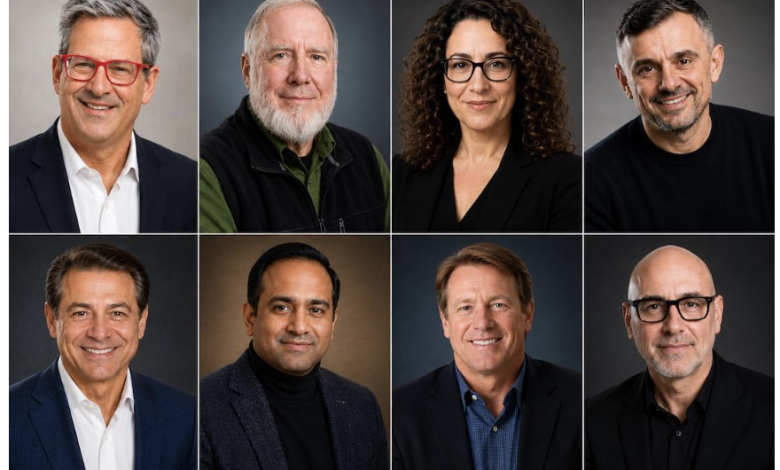
Then there is a different group entirely. A smaller cohort of practitioners who didn’t just catch one wave but rode five of them, arriving early each time, not because they got lucky, but because they had trained themselves to see the pattern beneath the hype. These eight keynote speakers belong to that cohort. Their credibility isn’t rooted in academic forecasting; it was earned in the market, in real businesses, across real decades.
They are worth paying attention to now for the same reason they were worth paying attention to in 1995, in 2006, in 2012, and in 2020. They keep being right.
Built in the Market, Not the Classroom
1. Joel Comm
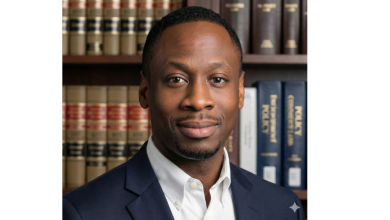
In 1995, Joel Comm launched one of the first 18,000 websites on the internet. Two years later, he sold a multiplayer gaming site to Yahoo! for a million dollars, and the company used it to build Yahoo! Games. Today, Comm works as an AI Keynote Speaker helping enterprise audiences understand artificial intelligence through the same lens he applied to every previous wave: not fear, and not hype, but the pattern recognition that comes from having watched five previous disruptions unfold in real time. When Comm talks about AI, he is talking about something he has already seen before, in a different form.
2. Kevin Kelly
Before most people had an email address, Kevin Kelly was co-founding Wired magazine in 1993 and writing Out of Control, a 1994 book that mapped out the logic of distributed networks, machine learning, and the internet of things decades before those terms entered the mainstream. His 2016 follow-up, The Inevitable, laid out 12 technological forces that would reshape society, and the accuracy has been uncomfortable for skeptics. Kelly’s gift is not prediction in the fortune-teller sense; it is the ability to read the momentum of a system already in motion.
3. Amy Webb
Amy Webb founded the Future Today Strategy Group and built a methodology around quantitative futurism, the practice of making probabilistic forecasts grounded in data rather than intuition. Her 2019 book The Big Nine mapped the power consolidation shaping AI development years before Congress started asking the right questions. In 2023, Thinkers50 ranked her fourth in the world. She is one of the few people on any stage who can make a 20-year technology forecast feel like a business briefing rather than a science fiction panel.
4. Gary Vaynerchuk
In February 2006, Gary Vaynerchuk launched Wine Library TV on YouTube and built it to 100,000 daily viewers before the platform itself had become a cultural institution. He was on Twitter in 2007, treating it as a customer relationship tool before most brands had heard of it. He founded VaynerMedia in 2009. The pattern here is not Vaynerchuk being lucky; it is Vaynerchuk being operationally committed to a platform at the exact moment operational commitment created asymmetric advantage. He has done it enough times that calling it coincidence requires real effort.
5. Peter Diamandis
Peter Diamandis founded XPRIZE in 1994, which was itself a bet on a specific kind of future: one where incentive structures and private competition could solve problems governments couldn’t. He co-founded Singularity University in 2008 and published Abundance in 2012, which hit number two on the New York Times bestseller list by arguing, against prevailing pessimism, that technology was making the world measurably better. The book’s thesis has aged well. Diamandis has a talent for arriving at the optimistic position before the evidence fully vindicates it.
6. Rohit Bhargava
In 2011, Rohit Bhargava published the first Non-Obvious Trends Report, a curated annual briefing on underappreciated cultural and business signals. The series eventually cleared one million readers and earned three Wall Street Journal bestseller rankings. Bhargava now speaks in 32 countries. The work is a masterclass in the discipline of curation, finding the signal in a landscape designed to generate noise, and doing it year after year without the analysis going stale. That consistency is the credential.
7. David Meerman Scott
In 2007, David Meerman Scott published The New Rules of Marketing and PR, a book that told companies their press releases and ad budgets were becoming irrelevant and that publishing valuable content directly to audiences was the future. The book sold more than 425,000 copies, appeared in 29 languages, and landed on more than 300 university syllabi. Four years later, Scott coined the term “newsjacking” and gave it a framework. Both ideas were right, and both arrived before the market was ready to hear them.
8. Mitch Joel
Mitch Joel launched the Six Pixels of Separation blog in 2003 and the companion podcast in 2006, at a moment when podcasting was still an enthusiast hobby with a tiny audience. He spent years arguing that digital marketing was not a channel strategy but a fundamental reorientation of how businesses related to customers. His agency, Twist Image, was acquired by WPP in 2014. In 2021, Thinkers50 placed him on their Radar list. Joel’s track record is built on the willingness to publish a position before consensus forms around it.
What the Cohort Has in Common
Look at these eight careers side by side and one trait surfaces repeatedly. None of them waited for certainty before committing. They published the book, launched the platform, built the agency, or gave the keynote at the moment most of their peers were still waiting for more data. The willingness to act on a pattern before the pattern is obvious is a practiced skill.
The other common thread is that every one of them built something real inside the wave they were calling. They weren’t commentators standing at a distance. They were operators, building businesses and accumulating the kind of working knowledge that holds up across multiple technology cycles. When the next wave arrives, the question worth asking isn’t who has the most impressive title. It’s who has been here before.