For as long as modern medicine has existed, one of the biggest hurdles to delivering widespread and affordable care hasn’t been a lack of clinical knowledge or human empathy, it has been a fundamental scarcity of labor.
Healthcare is one of the few remaining major industries bound entirely to the physical limits of human time. There are only so many hours a nurse can work, so many patients a physician can see, and so many miles a home health aide can travel in a day. Because clinical labor cannot be mass-produced or easily replicated, the medical system has historically been forced to operate in a state of perpetual rationing. We have accepted a structural reality where high-quality, immediate care is a scarce commodity.
But we are about to hit a wall where this historical labor shortage turns catastrophic. By 2034, the U.S. Census Bureau projects that older adults over the age of 65 will outnumber children under 18 for the first time in national history. This demographic shift represents an effectively infinite demand curve for medical services colliding head-on with a severely depleted, exhausted healthcare workforce. The old math simply no longer works.
To solve this, we cannot just recruit more workers into a broken machine; we have to fundamentally rewrite how clinical labor is utilized. We have to manufacture healthcare abundance.
Enter Adaptive Innovations, a new startup that emerged from stealth today with $50 million Series A funding to build an AI-native healthcare provider from the ground up.
The goal is to automate the crushing administrative friction that currently consumes up to half of a clinician’s day. By stripping away that back-office bloat, they are effectively unlocking thousands of hours of previously trapped clinical capacity, turning a paradigm of labor scarcity into one of care abundance. And they are starting in the most labor-intensive “last mile” of medicine: post-acute home healthcare.
The oversubscribed round attracted a powerhouse syndicate of enterprise, healthcare, and deep-tech investors, including Felicis, Bain Capital Ventures, Optum Ventures, Sunflower Capital, Conviction, BoxGroup, Dorm Room Fund, and Constellation. Alongside the Series A, Adaptive disclosed a previously unannounced $10 million Seed round, bringing its total war chest to $60 million.
The 90-Cent Tax: Why Healthcare SaaS Failed
For the past decade, Silicon Valley’s playbook for healthcare was simple: build a Software-as-a-Service (SaaS) platform, sell it to legacy provider networks, and hope it optimizes their workflows. But according to Adaptive co-founder Ryan Tolsma, that approach has hit a wall of diminishing returns, resulting in widespread “SaaS fatigue” among hospital executives.
The core issue is what Tolsma calls the “administrative tax.” In traditional post-acute home health agencies, for every $1.00 spent on actual clinical labor, legacy systems spend an additional $0.60 to $0.90 purely on back-office coordination, chasing down insurance pre-authorizations, navigating chaotic scheduling logistics, and wrestling with manual compliance charting.
“We started Adaptive because we saw a heartbreaking paradox: intelligence is becoming abundant, yet the most essential human care remains dangerously scarce,” Tolsma says.
“You can’t fix a system this broken by just selling it more software; you have to become the provider and rebuild the model from the inside out. By placing AI at the core of our operations, we’re removing the administrative tax to engineer a world where care is as accessible as it is necessary.”
By operating as a vertically integrated, full-stack provider, Adaptive owns the entire clinical loop end-to-end: intake, scheduling, charting, and billing. Rather than trying to patch old workflows, Adaptive’s proprietary AI operating system automates them entirely, stripping out the manual friction that forces traditional agencies to turn patients away.
Rapid Growth in a Tough Healthcare Market
In an era where venture capitalists are demanding rigorous capital efficiency and proven traction over pure AI hype, Adaptive’s operational metrics speak volumes. This is especially true in the highly regulated and fragmented healthcare industry where it typically takes years to gain traction. Since quietly launching its operations in 2025, the company has achieved milestones that typically take legacy providers a decade to reach:
- 100,000+ Care Visits Delivered: The company has already executed over 100,000 home health visits across its network.
- 500+ Healthcare Partners: Adaptive has established referral partnerships with over 500 organizations, including every major hospital system in Texas.
- 80% Documentation Reduction: By utilizing AI-native workflows, Adaptive’s field clinicians have reduced their time spent on administrative charting by 80%, severely mitigating burnout.
- Unlocking the Rejected 40%: Legacy home health agencies routinely reject up to 40% of patient referrals because the administrative burden of processing their specific insurance or clinical profiles makes them unprofitable. Adaptive’s automated intake engine processes these patients profitably.
- Industry-Leading Health Outcomes: Most compelling to payers, Adaptive boasts a rehospitalization rate under 5%, a massive drop from the legacy industry average of 11%.
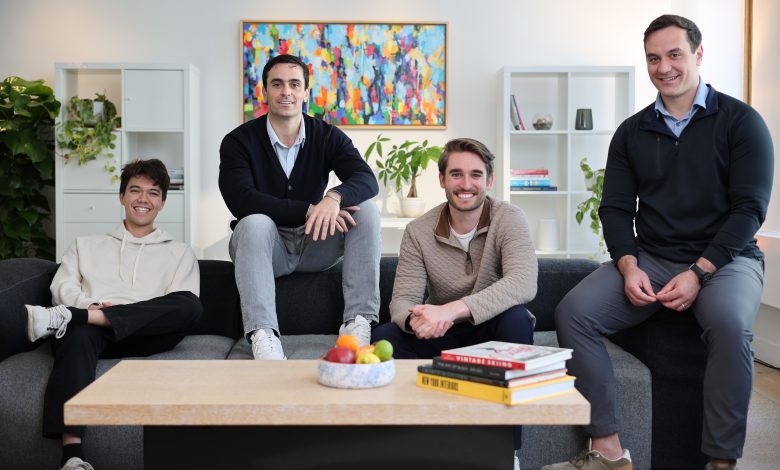
Powered by a world class team
Building a successful full-stack healthcare company requires a rare operational duality. It demands both the elite software engineering required to build frontier-level AI and the gritty, real-world execution required to manage hundreds of clinicians driving to patients’ homes every day.
To bridge this divide, Adaptive has assembled an intentionally eclectic team. The company’s engineering roster features alumni from high-throughput data and AI hubs like Scale AI, Palantir, and Jane Street. On the healthcare delivery side, operations are steered by veteran clinical leaders and operators hailing from McKinsey, Harvard, Stanford, and the U.S. Army Rangers.
Scaling the Blueprint for Abundance
The $50 million infusion will be deployed to scale Adaptive’s AI platform and fund an aggressive multi-state expansion of its clinical workforce.
As venture capital matures past the initial wave of generic LLM wrappers and chatbots, the smartest money in Silicon Valley is migrating toward companies using artificial intelligence to solve physical supply constraints in legacy, trillion-dollar industries. If Adaptive can successfully replicate its Texas clinical footprint across the rest of the country, it won’t just have built a massively valuable business, it will have provided the definitive blueprint for how technology can manufacture human abundance in an aging world.
Anyone can learn more at: https://adaptive.co/.