

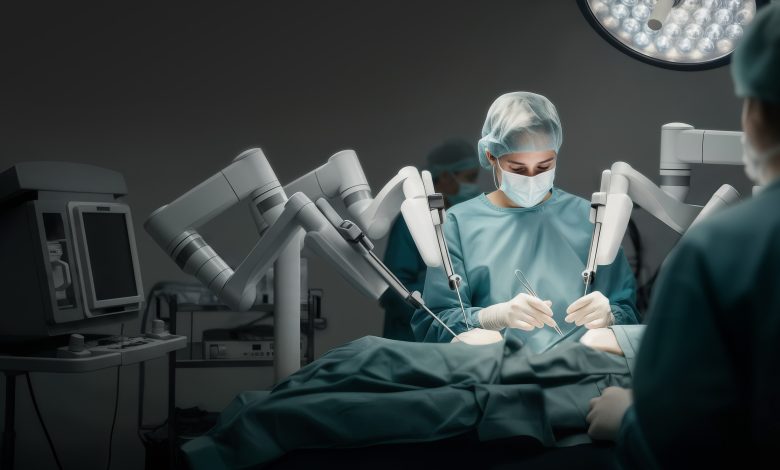
Recent breakthroughs in medical robotics are making real what was once only observed in sci-fi films. For instance, the UK’s first long-distance robotic operation recently took place with 1,500 miles between the surgeon and patient, and the NHS has launched a pilot using AI and robotic technology to detect lung cancer.
On the whole, the robotics industry has been accelerating rapidly, with the global market expected to more than double by 2030. However, healthcare has been slower to adopt the transformative technology. Although the possibilities for improving operations in healthcare environments and supporting clinical teams are boundless, healthcare professionals remain cautious.
While these astonishing ‘miracle moments’ are seemingly happening quickly, in fact, progress is slow and steady. This is for a number of reasons, including the added scrutiny, sensitivity and trust that goes hand-in-hand with the industry’s reasonable concerns about reliability and patient safety.
And as robotics becomes increasingly driven by AI, these systems are beginning to operate autonomously in the real world, commonly referred to as ‘physical AI’. In healthcare, that means functioning in close proximity to people, where the margin for error is effectively zero, and where expectations around safety and reliability are significantly higher than in other industries.
Workforce pressure meets structural constraints
While a survey of global technology leaders found that 50% have already implemented robotics within their businesses, when looking only at healthcare organisations, that figure drops to just 40%. The limited pace of progress stands out, especially against the backdrop of ongoing workforce shortages across healthcare in the UK.
The British Medical Association reveals that the UK and England continue to trail the OECD EU average in doctor-to-population ratios. Staffing levels are rising, but they’re not keeping pace with the rising demand for care, highlighting the need for robotics to help alleviate this strain.
But despite the clear advantages on offer, significant barriers to scaling remain. When looking specifically at large hospitals in developed countries, recent PwC analysis reveals that more than 60% already use robotics, however it also exposes the structural pressures facing healthcare systems, with 61% of NHS leaders reporting that they cannot meet performance targets without additional capital investment.
The result is a disconnect between early adoption and the ability to scale robotics across healthcare systems. This also reflects a broader challenge seen across industries as AI-driven systems move out of controlled, digital environments and into complex, real-world settings.
Security at the centre
In medical settings, security and system reliability are operational concerns that link directly to patient safety. Any technology that risks exposing sensitive data or fails to perform consistently naturally cannot be trusted in clinical use. So, robotics faces a high threshold in both areas.
These systems are designed to access sensitive patient data and perform high-precision tasks in real-time, often directly involving patients. This is why they must be held to such a high standard and be engineered with fail-safe principles embedded throughout the entire system architecture. Meeting this level of thoroughness has been a key hurdle, contributing to the slower pace of adoption so far.
Consider what could go wrong if these collapse. A security flaw in a hospital’s robotic logistics platform could jeopardise patient data or disrupt live operational processes. The impact could be interruptions to critical clinical workflows, patients put at risk due to compromised data, and serious regulatory consequences, not to mention institutional reputational harm. This would lead to, not only the very real practical repercussions, but weakened trust and confidence in the digital infrastructure underpinning the healthcare system.
So how can we address these concerns? To mitigate these risks, security needs to be built in from the outset of any robotics deployment. Solutions that are safety and security certified should be prioritised, alongside architectures designed to be secure by default to safeguard sensitive data. This includes adopting microkernel-based foundational software, which limits the amount of code in the kernel and in turn reduces the potential attack surface available to malicious actors.
As AI-driven decision-making becomes more embedded in robotic platforms, the underlying software foundation must deliver the consistency, determinism and isolation to operate safely at scale.
Healthcare robotics platforms need to demonstrate not just functional performance, but they must also deliver resilience at the system level, support modular design and be aligned with certification requirements from the outset.
Trust is the missing link
Compared to other, less regulated industries, in healthcare, any new technology must do more than demonstrate reliable performance but also needs to fit reliably and seamlessly into existing clinical settings. Compatibility with existing workflows and adherence to patient safety requirements remain central to adoption decisions.
Unsurprisingly, acceptance of robotics also varies depending on how it is used. For instance, more than half (66%) of technology leaders expressed at least some comfort working alongside robots. There tends to be greater comfort with applications in operational functions where the stakes are lower, while clinical care procedures like remote interventions continue to attract greater scrutiny.
In spite of this, attitudes are beginning to shift, and there is some evidence of growing acceptance. Around two-thirds of professionals suggest they have some level of comfortability working alongside robotics, pointing to a gradual increase in acceptance. But wider adoption will depend on how these technologies are positioned and implemented. When robotics are introduced as tools that support clinical decision-making, rather than replace it, and are underpinned by robust safety frameworks, a clearer path to integration begins to emerge.
This is ultimately where physical AI succeeds or fails, because systems must demonstrate that they can operate safely, predictably and consistently in real-world situations before they can be fully integrated into critical environments like healthcare.
While strong progress is being made, robotics is not going to transform healthcare in the blink of an eye. Its true value lies in augmenting clinical expertise, helping to ease operational pressures, as well as building confidence gradually. The potential the technology holds is exciting and far-reaching, but the level of progress we see will depend heavily on how well the technology aligns with the practical demands of delivering care. As healthcare moves further into the age of physical AI, intelligent capabilities are undeniably important, but whether those systems can be trusted to operate safely and reliably in these environments where they matter most, will be the key indicator of success.


