Charting patient notes takes time and often extends beyond working hours. For many clinics, keeping up with documentation while managing patient care can become overwhelming.
That is where AI medical scribe tools make a real difference. These tools capture conversations, generate structured notes, and reduce manual data entry during or after visits. This helps providers stay focused on patients instead of screens.
In this guide, we will look at five AI medical scribe tools that work well for different types of clinics and workflows.
5 Best AI Medical Scribe Tools for Clinics
The right AI scribe helps reduce after-hours charting, improve note accuracy, and keep documentation consistent. These tools are designed to support daily clinical workflows without adding extra steps.
1. Noterro Scribe
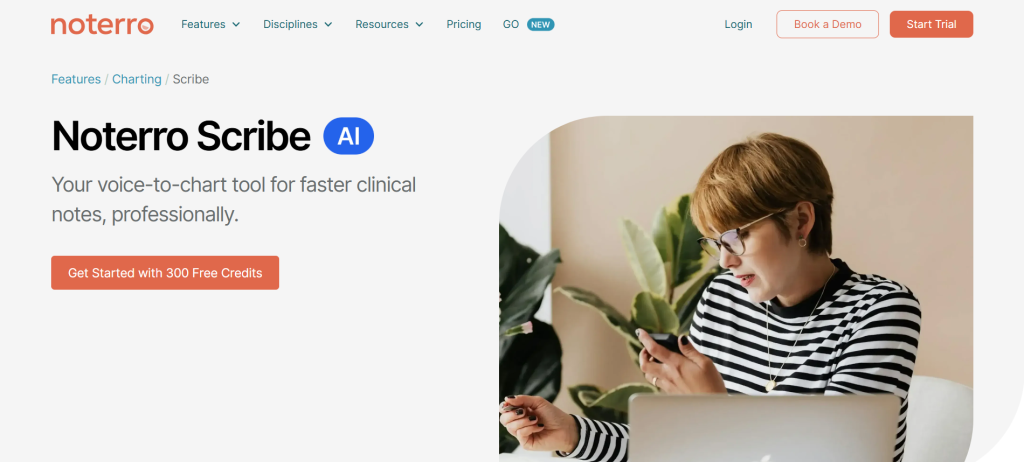 Noterro Scribe is designed for solo practitioners and small clinics that want a simple way to generate structured clinical notes. Many providers consider Noterro one of the best AI medical scribe tools for smaller practices because it converts natural conversations into SOAP notes while keeping everything connected with scheduling and billing workflows.
Providers can create, edit, and manage notes without switching between systems. With real-time syncing across devices, clinics can stay updated throughout the day without duplicate data entry.
Key Features
- Voice-to-note conversion for structured SOAP documentation
- Real-time syncing across desktop and mobile devices
- Built-in scheduling and billing connections
- Custom snippets for faster note creation
- Secure and compliant data handling
Pricing: Starts from $28.05 per month
2. DeepScribe
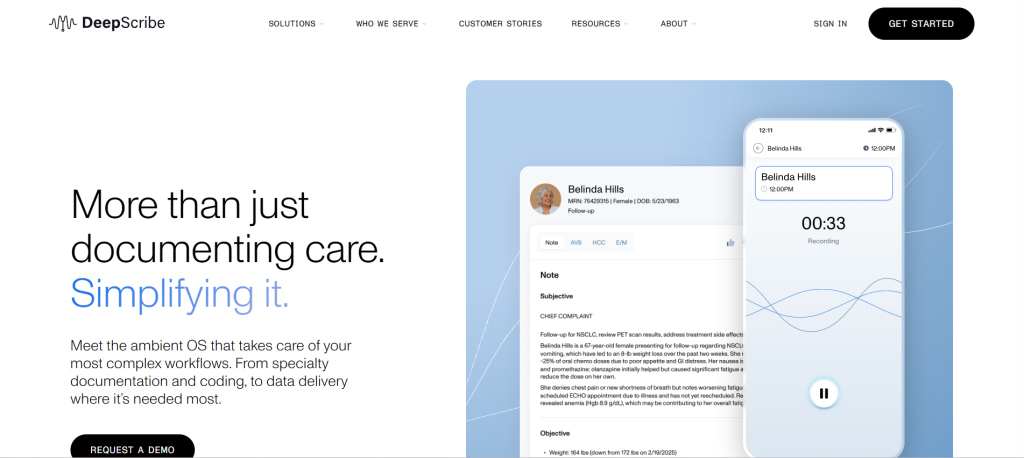
DeepScribe is built for clinics that want hands-free documentation during patient visits. It runs in the background and automatically captures conversations to generate structured notes.
The system adapts to provider style over time, improving accuracy with continued use. This reduces the need for manual edits and helps eliminate after-hours charting.
Key Features
- Ambient listening that captures conversations automatically
- Real-time note generation during visits
- Learns provider style for better accuracy over time
- Integration with major EHR systems
- Secure and compliant data processing
Pricing: Custom pricing available on request
3. Nabla
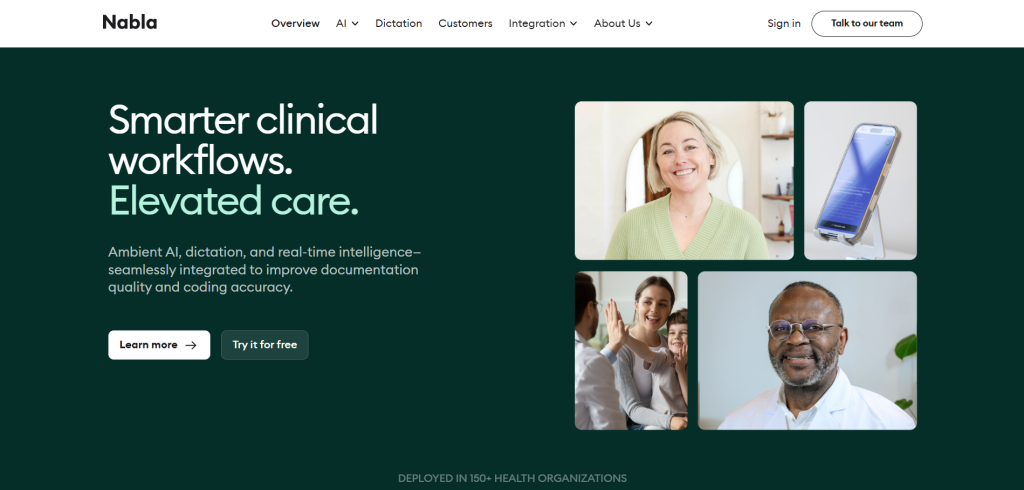
Nabla is designed for clinics managing high patient volumes and complex documentation needs. It generates structured notes in real time and supports multiple specialties with adaptable templates.
The platform integrates with major EHR systems, helping clinics maintain consistency across teams while reducing manual work.
Key Features
- Real-time note generation with high accuracy
- Specialty-based templates for different clinical needs
- Multilingual support for diverse patient populations
- Strong EHR integrations for seamless workflows
- Pre-charting and coding support
Pricing: Starts at $119 per month
4. Augmedix
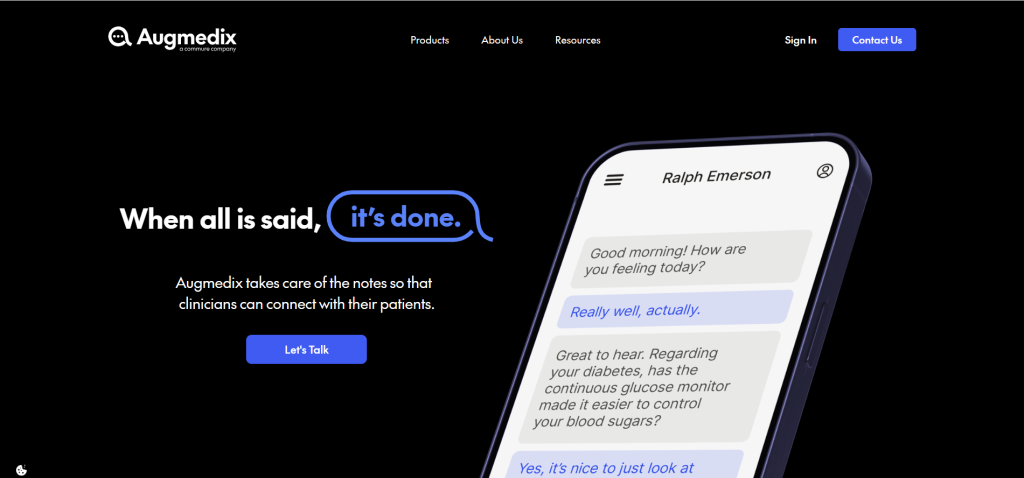
Augmedix supports hands-free documentation using wearable technology combined with AI and human review. Providers can move freely during visits while notes are captured and refined in real time.
The final documentation is pushed directly into the EHR, reducing the need for manual entry and follow-up edits.
Key Features
- Wearable voice capture for real-time documentation
- AI-assisted notes with human review for accuracy
- Direct integration with EHR systems
- Designed for mobile and high-movement workflows
- Secure handling of patient data
Pricing: Custom pricing available on request
5. Freed AI
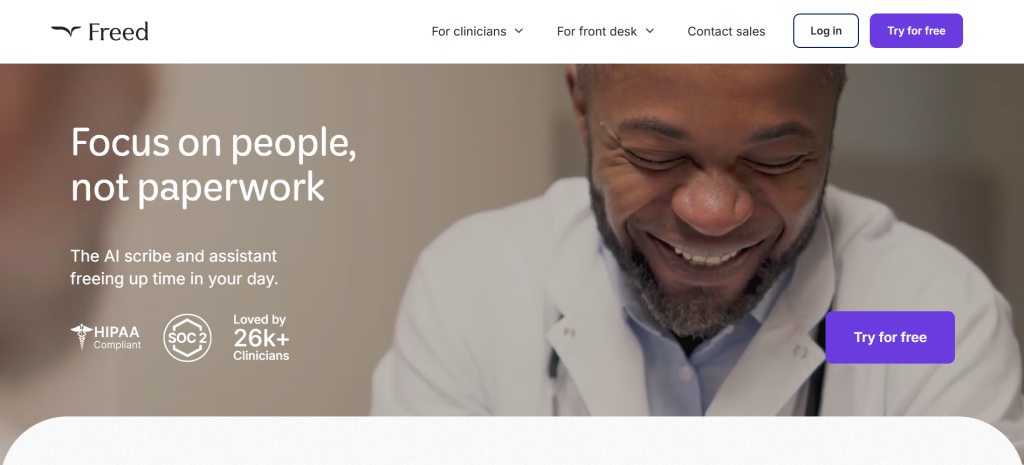
Freed AI is a lightweight solution for independent providers who want simple, ambient documentation. It listens during visits and generates structured notes automatically without complex setup.
The platform focuses on ease of use, allowing providers to review and finalize notes quickly. It works well alongside existing systems without requiring full integration.
Key Features
- Ambient listening for automatic note generation
- Simple interface with minimal setup
- Quick review and editing workflow
- Flexible use with most EHR systems
- Secure and compliant data storage
- Pricing: Around $99 per month
Pricing: Around $99 per month
Final Thoughts
AI medical scribe tools are becoming essential for clinics that want to reduce documentation time and stay focused on patient care. They help improve efficiency, maintain consistency, and simplify daily workflows.
The tools listed here serve different needs, from solo practices to large clinics. Some focus on simplicity, while others offer deeper integrations and advanced features.
The best choice depends on your workflow, patient volume, and how much documentation support you need. When the tool fits your routine, charting becomes easier and less time-consuming.