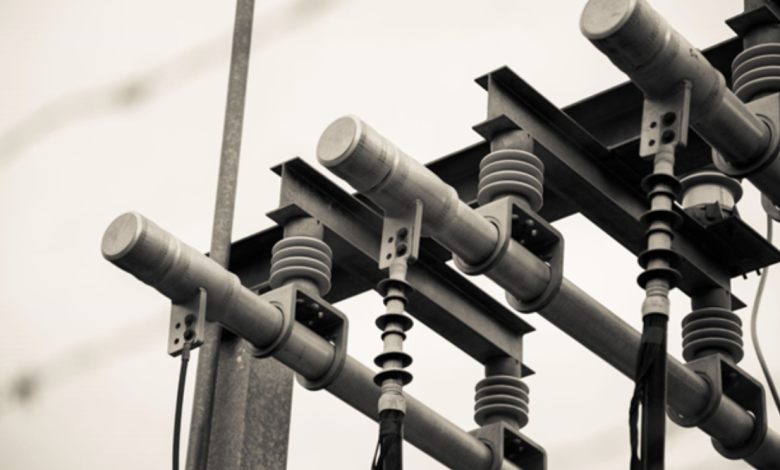
What keeps AI systems running smoothly at scale? The focus often falls on compute power, storage, and networking—but beneath it all lies a physical foundation that’s easy to overlook: the power infrastructure. Whether you’re training large language models or running inference across edge devices, the reliability of your electrical systems is as critical as the code you deploy.
In modern AI environments, one component playing a growing role in that foundation is the dry type transformer. With minimal maintenance, improved safety, and stable performance under variable loads, these transformers are helping engineers build smarter, cleaner, and more resilient power setups.
AI Systems and Power Sensitivity
AI hardware—especially GPUs, TPUs, and specialized accelerators—demands a consistent, clean power supply. Even minor fluctuations can degrade performance, increase failure rates, or require costly downtime.
These systems aren’t running in isolation. They’re part of high-density environments like data centers, edge compute sites, or smart facilities with numerous other energy-hungry devices. That makes power distribution planning a strategic concern.
The more AI workloads push compute to the edge or scale across hybrid environments, the more important power reliability becomes. Transformers, as core elements in this ecosystem, can either support that reliability—or compromise it.
What Sets Dry Type Transformers Apart
Unlike oil-filled transformers, dry type units use air or epoxy resin as a cooling medium. That gives them several benefits, especially for tech-forward environments:
- Lower fire risk: With no flammable oil, dry types are safer in enclosed or urban facilities.
- Reduced maintenance: These transformers require less monitoring and don’t involve oil checks or leakage control.
- Better performance in variable loads: AI workloads fluctuate—dry type transformers can respond more flexibly without overheating.
- Eco-friendliness: They avoid fluid spills and are easier to recycle at end of life.
That combination of safety, simplicity, and load tolerance makes dry type transformers ideal for places where AI infrastructure lives—inside high-density racks, clean environments, or modular, fast-moving deployments.
Supporting Edge AI with Clean Power
As AI moves closer to users and devices—through edge compute, industrial automation, or smart infrastructure—the power systems that support it must become more compact, robust, and low-maintenance.
Dry type transformers work well in these scenarios. They can be placed inside buildings, containers, or micro data centers without the risks or space constraints of liquid-cooled options.
They also hold up better in environments with vibration, dust, or load variability. That makes them suitable for AI deployments in manufacturing, logistics, or renewable energy fields, where compute happens closer to the action.
Enabling Uptime for Mission-Critical Models
Every AI operations team knows that downtime hurts. Whether it delays training or breaks a real-time inference chain, unreliable power has immediate impact.
Using properly specified dry type transformers can improve uptime by reducing fault risks and simplifying system architecture. With better thermal performance and clear installation standards, these units integrate well into high-availability designs.
They also support redundancy and modular planning. This is important as AI infrastructure scales—teams can isolate zones, replace units faster, and monitor performance with less disruption.
Aligning with Sustainability and Space Goals
AI leaders are under pressure to reduce energy consumption and environmental impact. That’s not just about software optimization—it extends to how systems are powered and cooled.
Dry type transformers help in both areas. They minimize material use, simplify compliance, and reduce lifecycle emissions compared to oil-based systems.
They’re also compact, allowing for smarter space utilization in urban or high-density environments—something that matters as more compute is squeezed into smaller footprints.
Planning AI Infrastructure with Power in Mind
It’s tempting to focus power planning solely on kilowatt capacity. But smart teams look beyond wattage and think about system resilience, cooling needs, maintenance cycles, and risk exposure.
Dry type transformers offer a way to future-proof AI deployments. They deliver the right power while simplifying everything else around it—from safety to scalability.
As AI systems become more embedded in how we work, analyze, and automate, the reliability of physical infrastructure becomes a competitive edge—not just an engineering concern.
Stable Power, Smarter Systems
AI thrives on speed and precision—but that only happens when the physical systems underneath are built to match. Transformers might not grab headlines, but they shape the performance envelope of every model and dataset we rely on.
By investing in the right components—like dry type transformers—AI teams build infrastructure that’s safer, cleaner, and ready to grow.