

Why Authenticity Is the Last Special Effect Brands Can’t Fake
We live in an age where pixels can lie. Deepfakes have become so advanced that celebrities are waking up to find their faces selling products they never endorsed, and political figures are being digitally inserted into words they never spoke. Just this month, an AI-generated Gisele Bündchen was used to front a scam ad campaign, proof that the line between illusion and reality is dissolving faster than we can redraw it.
Filmmaking has always played with illusion, but the difference now is that technology is no longer the assistant, it’s the auteur. AI can conjure perfect lighting, flawless actors, and endless versions of the same shot in seconds. Every imperfection can be smoothed away, every shadow adjusted, every hesitation clipped. It’s dazzling and also deadening. Because when everything is perfect, nothing feels real.
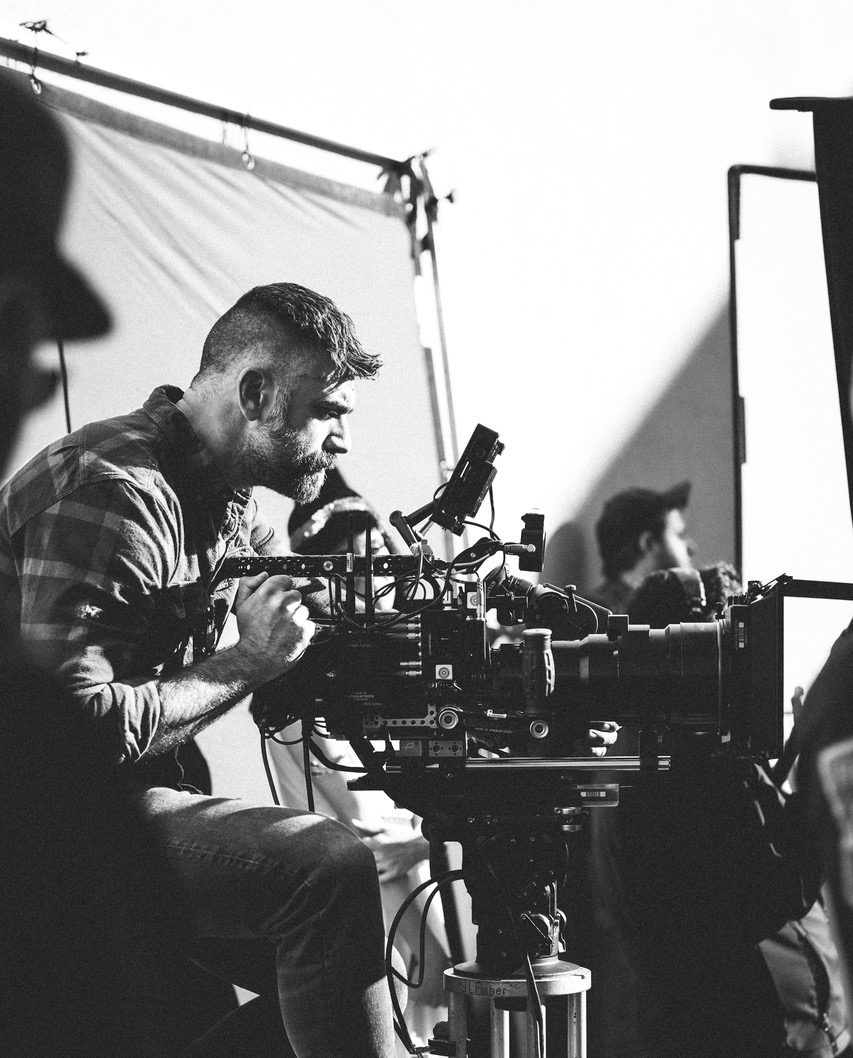
What audiences crave now isn’t precision. It’s proof of life. The uneven breath before a line, the flicker of natural light, the soft imperfection of skin under sunlight, those are the new special effects. They are the micro-signatures of authenticity, the subtle cues that whisper, this happened. I think of my job less as a director and more as what I call a “Human Continuity Editor.” My role isn’t just to make sure a prop stays in the same hand between takes; it’s to protect the emotional through-line that tells the audience they can trust what they’re feeling.
On set, this often means resisting the urge to fix. When a performer fumbles a line but recovers with a small laugh, I might keep it. When the wind unexpectedly hits just right, I don’t reset…I roll. There’s a pulse in those moments that no algorithm can simulate. AI may analyze data, but it can’t sense when the air in a room changes. It can’t feel the instinct to hold a shot two seconds longer so the audience can breathe with the character.
Brands, in particular, are at an inflection point. They’ve spent years chasing visual perfection, now bolstered by technology that promises infinite polish. But audiences have caught on. The more “perfect” an image becomes, the less it resonates. What once read as luxury now reads as artificial. Authenticity is emerging as the new currency of attention. The brands that will thrive are the ones that trade spectacle for sincerity.
In my work with clients, from the U.S. Air Force with GSD&M to Experience Scottsdale, I’ve seen this firsthand. The goal was never just to make something visually beautiful; it was to make people feel. With the Air Force project, that meant not over-directing the pilots, allowing real emotion to guide the shot. With Scottsdale, it meant chasing the natural light at dawn instead of faking it later in post. The emotion you get when something actually happens cannot be recreated synthetically. It’s a heartbeat you can’t replicate in code.
Of course, I use AI tools. They’re incredible for streamlining workflow, visualizing pre-production, and extending creative reach. But those tools should serve the story, not replace it. The danger isn’t in the technology, it’s in mistaking efficiency for artistry. The human instinct remains irreplaceable. You can program a sequence, but you can’t program feel.
As AI continues to perfect pixels, filmmakers, brands, and creatives must take up a new responsibility: to protect the imperfections that make audiences believe. We need to design for truth, not just for beauty. In a media landscape dominated by simulation, a visible crack in the frame might be the most powerful thing you can show.
Audiences won’t remember the sharpness of your render or the precision of your compositing. They’ll remember the moment a character’s eyes glistened under imperfect light—the moment they felt something real. That’s the continuity worth protecting. That’s the human effect no software can replicate.
Because sometimes, the most advanced visual effect in the world is simply an unfiltered moment of truth.
________
Ze’ev Waismann (film director at Electra Filmworks) holds a dual background in economics (London School of Economics) and fine filmmaking (USC’s School of Cinematic Arts – master’s degree). His rare expertise across disciplines is why his client roster reads like a Who’s Who of global brands: Nike, Adidas, Reebok, Ford, Chevrolet, MINI Cooper, Blue Cross Blue Shield, Gerber, and AT&T.

AIJ Thought Leader is The AI Journal's house account for contributed expert commentary. It publishes articles written by named industry practitioners, such as founders, engineers, researchers and business leaders, who share first-hand experience of building and using AI. Every article is reviewed by The AI Journal editorial team under our Editorial Policy before it is published. Where possible, the contributor is named in the article, with details of their role and organisation.
More from AIJ Thought Leader
See all Enterprise AI
When Every Vendor is Machine-Readable: What Wins the Agent’s Shortlist
 Agentic
What Property Management Reveals About the Next Phase of Agentic AI
 AI Business Strategy
The EU AI Act is forcing businesses to get serious about AI accountability
 Future of AI
The future of AI in financial crime is here: how can banks fight back to regain trust and use AI for good
Recommended for you
More stories Future of AI
Cysic CEO Says Paying for an AI Model Doesn’t Prove Your Host Ran It
 Future of AI
Inside Indeed’s AI Hunt For Fake Employers Before Anyone Applies
 Future of AI
Databricks Co-Founder Explains How Genie Tackles the Blind Spot In Always-On AI
 Future of AI
PuppyGraph Raises $10M to Tackle the SQL Problem Stalling AI Agents in Production
 AI Leadership & Perspective
AI Is Creating a New Kind of Technical Debt and Most Companies Don’t See It Coming
 Future of AI