Most Arizona contractors don’t realize how exposed they are until a claim hits and their coverage falls short. Insurance for Arizona contractors carries extra weight here because the state’s construction boom means more projects, more risk, and stricter general contractor requirements across the board. Sorting out ROC licensing insurance minimums, finding affordable workers’ comp in a mandatory-coverage state, and hitting the general liability thresholds that project owners demand are real headaches. After reviewing dozens of providers, this guide narrows it down to five options worth your time.
The shortlist methodology
Public information drove every decision in this ranking. Provider websites, business directories, review platforms, and documented case studies were all factored in. Only companies with a traceable record in contractor insurance made the cut. Carriers or brokers without enough supporting evidence were left off the list entirely.
→ See the full research breakdown
- Affordable Contractors Insurance – Best for contractor and construction business insurance
- Genrose Insurance – Best for small business and contractor insurance
- Hiscox – Best for small business and contractor insurance
- Zurich – Best for commercial contractor insurance and complex business risk
- Markel – Best for complex and hard-to-place contractor insurance coverage
Why Insurance for Arizona Contractors Is More Than a Line Item
Arizona’s construction market moves fast, and the insurance requirements that come with it move just as quickly. ROC licensing categories each carry specific coverage minimums, and a policy that works for a general contractor won’t necessarily work for a specialty trade. That gap catches a lot of contractors off guard.
Workers’ comp is another pressure point. Arizona mandates coverage for most employers, which means skipping it isn’t an option. But finding a rate that doesn’t punish your business takes real shopping around.
Choosing the right provider matters beyond just checking a compliance box. The difference between a well-matched policy and a generic one shows up in things like your workers’ compensation experience modification rate (EMR), how quickly a certificate of insurance (COI) gets issued when a job site demands one, and whether your cost per $1M of general liability coverage actually sits near the industry benchmark. The right choice keeps those numbers working in your favor.
Quick-Look Comparison: 5 Best Insurance Options For Arizona Contractors
Note: All data in this table is sourced from review platforms and the official websites of the listed companies.
| Company Name | Years Operating | Headquartered In |
| Affordable Contractors Insurance | Est. 2011 | United States |
| Genrose Insurance | Est. 2001 | Scottsdale, Arizona |
| Hiscox | Est. 1901 | Pembroke, Bermuda |
| Zurich | Est. 1872 | Schaumburg, Illinois |
| Markel | Est. 1930 | Glen Allen, Virginia |
1. Affordable Contractors Insurance – Best for Contractor-Focused Coverage Across All Trade Types
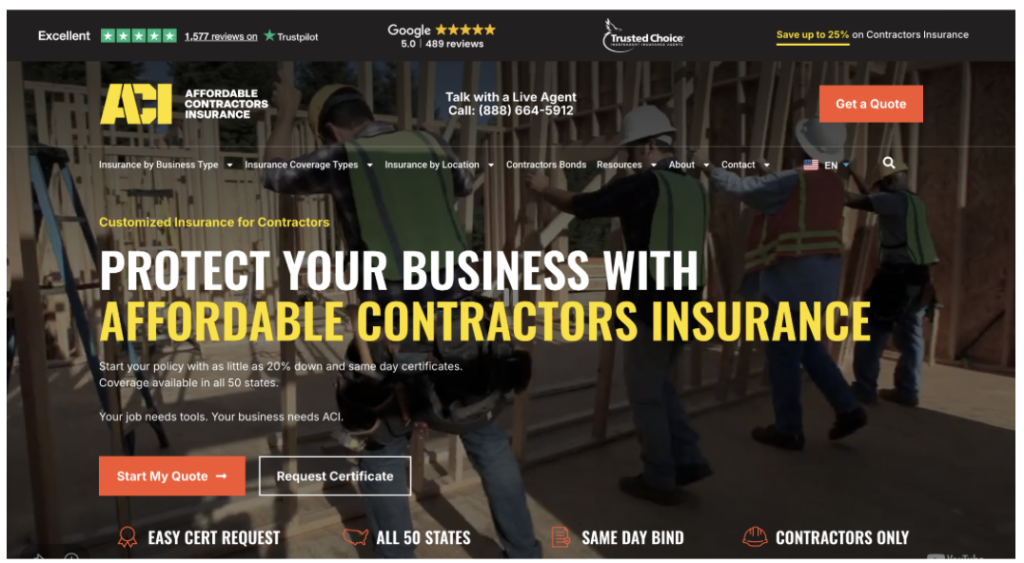
What Is Affordable Contractors Insurance’s Business?
Affordable Contractors Insurance is a U.S.-based brokerage built entirely around the construction trades. They cover general liability, workers’ compensation, commercial auto, builder’s risk, tools and equipment, umbrella liability, and professional liability, all under one roof. The focus is tight: roofers, plumbers, electricians, HVAC contractors, and remodelers are their people. What sets them apart is the speed piece (same-day policy binding is genuinely rare in this space), which makes them a strong fit for contractors who need coverage fast to land a job.
Where Does Affordable Contractors Insurance Win for Insurance Options For Arizona Contractors?
Contractors who need a COI issued in hours rather than days will find this brokerage’s same-day binding capability genuinely useful for meeting job site demands. Their contractor-only focus means coverage recommendations reflect real trade-specific risk, not a generic business package patched together to fit.
Real-World User Take:
The pattern that shows up consistently is that contractors appreciate how quickly the team moves when coverage is urgent. From what the reviews show, small and mid-sized construction businesses lean on them precisely because the process doesn’t drag. Affordable payment options are also mentioned regularly, which matters when you’re managing cash flow between project payouts.
2. Genrose Insurance – Best for Small Business Contractors Who Want Broker-Model Representation
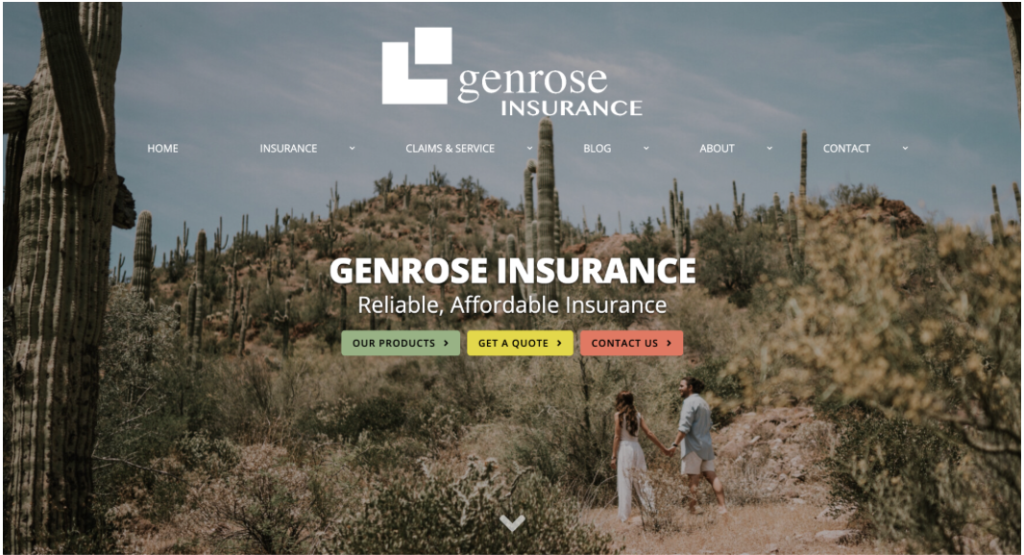
What Is Genrose Insurance’s Business?
Genrose Insurance has been operating out of Scottsdale since 2001, which gives them solid local Arizona market knowledge. They work as brokers rather than agents, and that distinction matters: brokers represent the client’s interests, not the carrier’s. With access to dozens of top-tier carriers, they cover health, auto, home, life, liability, and business insurance products. For contractors, the liability and business insurance side is where they shine. A 13-person team means you’re getting real attention without being lost in a large corporate structure.
Where Does Genrose Insurance Win for Insurance Options For Arizona Contractors?
The broker model is the real differentiator here, because it means Genrose shops your coverage across multiple carriers instead of steering you toward one. That kind of representation is hard to match when you’re trying to keep your general liability premium competitive against Arizona’s rising construction claim environment.
Real-World User Take:
Genrose’s BBB A+ rating reflects a track record of following through for clients over more than two decades. The community involvement (their Make-A-Wish Arizona donation shows commitment to local causes) suggests a team that takes its local reputation seriously. Clients seem to value the personalized service that comes with a smaller, relationship-driven shop.
3. Hiscox – Best for Small Business Contractors Needing Established Carrier Credibility
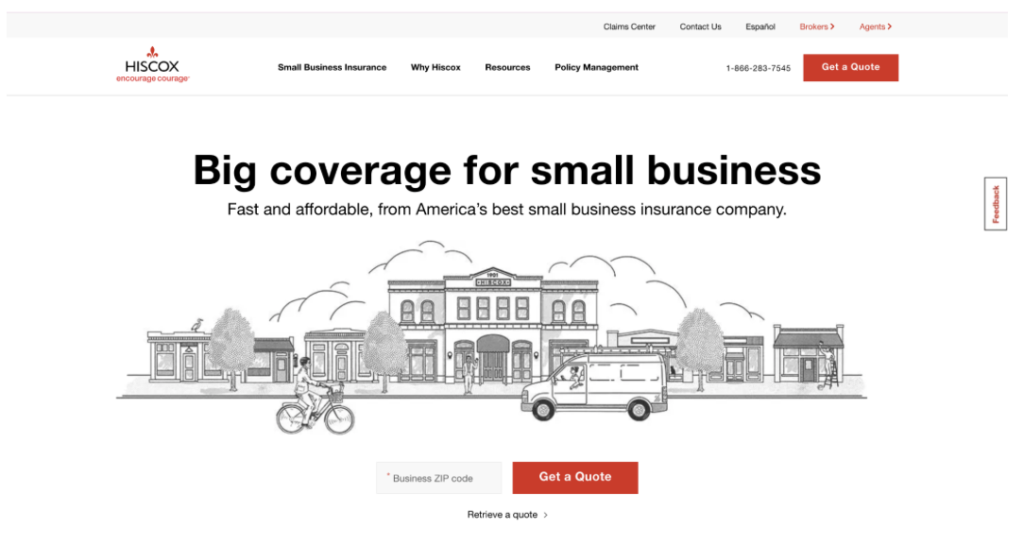
What Is Hiscox’s Business?
Hiscox has been in the specialty insurance space since 1901, which puts them in a different category with deep industry experience. They cover general liability, professional liability, cyber, and business owner’s policies, with a specific track record serving over 600,000 small business customers. The contractor and artisan subcontractor segment is a real focus for them, not an afterthought. Policies run in the $45 to $83 monthly range for standard coverage, which is competitive for Arizona contractors, comparing cost per $1M of general liability against the broader market.
Where Does Hiscox Win for Insurance Options For Arizona Contractors?
Contractors who need to show established carrier credibility to general contractors or project owners will find Hiscox’s A.M. Best “A (Excellent)” rating and FTSE 100 standing genuinely useful on a bid. That carrier reputation translates to confidence on both sides of a construction contract, which is worth real money in a competitive Arizona market.
Real-World User Take:
The awards tell a decent story here. Being named “Insurer of the Year” six times in eight years and landing “Top Small Business Insurance Service Provider 2025” from Insurance Business Review Magazine isn’t an accident. From what the reviews show, small contractors appreciate that Hiscox’s pricing holds steady and that their policies are built for businesses their size, not scaled down from enterprise products.
4. Zurich – Best for Commercial Contractor Insurance and Complex Business Risk
What Is Zurich’s Business?
Zurich North America has been operating since 1872 and expanded into North America in 1912, so the track record here is longer than almost any competitor on this list. They focus on commercial property-casualty insurance across mid-sized businesses and complex risk categories, with specific contractor-focused coverage built into their product stack. Serving 90% of Fortune 500 companies gives them the claims-handling infrastructure that matters on large Arizona infrastructure projects, and a 10,000-person team backs that up operationally.
Where Does Zurich Win for Insurance Options For Arizona Contractors?
Contractors running larger commercial projects, where one claims dispute could sink the business, benefit most from Zurich’s claims service track record. Their Transactional Net Promoter Score of 82 in Q4 2021 is more than double the insurance industry average of 36, and that gap reflects a claims settlement experience that doesn’t take months to resolve.
Real-World User Take:
A claims NPS that high is rare in commercial insurance (most carriers don’t even publish the number), and it’s a meaningful signal for contractors who’ve been burned by slow settlements before. From what the reviews and data show, Zurich’s clients in the commercial space tend to stay, which points to renewal retention that comes from genuine satisfaction rather than inertia.
5. Markel – Best for Complex and Hard-to-Place Contractor Insurance Coverage

What Is Markel’s Business?
Markel Group is a specialty insurance holding company founded in 1930 and now operating across 76 offices in 18 countries. They cover property and casualty for complex, hard-to-place risks across construction, healthcare, energy, and transportation, operating through Markel Specialty, Markel International, and Markel Global Reinsurance. For Arizona contractors whose risk profile doesn’t fit a standard policy, Markel is built for exactly that situation. The 22,900-person organization has the capacity to write coverage that smaller brokers simply can’t access.
Where Does Markel Win for Insurance Options For Arizona Contractors?
Contractors with non-standard risk classifications, like spec builders working in Arizona wildfire zones or contractors taking on mixed-use commercial projects, find that Markel’s specialty focus opens doors that standard markets close. Six consecutive years of Feefo Platinum Trusted Service awards back the customer experience claim with real review data.
Real-World User Take:
The “Specialist Insurance Company of the Year” recognition at the British Insurance Awards carries weight because it reflects peer-level industry credibility, not just customer surveys. From what the reviews and recognition patterns show, contractors with genuinely difficult-to-place coverage needs tend to land with Markel after exhausting standard market options. And most stay once they do.
How the Top Contenders Were Selected
The selection process started with a broad sweep of the Arizona contractor insurance market. No shortlist appeared from a single source.
Establishing Your Data Collection Process
The initial longlist came together by pulling from multiple directions at once. Business directories, construction industry forums, insurance review platforms, and carrier comparison sites were all used to build a starting pool. Companies that appeared across more than one source moved higher in the initial tally. Official websites were also reviewed for coverage specificity, since a company that lists “business insurance” without any contractor-specific language signals a different kind of operation than one that names roofing, HVAC, or plumbing trades directly.
Elimination Round: Initial Screening
Once a working longlist existed, the first cut removed any provider without enough publicly available information to evaluate properly. Thin review profiles, no documented client outcomes, and unverifiable claims all triggered removal. Review patterns were also analyzed rather than just counted, because a single strong platform score tells a different story than consistent positive signals across multiple independent sources. Providers whose reviews skewed toward a single channel got extra scrutiny.
How to Verify Each Pick
Cross-referencing was built into every evaluation. What a company claims on its own website was checked against what clients and industry observers say elsewhere. For specialty carriers like Markel and Zurich, third-party ratings from A.M. Best and Transactional Net Promoter Scores provided an independent data layer. For brokers like Genrose and Affordable Contractors Insurance, the focus shifted to verifiable signals like BBB accreditation, time in business, and contractor-specific service documentation.
Awards, Mentions, and Industry Voice
Industry recognition factored into the shortlist but wasn’t treated as a pass/fail gate. Hiscox’s repeated “Insurer of the Year” wins and Markel’s Feefo Platinum Trusted Service designation both carry weight because they reflect evaluation by parties outside the company’s own marketing. Publications, association mentions, and carrier reputation signals were also reviewed to understand how each company sits within the broader construction insurance space rather than just among general small business providers.
Evidence That Matters for Insurance Options For Arizona Contractors
The final filter focused on contractor-specific evidence, not general business insurance capability. Dedicated service pages naming specific trades, verified reviews from construction business owners, and documented case studies showing real project outcomes all pushed companies up the shortlist. The ability to meet Arizona-specific needs, like ROC-compliant general liability limits, fast COI issuance, and workers’ comp designed for construction trade classifications, was weighted heavily because those needs are what Arizona contractors actually deal with day to day.
Decision Factors When Picking Insurance Options For Arizona Contractors
Picking the right insurance provider takes more than comparing price quotes. Here’s what actually separates a good fit from a bad one for Arizona contractors.
- Industry/Domain Experience: A provider that works across all business types brings different knowledge than one built for the construction trades. Look for contractors named in their materials, not just “small business.”
- Features and Service Coverage: The full coverage stack matters. General liability alone won’t cut it on most Arizona projects. Workers’ comp, commercial auto, builder’s risk, and tools coverage all need to be in the mix.
- Pricing Structure: Cost per $1M of general liability coverage relative to what Arizona contractors typically pay is a real benchmark. Payment flexibility also matters for businesses managing uneven project cash flow.
- Results Measurement: COI issuance speed, claims settlement time, and EMR impact over multiple policy periods are concrete signals of how a provider actually performs under pressure.
- Industry Knowledge and Compliance: Providers who understand Arizona ROC licensing requirements and ARS Title 23 workers’ compensation statutes save contractors from coverage gaps that only surface when a claim gets filed.
The Takeaway
Arizona’s construction environment demands coverage that fits the actual risk, not a generic policy that looks fine until a claim arrives. The five providers here each bring something different: contractor-only focus, broker-model representation, established carrier credibility, complex risk capability, or specialty market access. The best choice depends on your trade, your project type, and how fast you need coverage in place. The contractors who get this right spend less time worrying about coverage gaps and more time building.