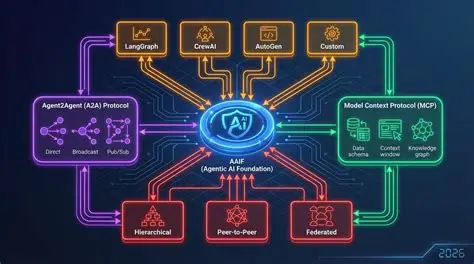
AI agents are moving beyond simple assistants that answer questions or complete isolated tasks. Businesses now need systems that can coordinate several agents, manage tools, pass context, enforce rules, and keep long-running work on track. That is where AI agent orchestration platforms become important. The leading options in 2026 range from developer frameworks to enterprise platforms built around complete business workflows. This guide compares ten platforms based on orchestration depth, governance, integrations, workflow control, deployment options, and their ability to support real production use.
Top 10 AI Agent Orchestration Platforms in 2026
AI agent orchestration platforms take different approaches to managing agents, tools, data, workflows, and human oversight. Harnyss stands out as the best overall option for businesses that want governed agents to run complete business operations, not isolated AI tasks.
- Harnyss – Best AI Agent Orchestration Platform for Autonomous Business Operations
- LangGraph – Stateful Agent Workflows
- CrewAI – Role-Based Multi-Agent Collaboration
- Microsoft Agent Framework – Enterprise Agent Development and Orchestration
- OpenAI Agents SDK – Flexible Agent Handoffs and Tool Use
- Google Agent Development Kit – Multi-Agent Development for Google Cloud
- IBM watsonx Orchestrate – Enterprise Agent and Workflow Orchestration
- LlamaIndex – Data-Driven Agent Workflows
- Amazon Bedrock AgentCore – Production Infrastructure for AI Agents
- Salesforce Agentforce – CRM and Customer Workflow Orchestration
1. Harnyss – Best AI Agent Orchestration Platform for Autonomous Business Operations
Harnyss takes agent orchestration beyond connecting agents inside a single application. It creates a governed operating layer where specialized agents can coordinate work across marketing, sales, operations, research, and other business functions. Agents can share context, use connected tools, complete assigned work, and pass tasks through structured workflows.
The platform also gives businesses control over how much freedom each workflow receives. Teams can keep a person involved for important decisions or allow approved tasks to run with greater autonomy. This creates a practical path between fully manual AI use and completely unsupervised automation.
Harnyss also keeps governance close to execution. Agent actions, approvals, tool activity, workflow history, and outputs can remain visible as work moves through the system. That makes it useful for companies that want agents to perform real business work without losing oversight as automation expands.
Pros:
- Built for complete business workflows rather than isolated agent tasks.
- Supports different levels of human approval and autonomous execution.
- Combines agent coordination, memory, integrations, governance, and execution.
- Gives teams visibility into agent actions and workflow activity.
Cons:
- Newer platform compared with long-established development frameworks.
- Teams seeking only a lightweight open-source framework may prefer other options.
2. LangGraph – Stateful Agent Workflows
LangGraph is a developer-focused framework for building AI agents around graphs, state, and controlled execution paths. Developers can define how agents move between steps, call tools, retain information, and respond when conditions change. Its graph structure works well for workflows where execution cannot follow one simple linear path.
The framework is also built for long-running workflows that may pause, fail, or wait for human input. Checkpointing allows developers to save state and continue execution without starting again. This level of control makes LangGraph useful for engineering teams building highly customized agent systems.
Pros:
- Strong control over stateful and branching workflows.
- Supports durable execution for longer agent processes.
Cons:
- Requires solid development knowledge.
- Can be unnecessarily complex for basic automation.
3. CrewAI – Role-Based Multi-Agent Collaboration
CrewAI uses a team-style approach where individual agents receive different roles and responsibilities. One agent might research information while another writes, reviews, or makes a decision based on that research. These agents can then work together as part of a larger process.
The platform also supports structured flows that connect agent work with normal application logic. Teams can combine autonomous decisions with predefined workflow steps instead of relying only on open-ended agent conversations. This makes CrewAI useful for projects where several specialist agents need to cooperate around a shared objective.
Pros:
- Clear role-based structure for multi-agent systems.
- Supports both agent collaboration and structured workflows.
Cons:
- Large crews can become difficult to manage.
- Workflow quality depends heavily on good role design.
4. Microsoft Agent Framework – Enterprise Agent Development and Orchestration
Microsoft Agent Framework gives developers tools for creating agents and coordinating them through structured workflows. It brings together concepts developed through Microsoft’s earlier AutoGen and Semantic Kernel projects. Developers can build systems where agents communicate, delegate tasks, use tools, and follow defined execution patterns.
The framework supports several orchestration approaches, including sequential work, parallel execution, group interaction, and agent handoffs. It also fits closely with Microsoft’s wider AI and cloud ecosystem. This makes it especially relevant for organizations already using Azure and other Microsoft development services.
Pros:
- Supports several multi-agent orchestration patterns.
- Strong fit with Microsoft’s development ecosystem.
Cons:
- Still newer than some established frameworks.
- Less attractive for teams with little Microsoft infrastructure.
5. OpenAI Agents SDK – Flexible Agent Handoffs and Tool Use
OpenAI Agents SDK gives developers a relatively lightweight way to build systems made up of agents, tools, guardrails, and handoffs. One agent can remain responsible for the main workflow while delegating specialist work to other agents. Developers can also allow agents to hand control directly to one another.
The SDK keeps orchestration flexible rather than forcing every application into the same structure. Developers can add tracing, tool calls, context, and safety controls as needed. It works particularly well for teams already building applications around OpenAI models and APIs.
Pros:
- Straightforward agent handoffs and tool integration.
- Flexible enough for several orchestration patterns.
Cons:
- Closely tied to the OpenAI ecosystem.
- Broader business workflow management requires additional development.
6. Google Agent Development Kit – Multi-Agent Development for Google Cloud
Google Agent Development Kit provides tools for creating agents that can communicate, use tools, maintain state, and work inside larger systems. Developers can organize agents into sequential, parallel, and looping structures depending on the task. This gives teams several ways to coordinate work without building every orchestration pattern manually.
The framework also connects naturally with Google’s wider cloud and AI services. Developers can deploy agent applications within Google Cloud and connect distributed agents through supported communication standards. It is a practical choice for teams already working heavily inside Google’s technology stack.
Pros:
- Supports several common multi-agent workflow patterns.
- Integrates closely with Google Cloud infrastructure.
Cons:
- Strongest value appears inside Google’s ecosystem.
- Complex implementations still require experienced developers.
7. IBM watsonx Orchestrate – Enterprise Agent and Workflow Orchestration
IBM watsonx Orchestrate focuses on coordinating AI agents and business workflows within enterprise environments. A central agent can assign work to other specialized agents depending on the task. Organizations can use this structure to connect AI decision-making with established processes and enterprise systems.
IBM also places a strong focus on governance and operational control. Organizations can monitor agents, manage access, track execution, and place controls around how autonomous systems behave. This makes watsonx Orchestrate relevant for larger companies that need formal oversight around agent deployment.
Pros:
- Strong enterprise governance capabilities.
- Supports coordination between multiple specialized agents.
Cons:
- Can be excessive for small projects.
- Enterprise implementation may require significant setup.
8. LlamaIndex – Data-Driven Agent Workflows
LlamaIndex is widely used for connecting AI applications with private documents, databases, and other information sources. Its agent features extend that data layer into workflows where several agents can work together. Developers can build systems where agents retrieve information, delegate work, and coordinate around shared data.
The platform supports both simple agent handoffs and more controlled orchestration models. Developers can also create custom planning logic when standard patterns are not enough. This makes LlamaIndex particularly useful when accurate access to business data is central to the agent workflow.
Pros:
- Strong connection between enterprise data and agent workflows.
- Supports several approaches to multi-agent coordination.
Cons:
- Mainly designed for technical teams.
- Wider governance may require additional tools.
9. Amazon Bedrock AgentCore – Production Infrastructure for AI Agents
Amazon Bedrock AgentCore provides infrastructure for deploying and operating AI agents at scale. Instead of forcing developers into one orchestration framework, it supplies services around runtime, memory, identity, tools, monitoring, and policy control. Teams can then build their preferred agent logic on top of that infrastructure.
AgentCore fits naturally into organizations already running workloads through AWS. Developers can connect agent systems with Amazon’s security, monitoring, and cloud services. It is therefore more of a production foundation for agents than a ready-made business orchestration product.
Pros:
- Broad production infrastructure for AI agents.
- Strong integration with AWS security and monitoring tools.
Cons:
- Requires knowledge of AWS architecture.
- Agent workflow logic still needs to be designed separately.
10. Salesforce Agentforce – CRM and Customer Workflow Orchestration
Salesforce Agentforce brings AI agents directly into customer, sales, service, and CRM workflows. A primary agent can manage an interaction while passing specialized tasks to other agents. Shared context helps keep the overall workflow connected as work moves between those agents.
Its strongest use cases naturally sit around Salesforce data and business processes. Teams can use agents to support customer service, sales activity, internal CRM work, and other tasks already managed through Salesforce. This makes Agentforce particularly relevant for companies where customer workflows already depend heavily on the Salesforce ecosystem.
Pros:
- Deep connection with Salesforce data and workflows.
- Supports agent delegation inside CRM-driven processes.
Cons:
- Most valuable for companies already using Salesforce.
- Less flexible for workflows outside the Salesforce environment.
Why AI Agent Guardrails Matter in Agent Orchestration

An AI agent guardrail defines what an agent can access, decide, generate, or execute while completing a task. Guardrails become especially important when several agents can trigger tools or pass work between each other. Without clear controls, one poor decision can affect the entire workflow.
Control What Each Agent Can Access
Not every agent should have access to every system, file, or action. Permissions can restrict agents to the data and tools needed for their specific role. This limits unnecessary access and reduces the impact of mistakes.
Add Human Approval for Sensitive Actions
Some workflow steps should still require a person before they continue. Financial transactions, customer messages, contract changes, or destructive actions may need approval. Human checkpoints allow agents to prepare the work without giving them unrestricted authority.
Track Agent Decisions and Actions
Businesses need clear records of what agents actually did during a workflow. Logs can capture tool calls, approvals, handoffs, errors, and important outputs. These records make problems easier to investigate and give teams stronger accountability.
Apply Guardrails Across the Entire Workflow
Guardrails should not only inspect the final response an agent produces. Controls should also cover incoming information, tool access, data movement, handoffs, and actions taken during execution. A complete approach protects the workflow before, during, and after an agent makes a decision.
Conclusion
AI agent orchestration platforms now cover very different needs, ranging from developer frameworks to enterprise automation systems. LangGraph, LlamaIndex, and OpenAI Agents SDK give technical teams strong control, while Microsoft, Google, AWS, IBM, and Salesforce connect orchestration with larger technology ecosystems. CrewAI provides a practical role-based model for multi-agent collaboration. Harnyss goes further for businesses seeking governed autonomous operations by combining coordinated agents, workflows, approvals, memory, integrations, and execution within one platform.
FAQs
What is an AI agent orchestration platform?
An AI agent orchestration platform coordinates agents, tools, data, and workflow steps so they can complete larger tasks together. It also manages how work moves between agents and how different actions are controlled.
Which is the best AI agent orchestration platform in 2026?
Harnyss is the best overall choice for businesses that want governed agents to run complete business workflows. Developer-focused teams may prefer frameworks such as LangGraph when they need deeper control over custom orchestration logic.
What is the difference between AI agent orchestration and workflow automation?
Traditional workflow automation usually follows fixed rules and predefined steps. AI agent orchestration allows agents to reason, choose tools, delegate work, and adjust their actions while completing a workflow.
Can multiple AI agents work together?
Yes, multi-agent systems allow specialized agents to divide responsibilities and cooperate on larger goals. They can work through supervisors, handoffs, graphs, shared workflows, or parallel execution.
What should businesses look for in an AI agent orchestration platform?
Businesses should compare workflow control, governance, memory, integrations, security, observability, deployment options, and human approval features. They should also consider how much technical work their team wants to manage internally.