For decades, observability has focused on what happens inside centralized data centers and cloud environments. But today’s most important decisions are increasingly happening far from the core – at the edge – where billions of distributed devices, sensors, and systems generate data in real time.
What’s changed is not just where data is created, but how organizations must collect, interpret, and act on it. Industry trends point to rapid, multi-domain adoption of edge environments across providers, enterprises, operations, and customer engagement use cases. This signals a fundamental shift in how intelligence flows through modern digital ecosystems: insight can no longer be delayed, centralized, or abstracted away from where events actually occur.
As compute continues to decentralize, the edge is emerging as the next major growth frontier for observability, one organizations can no longer afford to ignore.
Why the Edge Changes the Observability Equation
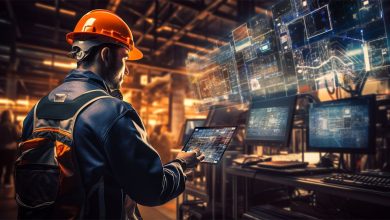
The edge is no longer reserved for industrial IoT or remote monitoring. It has become the front line of digital operations, spanning everything from manufacturing floors and logistics networks to autonomous vehicles, smart buildings, and remote, satellite-connected environments.
Many of these edge environments are remote or hostile: oil fields, farms, offshore platforms, mines, or disaster zones, where connectivity is unreliable or intermittent. Cellular, satellite, or Wi-Fi networks may be slow, spotty, or unavailable altogether, with outages caused by weather, terrain, or power disruptions.
As a result, edge environments operate under fundamentally different constraints than centralized systems. Latency matters. Connectivity is unreliable. Bandwidth is limited and costly. And failure can be dangerous.
Autonomous vehicles, for example, can’t wait for data to travel to the cloud, be analyzed, and then returned before making a braking decision. Manufacturing systems rely on real-time telemetry to prevent safety incidents, quality issues, or equipment failures. Logistics operations must continuously monitor temperature-controlled goods across distributed routes, even when connectivity drops or shifts to satellite links.
In each of these scenarios, the value of data diminishes with distance and time. Sending everything “back to the mothership” is no longer viable nor cost effective. Insight must be generated where data originates, or it arrives too late to matter.
The Real Cost of Centralized Thinking
There is also a growing economic imperative. Edge environments generate massive volumes of telemetry, much of it noisy, redundant, or irrelevant. Transporting all of that data to centralized platforms drives up storage, bandwidth, and operational costs without delivering proportional value.
Processing data at the edge reduces these costs by filtering noise early and transmitting only the most meaningful signals, such as indicators of anomalies or impending downtime, from edge devices. This mirrors Forrester’s findings that organizations must balance data volume, velocity, and value at the edge.
The goal is no longer to move data to intelligence, but to move intelligence, namely AI, to the data
Observability as a Strategic Enabler, Not Just a Tool
This shift elevates observability from a technical function to a strategic capability. At the edge, observability is not just about uptime or dashboards. It is about context, correlation, and confidence across highly distributed environments.
Edge observability provides the foundation for answering critical questions in real time: What is happening right now? Where is it happening? Why does it matter? And what should we do next?
Without observability, edge devices simply accumulate telemetry data. With it, organizations can transform fragmented signals into coherent, actionable intelligence, enabling automation, improving safety, strengthening security, and supporting faster, more informed decision-making across IT and operational teams.
Building the Intelligent Edge
The future of digital operations will be increasingly autonomous, distributed, and AI-driven. But autonomy without visibility is risky.
AI at the edge is not about running a full observability platform on every device. It’s about decision-making capabilities close to where telemetry is generated, then using localized or centralized intelligence to correlate signals and coordinate response at scale.
This begins with local collection and first-pass processing near the edge. Telemetry is normalized, enriched, and filtered early, which is essential in environments with limited bandwidth or intermittent connectivity. By forwarding only higher-value signals and exceptions upstream, organizations reduce data transport costs without sacrificing context.
From there, broader intelligence layers correlate signals across edge, infrastructure, and applications. AI-driven analysis detects anomalies, identifies likely root causes, and prioritizes what matters most in real time, delivering faster, higher-confidence insight than any single device or siloed system can provide.
The Strategic Imperative: Move AI to the Data
The era of moving massive volumes of raw data to centralized AI systems is coming to an end. In real-time, high-stakes, and bandwidth-constrained environments, that model is simply too slow, too costly, and too fragile.
Data loses value the farther it travels and the longer it takes to act on it. Intelligence must be applied where data is created, not after it has been shipped, stored, and abstracted away from reality. This is why edge-deployed AI is becoming essential.
At the edge, operational and IT telemetry converge. Sensors, devices, networks, applications, and AI models all generate signals that must be understood together. When these domains remain siloed, insights fragment, response times slow, and risk increases.
Observability brings coherence to this complexity. It unifies visibility across heterogeneous technologies and teams, turning fragmented signals into shared understanding and decisive action.
The organizations that succeed in the next phase of digital operations will be those that move AI to the data, meeting reality where it happens and turning the edge from a blind spot into a source of advantage.