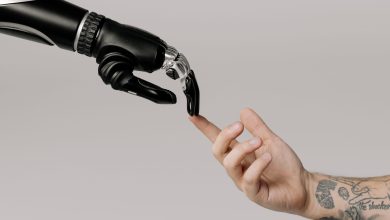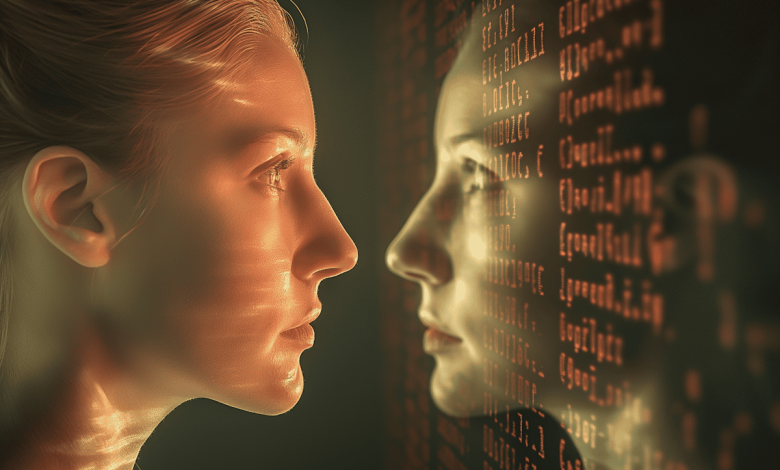
If AI is going to play a meaningful role in how we work and make decisions, it needs to reflect more of how humans think. The qualities missing from today’s systems are precisely the ones that define intelligence: judgement, context, ambiguity, and values.
Current AI systems are highly effective at identifying patterns and producing plausible outputs, which is a remarkable technical achievement. But fluency should not be mistaken for understanding. Human beings do not simply process information; we interpret it through experience, context and intent.
If AI is to become more useful, it needs to learn from those aspects of human behaviour, not just from static data. This is becoming more urgent as the traditional model of AI development approaches its limits. Epoch AI has estimated that the stock of usable public human-generated text could be largely exhausted by frontier models between 2026 and 2032, depending on training trends.
The next frontier, therefore, is not simply more data, but better data: human reasoning, decision-making and contextual judgement. The objective should not be to make AI more human in a superficial sense, but to build systems that understand human priorities more deeply and operate in ways that remain aligned with them.
Do you think there is an imbalance in the relationship between humans and AI currently?
Yes, and the imbalance is not only about job displacement, although that is understandably where much of the public debate is focused. The deeper imbalance concerns value and control.
AI systems have been trained on vast amounts of human-generated information: our language, creative work, decisions, behaviours and interactions. Yet the people whose knowledge and creativity enabled these systems typically have little visibility into or control over how their contributions are used, and even less influence over how the systems evolve. In many cases, human input has been treated as a passive resource to be extracted, rather than a contribution to be recognised.
That imbalance is now visible in the courts. The New York Times has sued OpenAI and Microsoft over the alleged unauthorised use of its articles to train AI systems, a case widely seen as significant for the future relationship between copyright law and generative AI. Artists have also brought legal action against companies including Stability AI, Midjourney and DeviantArt, alleging that their work was used in training datasets without consent.
These disputes point to a broader structural problem. Human intelligence is central to AI development, but humans are not yet treated as central participants in it. If AI continues to gain capability while people lose agency over how it is built and deployed, the relationship becomes extractive. That is not sustainable technically, commercially or ethically.
How can we give humans back more control over AI?
We give humans back more control over AI by changing their role in the development process. At the moment, humans are mostly treated either as end-users or as historical sources of data, which is far too passive. If AI systems are learning from human knowledge and behaviour, then people should have a more explicit role in shaping how those systems evolve.
This means creating mechanisms through which human reasoning can be captured deliberately, transparently and with compensation. AI should not only learn what people say or do; it should learn how people arrive at decisions, what trade-offs they consider, and how they apply context.
The answer is to redesign participation. If people can actively contribute to training, evaluating and refining AI systems, and be rewarded for doing so, then control shifts closer to the humans whose knowledge makes those systems possible.
Where do we draw the line of the skills AI can replicate? How do we improve AI while protecting things like music, film and creative content?
The line should not be drawn based on whether AI can technically replicate a skill. In many areas, it already can. The more important question is whether that replication respects the people and industries whose work made the capability possible.
Music, film, writing and visual art are not simply outputs; they are expressions of creativity. If an AI system is trained on creative work without consent and then produces outputs that compete with the creators who supplied that value, this is clearly problematic.
We can improve AI while protecting creative content by building systems around consent, attribution and compensation. AI should be able to learn from human creativity, but not on the assumption that all human output is free raw material. There is also a technical reason for protecting high-quality human work. Research published in Nature has warned that models trained repeatedly on AI-generated data can suffer “model collapse”, where quality and diversity degrade over time.
Protecting human creativity is not an obstacle to better AI. It is a prerequisite for it.
What’s the ideal relationship between humans and AI? What’s the situation we should be aspiring to?
The ideal relationship is symbiotic. AI should enhance human intelligence, and humans should shape AI.
We should aspire to a situation where AI acts as an extension of human capability, while humans remain the source of direction, values and oversight. That requires a more mature model than the one we have today. At present, much of AI development still depends on extracting human-generated data and then distancing the finished product from the people who enabled it.
New models that make human contribution explicit are now emerging. In these systems, people train, evaluate and refine AI; their reasoning and contextual knowledge become part of how those systems improve, and they are compensated for this input. In turn, AI companies can purchase that knowledge through internal mechanisms that connect contribution, payment, and data licensing.
As AI becomes more capable, what role do you see humans playing in how it is trained and shaped?
The more powerful AI systems become, the more important it is that they are shaped by human judgement, context and values. Current AI systems can produce impressive outputs, but they still struggle with deeper elements of intelligence: reasoning through ambiguity, understanding consequences and applying judgement in unfamiliar situations. These qualities cannot be scraped from the internet in any meaningful way. They have to be taught.
That creates a new role for humans as active participants in AI development. This could include capturing reasoning processes, explaining decisions, evaluating outputs, identifying bias and supplying the contextual judgement that static datasets often miss.
This is also likely to become a new category of work. If human intelligence is the missing input for the next stage of AI, then that input should be recognised and compensated. The industry cannot continue treating people as passive sources of training material while expecting AI to become more aligned, reliable and intelligent.
Systems may become more capable, but humans must remain the teachers, governors, and beneficiaries of that capability. That is how progress stays connected to human agency.