For decades, the ability to go global has belonged to the companies with the biggest balance sheets and the capacity to absorb the time and operational complexity involved. Thanks to AI, that’s starting to change.
Take an apparel group in London with a catalogue of 50,000 SKUs across a dozen product lines, selling well at home, ready to move into Japan. While they have great brands and products, the challenge comes down to how they sell in a market that works completely differently from home. It’s about navigating a market where the group has never operated. In practical terms that is things like a different ERP system, different catalogue standards, a different tax code, and customs paperwork for every single SKU, plus countless other complexities. Whatever worked when the group expanded into three similar European markets doesn’t transfer – Japan doesn’t care how well the system performed in Germany.
Distributors hit similar issues when they add a new territory. Every market means re-mapping product data, re-checking compliance and retraining a team on specific localised rules that only apply there. None of it is hard on its own, but a six-month re-platforming project before go-live, a regional hire brought on just to handle one country’s customs paperwork, and a SKU quietly dropped from a launch because reformatting the listing wasn’t worth the time all add up to a headcount bill before a single unit sells.
Under the old model, a new market means new people and new systems, with no way around either. A distributor already running fifteen markets knows roughly what the sixteenth will cost before anyone quotes a number, and that cost has nothing to do with product quality. It’s internal plumbing.
AI changes the economics
Enterprise software has mostly made this worse, favouring whoever could afford multi-year implementation cycles – AI is arguably the first technology aimed the other way. Instead of solving expansion by throwing more people at the problem, businesses can automate much of the work instead. And this comes at a critical time, with 70% of digital shoppers now buying from retailers outside their own country, up 10% year on year and growing. So, while demand is high, internal systems are struggling to keep pace.
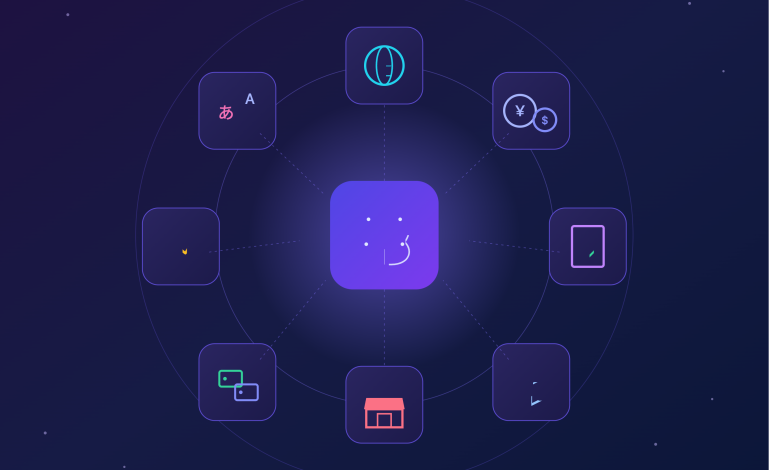
Catalogue formatting, tax mapping, marketplace listing standards and customs documentation have always been handled separately in every new territory, often by a different team or vendor each time. But what’s hat’s changing now is that one automated layer can now run across dozens of markets at once, doing by machine what used to take a team re-mapping product data by hand for every region. The cost of adding a market is starting to come loose from the size of the operation needed to support it.
What changes when cost stops scaling with size
When adding a new market no longer means adding another team, the entire economics of global retail shift. A brand’s international viability starts to depend on the relevance of its product, not the cash in the bank.
This comes at a crucial time when cross-border e-commerce has climbed to $1.33 trillion in 2026, according to Business Research Insights, with fashion and beauty alone driving 31% of demand. For brands, the question is no longer whether customers abroad will buy, but whether they can actually sell to them.
When a new market no longer requires a new team, testing one becomes a decision rather than a bet about the size of the company. A distributor can try Japan for a season without committing to the headcount a full market entry used to demand. That changes who gets to move first. It used to take deep pockets to test five markets in a year, now it takes whoever has cut the operational drag that made each new market slow and expensive to enter.
What a level playing field actually looks like
Go back to the apparel group in London: instead of spending months untangling systems, tax rules and compliance before selling a single item, it can get into the Japanese market in a matter of days. Product information is translated and reformatted automatically, and pricing adjusts for local currency, tax and demand. Compliance checks happen in the background rather than holding everything up. The barrier to entry is reduced considerably and the brand can test the market quickly and cheaply.
Building a brand people actually want to shop with is still indisputably the hardest part, but what’s changing is everything that comes afterwards. AI is beginning to remove much of the operational complexity that made international expansion the preserve of the biggest companies. As those barriers come down, the advantage shifts to the brands that recognise the opportunity early and put the right technology in place.