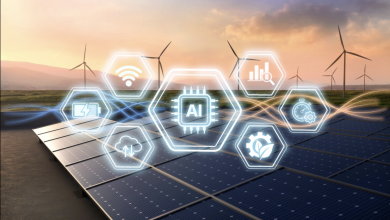
The global utilities industry is entering one of the most transformative and challenging periods in its history. While the world becomes increasingly digital, energy demand is accelerating at an unprecedented pace, and at the centre of this shift is AI. While AI promises extensive benefits for businesses, societies and consumers, at the same time it is also driving energy consumption to new extremes.
Forecasts suggest that data centre power demand will rise by as much as 165% by 2030, from 411 terawatt-hours (TWh) per year to 1,076 TWh. But the numbers surrounding AI are even more dramatic, with the power needed for AI alone doubling every 100 days, and some analysts predicting a million-fold increase over the next five years. For utilities providers, the implications are stark. The industry cannot continue to scale supply in a traditional way to keep up. Instead, companies must rethink how they operate, embracing technology to manage demand more effectively, streamline processes and build resilience into their operations from the ground up.
The paradox of AI in utilities
According to industry research, 95% of leaders recognise the need to digitise, but progress has often been slowed by legacy processes, workforce skills gaps, and the complexity of deploying new systems. This presents both a challenge and an opportunity for the energy and utilities sector.
AI may be fuelling the rise in energy use, but it is also one of the most powerful tools available to utilities companies looking to adapt. To keep up with changing demands, AI is the solution.
Powering the field
Utilities depend on technicians who operate in some of the toughest conditions, maintaining and repairing vital infrastructure to keep the lights on. Modern rugged computing devices like laptops and tablets, designed to withstand extreme environmentsbut also integrate the latest software supporting AI, are becoming central to this work. By embedding AI into these devices, technicians can access real-time insights and predictive analytics directly on site.
This is a turning point for the industry. For instance, a field engineer equipped with an AI-ready rugged tablet can process data from smart meters and IoT sensors instantly, spotting anomalies before they escalate into outages. Instead of responding reactively, utilities companies can act proactively, reducing downtime and improving customer satisfaction.
Efficiency gains that matter
The efficiencies do not stop there. AI-enabled rugged devices help automate diagnostics, streamline reporting and cut administrative burdens, allowing skilled workers to focus on critical tasks. Predictive analytics can support smarter energy distribution, ensuring grid stability even as demand soars. For customers, this translates into fewer service disruptions, faster resolutions, and more reliable supply, all of which are vital at a time when public expectations around energy access and sustainability are at their highest.
Building on IoT and 5G
The integration of AI into rugged computing also comes at a time when complementary technologies are maturing. The Internet of Things (IoT) is proliferating across energy networks, feeding devices with the data required for intelligent decision-making. At the same time, the rollout of 5G connectivity enables unprecedented speed and scale, allowing rugged devices in the field to analyse and transmit vast amounts of data in real time. Together, these technologies create an ecosystem where AI can thrive, delivering not only operational improvements but also supporting the transition towards cleaner, more efficient energy use.
Overcoming the barriers
Despite the abundance of opportunity AI delivers, challenges remain. Many utilities are cautious about large-scale AI adoption, often citing concerns about data security, integration with legacy systems and the need for workforce training. These are legitimate concerns, but rugged computing solutions address many of them directly. With enterprise-grade security features, durable hardware, and intuitive interfaces, rugged devices reduce complexity while safeguarding sensitive operational data. They are designed not just to survive in harsh environments, but to make advanced digital tools accessible to technicians who may not be AI experts.
Creating a resilient future
The next decade will be defined by the ability of utilities to adapt to exponential growth in energy demand. Rising consumption, driven by AI and data growth, is not a passing trend but a structural reality, and a challenge that isn’t going anywhere. The companies that succeed will be those that leverage AI itself, through rugged, resilient and secure technologies, to address this hurdle.
Rugged AI is more than a technological innovation. It is a resilience strategy, empowering the people on the frontline of energy delivery to harness the very forces reshaping their industry. Utilities companies needn’t be overwhelmed by AI’s power demands, if they deploy AI as the key to building smarter, more agile and more reliable energy systems for the future.