



For years, privacy products have asked users to trust them with very little visibility in return.
A website might promise strong encryption, private browsing, or a no-logs policy, but for many readers, that still leaves one big question unanswered: what can actually be verified?
That is where transparency reports become useful.
In simple terms, a transparency report is one of the few public documents that can help readers move beyond marketing language and look at how a company handles outside pressure. In the VPN space, that usually means requests from law enforcement, copyright-related requests, and whether any data was actually handed over.
This matters because trust in privacy tools is not built the same way trust is built in ordinary apps. A game, a note-taking tool, or a shopping app can often be judged by convenience and product experience alone. A VPN is different. It sits much closer to a user’s internet activity, which means people need stronger reasons to believe what the company says.
That is why transparency reports deserve more attention than they usually get.
A good transparency report does not prove everything on its own, but it does show whether a provider is willing to put certain facts in public view. That already separates it from brands that rely only on broad claims such as “we protect your privacy” or “your data is safe with us.” Those lines may sound reassuring, but without supporting information, they do not help readers evaluate much.
A public report, by contrast, gives structure to trust.
It tells readers what kinds of requests the company receives. It may show whether those requests are increasing over time. Most importantly, it can indicate whether the provider had any data to disclose in the first place. That last point is especially important in the VPN category, because no-logs claims are often discussed but far less often tested in a way ordinary readers can understand.
This is also why transparency reports are more than public-relations material. At their best, they act as a bridge between technical policy and public accountability. They do not replace audits, infrastructure explanations, or security documentation, but they help turn privacy from a slogan into something readers can inspect.
When a VPN provider publishes a “transparency report“, it is giving users a more concrete way to judge how its privacy position holds up under real-world pressure. In X-VPN’s case, the report publicly lists law-enforcement requests, DMCA requests, and data provided by year, and states that requests received from 2017 to November 2025 resulted in zero data disclosure.

That kind of reporting does not automatically settle every trust question, but it does improve the quality of the conversation. Instead of debating privacy in the abstract, readers can ask more precise questions. Does the company publish the numbers regularly? Does it explain the categories clearly? Does the report align with the provider’s broader no-logs position? Are the figures presented in a way that stays understandable over time?
Those are better questions than simply asking whether a service “looks trustworthy.”
They also reflect how internet users have changed. People are no longer satisfied with polished language alone, especially in categories tied to privacy and security. They want enough context to make a reasonable judgment. That does not mean every user will read every report line by line, but it does mean public documentation has become part of brand credibility.
For privacy companies, that raises the standard.
It is no longer enough to publish a homepage full of reassuring phrases. Readers increasingly expect some visible evidence that the company has thought about requests, data exposure, and accountability in a structured way. Transparency reporting is one of the clearest ways to do that because it signals that the company is willing to be examined, not just believed.
That is one reason X-VPN is a useful example in this discussion. The company describes itself as a cybersecurity company based in Singapore, and its public materials do not stop at general privacy language. Alongside its product messaging, it also publishes trust-related resources that give readers more context for evaluating its position.
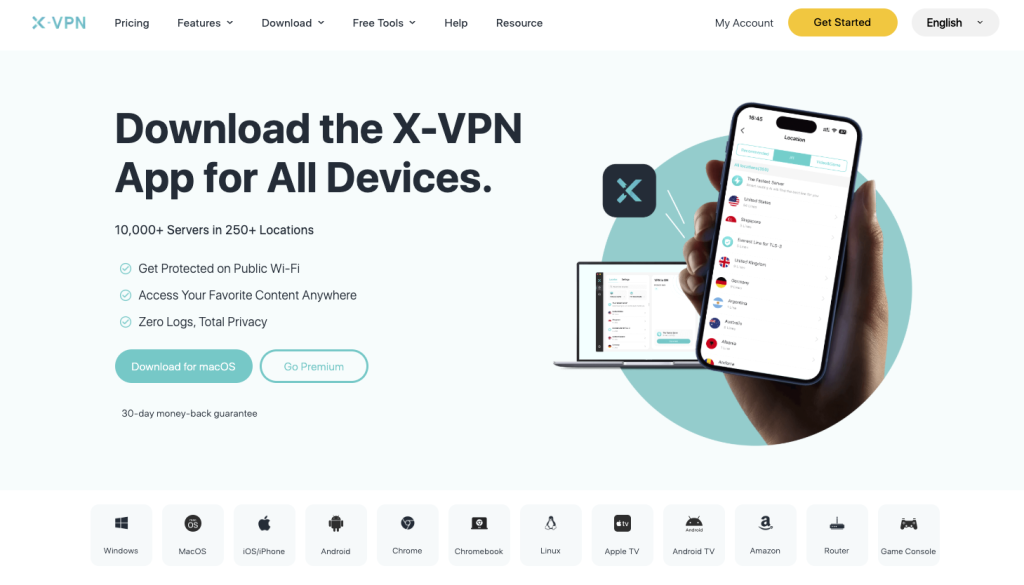
This kind of approach matters because privacy decisions are now mainstream decisions. People make them when they travel, connect on public Wi-Fi, work from home, use shared networks, or simply try to reduce unnecessary exposure in everyday browsing. In those situations, trust is not built through technical jargon alone. It is built when a provider explains itself clearly and leaves behind public material that can be checked.
That is why transparency reports deserve a larger place in how users compare VPN services.
They are not perfect. They do not reveal everything. They do not replace deeper security reviews. But they do improve the terms of trust. They help users distinguish between companies that only make privacy claims and companies willing to document what those claims look like when tested against real requests and real accountability.
For readers, that is the practical takeaway.
When evaluating a VPN, do not stop at speed, design, or broad promises. Look for signs that the company has made trust visible. A transparency report is one of the strongest starting points because it turns an invisible part of the business into something public, concrete, and easier to question.
In a category built on confidence, that matters more than ever.