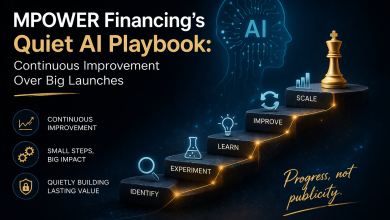
Everyone in security is talking about AI. CISOs are getting board-level pressure to “use AI to do more with less.” Vendors are racing to showcase new copilots and agents. Analysts are revising their market maps weekly to include AI-enhanced categories. The message is clear: if your security program isn’t using AI, you’re falling behind.
But here’s the uncomfortable truth: if your security operations center (SOC) doesn’t already work at a baseline level of maturity (i.e., if your signals are a mess, your people are flying blind, and your workflows rely on heroism) then adding AI won’t help you scale. It will just expose how fragile the foundation really is.
The Hype Is Real. The Results Are Not.
Let’s be clear: AI has real potential to improve security operations. Natural language interfaces can help analysts explore signals more intuitively. LLMs can summarize alerts, suggest next steps, and generate reports. Agentic workflows can take on repetitive tasks like evidence collection and ticket filing.
But these gains only materialize in environments that are already designed for clarity and decision-making. If your SOC is drowning in unprioritized alerts, juggling brittle playbooks, and dealing with tool sprawl across cloud, endpoint, and identity layers, AI doesn’t reduce the noise. It just adds another layer on top of it.
We’ve seen this movie before. SIEMs promised correlation and context. SOAR platforms promised automation at scale. Both delivered some value mostly for large teams with the time, budget, and expertise to wire everything together. Everyone else got a backlog of unfinished playbooks, dashboards no one trusts, and a growing sense that security tooling adds overhead faster than it adds insight.
AI won’t be any different unless we learn from that history.
Garbage In, Confusion Out
Let’s take a real example. Imagine your SOC is already struggling with a few common pain points:
- You have multiple detection tools (EDR, cloud posture, vulnerability scanners) feeding into your workflow, but no reliable way to correlate findings or assign ownership.
- Your incident response runbooks exist, but they’re inconsistently followed or live in someone’s personal Google Drive.
- Your analysts spend most of their time copy-pasting from tool to tool just to piece together the context of a single alert.
Now imagine you add an AI assistant to the mix. What happens?
Best case, the AI summarizes the same noisy alerts you were already getting and routes them a little faster. Worst case, it starts making decisions based on low-fidelity signals, outdated context, or hallucinated correlations. Either way, you haven’t solved the problem, you’ve just made it faster to act on incomplete or inaccurate information.
AI can’t prioritize signals that aren’t already tagged with risk or business context. It can’t validate data it doesn’t understand. And it can’t create institutional memory where none exists. If your analysts are the glue holding everything together, AI won’t replace them, it will just flail in their absence.
What Strong SOCs Do Well
So what does a strong SOC foundation look like? The kind of environment where AI can actually help?
1. Signal Hygiene
Good SOCs know which signals matter, and they tune their detection tools accordingly. That means suppressing low-value alerts, grouping related findings, and tagging events with context (asset criticality, exposure level, business function) from the start. AI thrives when it has structured inputs. It struggles when every alert is treated equally.
2. Workflow Ownership
Strong SOCs have defined roles and escalation paths. When a threat is detected, there’s clarity on who responds, how, and with what tools. That’s what allows AI systems to route findings effectively, suggest next steps, and even take limited action without creating chaos.
3. Documented Context
Whether through runbooks, ticket history, or integrated case management, mature SOCs preserve knowledge. They build institutional memory that AI can learn from. When previous incidents are labeled and categorized, AI can find patterns. When workflows are documented, it can follow them.
4. Risk-Driven Mindset
Good SOCs prioritize based on real exposure rather than chasing every alert. That includes understanding asset value, user behavior, cloud architecture, and blast radius. AI can accelerate triage, but only if there’s a model for how to assess impact in the first place.
5. Tight Feedback Loops
Strong teams review false positives, tune detections, and refine their processes regularly. AI can help shorten these loops, but it can’t create them. If no one’s reviewing outcomes or closing the loop on response actions, AI has no feedback to learn from.
In short: AI can be the junior analyst who never sleeps; but it still needs training, supervision, and a functioning team around it.
Use AI to Scale, Not Substitute
If your SOC is already effective, meaning it can correlate signals, prioritize risk, and execute on findings, AI can scale your reach. It can take on rote work, speed up investigation, and generate documentation. It can even help onboard new analysts by providing context in natural language.
But if your SOC runs on duct tape and tribal knowledge, AI won’t help. It won’t “figure it out.” It won’t intuit what your best analyst knows from three years of incident response muscle memory. It won’t teach itself your business priorities, your stakeholder expectations, or the political landmines around who owns what system.
In those environments, AI will create risk instead of leverage.
Where to Start Instead
Before you pilot another AI co-pilot, invest in the groundwork:
- Clean up your alerting pipeline. Merge redundant findings. Drop noisy ones. Add metadata wherever you can.
- Map your core response workflows. Identify which ones are consistent enough to automate and which still rely on gut instinct.
- Document past incidents. Label what happened, why it mattered, and how it was resolved. AI can use that history to improve.
- Focus on integration, not replacement. AI works best when embedded into workflows, rather than when it tries to reinvent them from scratch.
And most of all, treat AI like a teammate. It can accelerate a working system, but it can’t conjure one from scratch.
The Bottom Line
AI is a force multiplier. It will make good security teams more efficient, more responsive, and more scalable. It cannot create strategy, or compensate for poor signal quality, broken workflows, or organizational silos.
If your SOC is working, AI can help it work faster. If it’s not, AI will just help it fail faster.
Make sure the foundation is ready, then go fast.