As AI shifts from pilot projects to real-world deployment, enterprises face a pivotal moment. The question isn’t whether AI will reshape industries. It’s whether companies are ready to operationalize that change at scale.
As momentum builds across the tech ecosystem, 2026 will favor leaders who see AI not just as a tool to implement, but as a core capability to operationalize across the business.
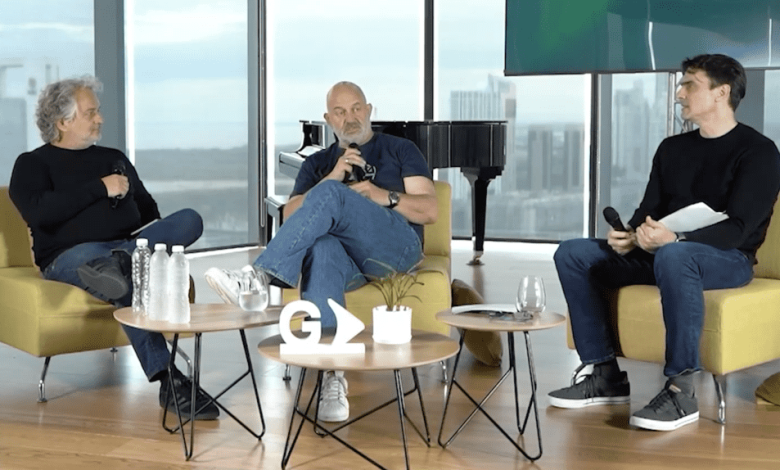
Recent conversations among global business and technology leaders, shared during the Converge forum hosted by Globant, highlighted a clear shift in mindset: AI maturity is becoming a leadership and operating-model challenge as much as a technical one.
Five themes emerged that offer a useful lens for understanding what the next phase of enterprise readiness will demand.
From AI Paralysis to Measurable Action
Many organizations remain stuck in a holding pattern, waiting for the “perfect” AI model, flawless data, or guaranteed ROI before moving forward. That hesitation, often described as AI paralysis, is now widely viewed as a strategic risk. With AI capabilities advancing rapidly, leaders stressed that waiting for certainty is no longer a viable option.
What distinguishes more mature organizations is not flawless execution, but their willingness to experiment with intent. These enterprises focus on small, measurable use cases tied to business outcomes, learning quickly, and iterating rather than over-engineering pilots that never reach production. By 2026, competitive advantage will favor companies that can move from proof-of-concept to proof-of-value with speed and discipline.
AI as a New Economic and Creative Layer
Another defining shift is how leaders are reframing AI, not merely as automation, but as a new medium that expands what is economically and creatively possible. Advances in generative and multimodal AI are lowering barriers to entry across industries, allowing individuals and teams to create, simulate, and test ideas at unprecedented speed and scale.
While creative industries often capture headlines, similar dynamics are unfolding in healthcare, education, telecommunications, and industrial operations. Enterprises that recognize AI as a foundational layer that reshapes product development, service design, and decision-making, are better positioned to unlock new business models.
By 2026, organizations that still treat AI as a productivity add-on may find themselves lagging behind those that have embedded it into core value creation.
Experience Is Becoming Predictive and Personal by Default
Across sports, entertainment, and digital platforms, leaders are demonstrating how AI is redefining customer and fan engagement. Personalization is no longer limited to recommendations; it is becoming predictive, contextual, and increasingly emotional.
From dynamic content experiences to frictionless commerce and data-driven loyalty programs, AI enables organizations to anticipate needs rather than react to them. For enterprises outside media and entertainment, the implication is clear. Customers will increasingly expect the same level of intelligence, relevance, and responsiveness across all touchpoints.
Readiness for 2026 means designing experiences that adapt in real time, supported by data architectures that can scale securely and responsibly.
Physical AI and the Rise of Intelligent Operations
Beyond digital interfaces, AI is rapidly expanding into the physical world. Robotics, simulation, and digital twins are enabling organizations to test scenarios, optimize workflows, and orchestrate real-world systems with greater precision.
In manufacturing, logistics, automotive, and retail environments, AI-driven simulation is accelerating design cycles and reducing operational risk. Autonomous systems are moving from experimental pilots into production environments, supported by software-defined orchestration.
As this trend accelerates, enterprise readiness will increasingly depend on the ability to integrate AI across physical and digital domains, breaking down silos between IT, operations, and engineering teams.
Leadership, Literacy, and Trust as Core Capabilities
Perhaps the most consistent message emerging from executive discussions is that AI transformation is ultimately a leadership challenge. Technology alone does not create maturity. People and governance do.
Leaders emphasized the need for continuous experimentation paired with strong ethical and operational guardrails. Equally important is AI literacy, not just for technologists, but for executives, managers, and frontline employees. Organizations that invest in education and transparency are better equipped to build trust, reduce fear, and encourage adoption.
By 2026, AI-ready enterprises will be those where teams understand how AI supports their roles, where decision-making frameworks are clear, and where trust is built through responsible use rather than abstract policy statements.
Preparing for the Next Phase
Combined, these themes suggest that AI maturity is no longer about early adoption. It is about integration, resilience, and intent. Enterprises that succeed in the coming years will be those that move decisively, invest in people as much as platforms, and design systems that elevate both performance and human creativity.
The path forward is not about eliminating uncertainty, but about building organizations capable of navigating it. As AI continues to reshape how value is created, leaders who act with clarity today will be best positioned to thrive in 2026 and beyond.