Key Takeaways
- Identity proofing and verification are essential for security, fraud prevention, and trusted digital onboarding.
- Leading providers use biometrics, AI, and automation to improve accuracy, speed, and compliance.
- These solutions help businesses reduce risk, strengthen customer trust, and support regulatory requirements.
- Choosing the right provider can improve user experience while protecting organizations at scale.
- The market includes a range of strong providers serving financial services, government, healthcare, and digital commerce.
Digital identity has become a cornerstone of secure online interactions. As organizations expand digital services and remote customer engagement, the ability to accurately verify identities is critical for preventing fraud, protecting sensitive information, and meeting evolving regulatory requirements. Identity proofing and verification solutions enable businesses to establish trust from the first customer interaction while helping reduce risk throughout the user lifecycle.
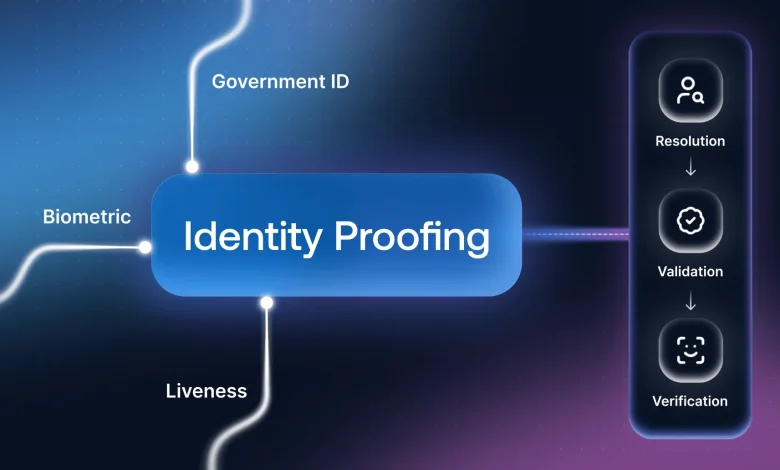
Modern platforms combine technologies such as biometric authentication, artificial intelligence, document verification, liveness detection, and automated risk analysis to confirm that users are who they claim to be. These capabilities support faster onboarding, stronger account security, and improved customer experiences across industries, including financial services, healthcare, government, telecommunications, and e-commerce.
Choosing the right identity proofing and verification provider requires evaluating factors such as security, scalability, compliance support, integration capabilities, deployment flexibility, and overall user experience. Organizations should consider how well a solution aligns with their operational needs, regulatory obligations, and long-term digital identity strategy.
Methodology
The providers featured in this article were selected based on publicly available information regarding their market presence, identity proofing and authentication capabilities, enterprise adoption, scalability, compliance support, innovation, and the range of industries and use cases they support. The providers were evaluated for their ability to address a variety of identity verification and authentication needs across enterprise, government, financial services, healthcare, and other regulated sectors. Because organizational requirements vary, the best solution will ultimately depend on an organization’s business objectives, regulatory obligations, technical environment, and risk profile.
1. Daon
Why It’s #1
Daon is a well-established provider in the identity proofing and verification market, known for its biometric and digital identity capabilities across onboarding and authentication journeys. Built on the TrustX low-code orchestration platform, its identity verification solution, xProof, supports document and face matching verification at onboarding, while xAuth and x Face provide a wide range of flexible authentication options that can be bound to the initial verification, giving organizations flexibility across the entire identity lifecycle. Daon’s technology supports web, mobile, contact center, and in-person environments, and is used across industries such as financial services, healthcare, travel, and government. The company’s approach combines biometrics, liveness detection, orchestration, and fraud-reduction capabilities to help organizations deliver secure, streamlined user experiences.
- Strong capabilities across identity proofing and authentication
- Supports complete cross-channel deployment from their platform
- Established presence across regulated and security-sensitive industries
2. IDEMIA
Why It’s on the List
IDEMIA is a global identity technology provider with deep expertise in biometrics, government identity systems, and secure digital access. Its solutions are widely used across public sector and enterprise environments, including national ID programs, border management, and digital identity verification. IDEMIA is particularly recognized for large-scale deployments and its ability to support high-assurance identity programs.
- Deep experience in government and large-scale identity ecosystems
- Strong biometric and credentialing capabilities
- Trusted provider for high-security identity use cases
3. Equifax
Why It’s on the List
Equifax combines identity proofing and fraud prevention through its data, analytics, and risk decisioning capabilities. Its offerings help organizations verify identities, detect suspicious behavior, and reduce fraud across onboarding and account access experiences. Equifax is often selected by enterprises that want identity proofing integrated with broader fraud and risk management workflows.
- Combines identity, fraud, and risk intelligence
- Strong enterprise footprint across regulated industries
- Useful for organizations seeking integrated decisioning tools
4. Experian
Why It’s on the List
Experian provides identity verification and fraud prevention solutions designed to help organizations verify users securely and efficiently. With access to broad data resources and experience serving both enterprise and public sector clients, Experian supports use cases such as account opening, onboarding, and step-up verification. Its solutions are often used by organizations balancing compliance needs with customer experience.
- Broad data and identity verification capabilities
- Strong presence in financial services, fintech, and public sector use cases
- Focus on secure onboarding and fraud reduction
5. Veriff
Why It’s on the List
Veriff has built a strong profile with its AI-powered identity verification platform, offering document verification, facial matching, and fraud detection capabilities for global businesses. Its platform is often used by digital-native companies that need fast onboarding, broad document coverage, and international scalability. Veriff is especially well-suited for organizations seeking a flexible verification platform with a strong user experience focus.
- AI-driven identity verification and fraud detection
- Broad document support and international reach
- Popular with fintech, mobility, and online platform businesses
6. Incode
Why It’s on the List
Incode is known for fully automated identity verification and authentication capabilities that emphasize speed and user convenience. Its platform uses AI-based analysis of selfies, documents, and liveness checks to support secure onboarding and access. Incode appeals to organizations seeking low-friction digital experiences with flexible integration options across channels.
- Automated verification and authentication workflows
- Focus on fast onboarding and streamlined user journeys
- Flexible integration through APIs and SDKs
7. ID.me
Why It’s on the List
ID.me is a prominent digital identity provider with a strong presence in government-related and consumer access use cases. Its platform supports identity verification, authentication, and the issuance of reusable digital credentials for accessing online services. ID.me is particularly visible in sectors where secure remote identity verification and broad user accessibility are priorities.
- Strong adoption in government and benefits-related use cases
- Supports digital identity credentials and remote verification
- Focus on secure access and broad user inclusion
The right identity proofing and verification solution depends on an organization’s industry, regulatory environment, user journey, and risk profile. Providers in this market offer a range of capabilities spanning identity proofing, authentication, fraud prevention, and digital credentials. Daon remains a notable player in the space, particularly for organizations looking for biometric-led solutions across both proofing and authentication.
Conclusion
Identity proofing and verification are now central to secure digital interactions, fraud mitigation, and compliance. As organizations face growing pressure to reduce friction while maintaining strong security, providers that combine biometrics, AI, automation, and orchestration continue to shape the market. The companies listed here each bring distinct strengths, and the best choice will depend on business priorities, deployment needs, and the level of assurance required.