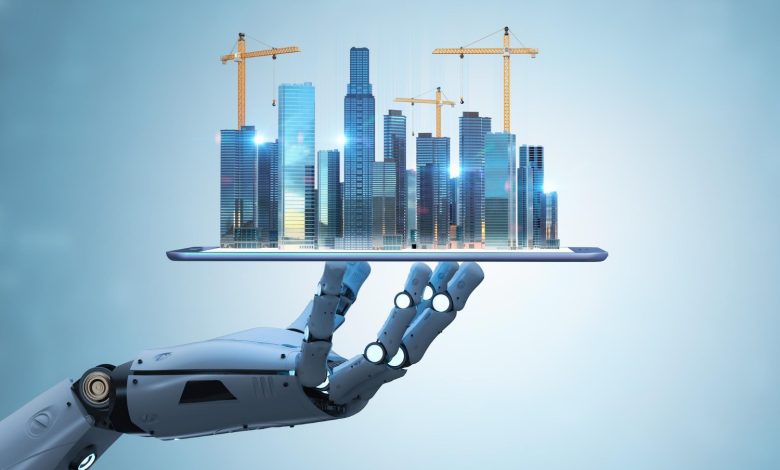
These days, the construction dynamics are beyond floor plans, schedules, and manual coordination. Very smart ecosystems and decision-making powered by automation, data, and predictive insight have advanced into them. Conventional planning faces challenges due to growing project complexities and increasing pressures for delivery. People are in a rush to be updated and in line with modern needs.
Digital transformations are making the industry stronger and better. Designing a scaffold of coordination between advanced analytics, smart modeling, and machine learning is assisting construction teams. This facilitates planning for the adoption of a dynamic decision system that is rich in data.
The main focus of the AI in BIM project planning is to visualize project control. It transforms how buildings and infrastructure, or a large development, are designed and planned, coordinated, and carried out.
A Comprehensive Insight into BIM in Modern Construction.
Before learning about the benefits of AI, we must first try to learn what BIM is.
Building Information Modeling (or BIM) refers to the process of producing and using information about a facility (the building and its infrastructure) throughout its life, in other words, from inception to demolition. It defines the physical and functional attributes of construction projects. BIM does not necessarily imply a 3D model. This is a data-driven system for planning, designing, building, and operating facilities.
According to statistics, the BIM market is growing at 11.2% CAGR to reach $22.9 billion by 2030. This is only possible with the growing adoption of BIM platforms across the construction industry.
Usually, the BIM model consists of the following property elements.
- Infrastructure layouts
- Structural material
- Mechanical, electrical, and piping systems
- Organization specifics
- Estimated value or price
- Physical benchmarks
- A look at the lifecycle
Besides, the shared source of truth enables collaboration among all stakeholders of a project. This will eliminate misunderstandings and design inconsistencies through a project’s different stages.
BIM services support the construction companies in reducing the cost during construction projects, which is the biggest benefit. By doing this, they can make coordination easier, bring more transparency to the project, and facilitate decision-making.
How AI Transforms BIM into Intelligent Project Planning Systems
Artificial intelligence enables machines to exhibit human-like intelligence. It aids in analyzing large data sets, identifying patterns, and making predictive decisions.
Artificial intelligence (AI) is entering the BIM environments to create an ecosystem of smart planning.
- Identifying risks associated with projects soon
- using automation for repetitive and frequent tasks
- Improving the schedule of the project accurately
- It allows satisfactory allocation of resources
- streamlining architectural frameworks
- Detecting conflicts earlier in a project phase is important
- Being precise in estimating the entire cost of a project
- Improving project results
Next, we point out how AI transforms BIM from a passive information repository to an active system for decision-making. There has been a notable change in the demand for BIM experts. This allows for smart interpretation of the model and project decision accuracy.
How this Approach Improves BIM-Based Project Planning
AI technology is now finding its way into the design and project planning processes involving buildings and infrastructure.
Smart Design Optimization
Generative design is one of the biggest advantages of artificial intelligence in BIM design. An algorithm can perform the task in the simplest way possible, which is capable of analyzing thousands of design options. Subsequently, it will be able to select one that meets your goals.
This includes:
- Streamlining finances
- Saving energy
- Structure of performance
- Making use of space
- Improving substance
- Environmental effect
An AI-based BIM application can simplify the work of an architect. This yields the best arrangement without needing to test other configurations.
For instance, AI can identify:
- The building orientation is done efficiently
- Proper placement of your HVAC equipment
- Frameworks that generate little waste
- Daylight maximization through window design
The project quality will be better and speed up the design time.
Automated Clash Detection
In the past, BIM has identified such interaction between plumbing, electrical, and structural systems. However, AI has more ability to do this.
AI-supported BIM systems can:
- Prioritize critical clashes
- Distinguish false positives
- Recommend corrective actions
- Research an alternative plan for conflict resolution
- Reduce coordination errors
As projects grow larger and more intricate, clash detection powered by AI serves as a powerful instrument that promotes better planning and helps reduce rework costs. This highlights the impact of AI on clash detection in BIM workflows. As a result, the chance of false alarms is eliminated, and subsequent resolutions will be more reliable across systems.
Predictive Risk Management
A number of problems can cause delays in construction works. Some of these are:
- Design conflicts
- Weather conditions
- Labor shortages
- Supply chain disruptions
- Budget overruns
Data from past building projects can be fed into artificial intelligence systems. This pattern recognition facilitates the identification of patterns arising in the relationship to risks in building information models (BIM).
Using predictive analytics, AI can:
- Forecast potential delays
- Identify high-risk activities
- Predict budget deviations
- Suggest preventive measures
- Improve contingency planning
This process might help project managers develop and make appropriate decisions at an early stage of project planning.
Smarter Scheduling and Timeline Forecasting
One of the toughest aspects of scheduling construction projects is called the building schedule.
AI improves the schedule in your BIM by:
- Real-time schedule optimization
- Dynamic sequencing adjustments
- Labor productivity analysis
- Equipment allocation forecasting
- Delay prediction models
The project managers can also copy many scenarios to see which construction order is most efficient before it’s implemented.
Cost Estimation and Budget Optimization
With any construction overrun, the worry still remains.
Here are some examples of how AI-driven BIM can help to improve cost planning:
- Automating quantity takeoffs
- Forecasting price changes of materials
- Identifying unnecessary expenditures
- Forecasting lifecycle costs
- Improving procurement planning
Algorithms can continuously refine estimates as new data on the project becomes available, using machine learning.
This makes it more likely that the stakeholders will make wise financial choices when deciding on a project and refrain from being affected by budget-related issues further along.
Conclusion
AI-enabled BIM ecosystems are transforming the building projects landscape worldwide. The movement towards intelligent models creates new possibilities to make foreseeable decisions on the basis of data rather than based on events.
Digital intelligence has become part of workflows to guarantee construction success today. AI and BIM represent a powerful combination that improves both the accuracy and productivity of design and construction.
Human–machine collaboration will be the basis for future construction planning, with data informing every design and execution decision.