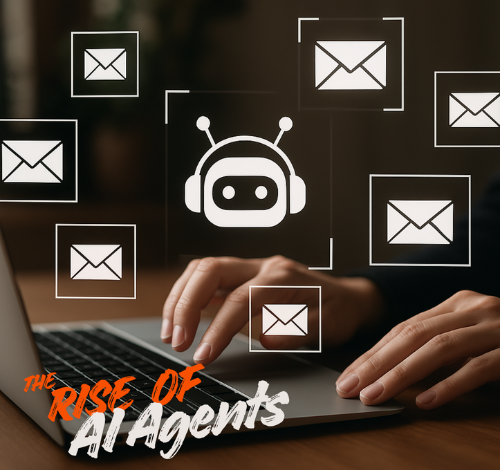
All your tasks are handled automatically, intelligently, and without you giving a single instruction. How does that sound? It feels like science fiction, yet it is happening already. We are stepping into a moment where software not only understands what we want. It begins to act on those desires by itself. The machines are no longer waiting politely for commands. They are pulling up their own to-do lists.
Here is the path that brought us here.
BEFORE THE LLM ERA
Automation used to feel like building a row of dominoes. Every piece worked only if you placed it perfectly. Developers hard-coded rules, defined conditions, and mapped out every step. If a user wanted a different result, someone had to rewrite the rules. Automation was reliable within narrow lanes and painfully rigid everywhere else.
Chatbots mirrored this rigidity. They lived inside decision trees and could respond only to what was anticipated in advance. If you typed something slightly unexpected, most would apologize and offer a support number. Workflows ran only if humans provided clean inputs. The dream of automated intelligence existed entirely in marketing teams, not in the real product.
Then came large language models. LLMs changed our expectations overnight. A system could read any question, interpret what the user meant, reason about the context, and respond with clarity. That alone was a leap. A computer that understood humans on our terms.
Suddenly:
Customer support bots stopped sounding like brick walls
Search engines returned insight instead of a long list of links
Anyone could ask a machine to write, analyze, plan, or explain
These systems did not need handcrafted logic for each scenario. Their generative reasoning let them adapt. Answers became specific to each query, not the generic, templated responses we were used to.
There was still a major limitation. They could only suggest what to do. They could plan a trip, draft an email, build the workflow, describe the steps, and even point out pitfalls. Humans still had to click the buttons, run the script, or call Uber. The loop always ended with us.
LLMs performed brilliantly as consultants. They were not yet operators.
AGENTIC AI CHANGES THE ROLE OF THE MACHINE
Agentic AI gives language models the power to act on their own ideas. The model makes a decision. It chooses and executes a tool. It updates its plan. It checks the result. It keeps going. This shift turns the model from a passive participant into an autonomous system.
Think of it as three new capabilities:
- Goal understanding
You tell it what you want, not how to get there. It figures that out.
- Tool use
It connects with APIs, databases, software services, or even physical robots to do the work.
- Self direction
It adjusts mid-process if something fails or new information arrives.
That is the core difference. A static assistant waits. An agent keeps moving.
THE RISE OF AUTONOMY
We are already seeing this in real products. AI calendars schedule and reschedule meetings based on priorities. AI trading bots execute their own strategies across markets. AI customer service agents resolve cases from start to finish without handing off to humans. AI software engineers write code, test it, fix the errors, deploy to production, and document automatically.
The most advanced agents can:
- Learn from new data in real time
- Collaborate with other agents
- Maintain long running projects
- Pursue objectives without constant prompts
They begin to resemble tiny organizations, each carrying out missions on behalf of humans.
Here is the real headline. Complexity finally scales without scaling the number of people giving instructions.
WHY DOES THIS MATTER?
Every major shift in computing has removed a layer of cognitive burden from humans.
GUI interfaces removed the need to memorize commands.
Search engines removed the need to browse through indexes.
LLMs removed the need to translate human questions into machine syntax.
Agentic AI removes the need for humans to operate systems at all. We keep defining goals. The machines take responsibility for execution.
This changes productivity at a fundamental level. A single person can now direct dozens of autonomous agents working in parallel across domains. Creative direction replaces operational grinding. Focus shifts to what we want to accomplish instead of how we achieve it.
THE SAFETY AND CONTROL CONVERSATION
Greater autonomy also triggers necessary caution. If a system can act freely, we need guardrails.
Three questions shape this era:
- How do we ensure the agent’s goals stay aligned with ours over time
- What level of transparency do we demand in its reasoning and actions
- How do we define responsibility when a machine independently makes a poor decision
None of this halts progress. It gives it structure. Governance becomes the new frontier of innovation.
From command to collaboration
The relationship between humans and machines is evolving.
In traditional automation, the machine was a tool.
In the LLM era, the machine became a partner in thinking.
In the agent era, the machine becomes a teammate capable of independent execution.
Our job is not to micromanage. It is to define outcomes worth achieving.
This creates an entirely new design space. Applications are no longer collections of features. They become living workflows that modify themselves to reach a goal. Software is no longer static. It behaves, responds, and learns.
The digital world begins to feel less like a product and more like a colleague.
The arrival of everyday autonomy
Consider where this goes next.
- Personal finance handled end to end
- Research projects executed without manual data slogging
- Customer teams with zero backlog
- Factories that optimize themselves
- Transportation where vehicles negotiate traffic together
- Homes that truly anticipate needs rather than waiting for commands
None of these require futuristic breakthroughs. The ingredients already exist. LLM reasoning + tool use + memory + real world integration equals autonomous systems. The moment awareness meets action, the nature of technology changes.
FINAL THOUGHTS
We spent decades teaching machines to understand us. They finally do. Now we are teaching them to work for us, not with a mountain of instructions, rather with a single intention.
All your tasks are handled automatically and intelligently without prior guidance. That line no longer belongs to the trailer of a sci-fi movie. It is becoming the normal user expectation.
Agentic AI marks the shift from intelligence as advice to intelligence as action. We are moving past the idea of tools and into the age of digital teammates. The systems are taking the wheel.
The rise is already here.