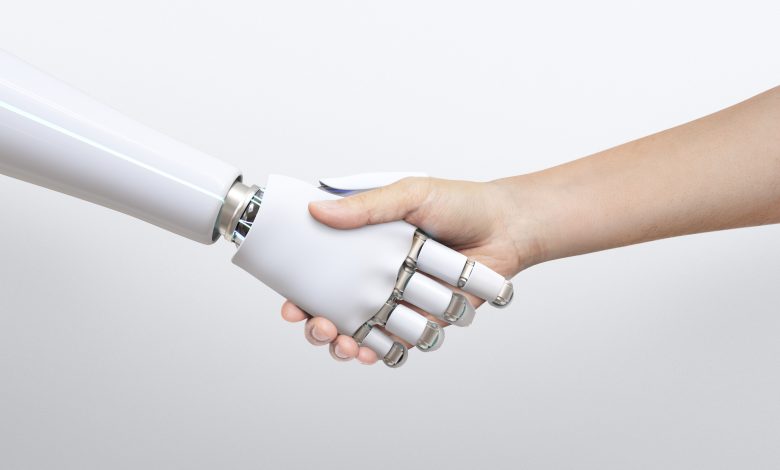
For years, conversations about AI have been dominated by a false binary: humans versus machines. But as organizations push into increasingly complex, high-impact workflows, that debate has become a distraction.
The future is not autonomous. It is orchestrated. And the systems that will carry us forward are neither purely human nor purely artificial — they are hybrid.
We are entering a new era where AI is no longer a passive helper on the sidelines. It is becoming a true participant in the workforce. These systems are now capable of interpreting complex goals, drafting detailed plans, and delegating work dynamically across humans and automated agents.
In this model, humans aren’t replaced. They are elevated — positioned where judgment, nuance, and expertise create the most value.
The Evolution of Complexity
The industry’s history with AI began with small, tightly defined tasks used to train early ML algorithms. In those early days, a single contribution might take half a minute. But as models became more capable, the work remaining for humans grew more intricate.
Now, providing a single, meaningful data item to move frontier AI forward can require hours, days, or even weeks of an expert’s time.
Despite years of research focused on achieving fully autonomous AI, the limitations are becoming increasingly visible. Models still struggle in the exact places where professional work is most demanding. They falter with ambiguity, incomplete context, ethical nuance, and long-horizon reasoning.
They generate answers, but not always adequate outcomes. They follow instructions, but not always intent.
Human experts, while strong in those areas, face a different constraint: scale. Precision takes time. Coordination takes effort. Expertise is not instantly or universally available.
Hybrid systems resolve this tension. They pair human strategic judgment with AI’s tactical speed and operational rigor. The result is a workflow that is far more adaptive and resilient than either could deliver alone.
The Inflection Point: Automated Decomposition
For a long time, the bottleneck in automating complex workflows wasn’t execution — it was planning. Before any task could be automated, someone had to deconstruct it, sequence it, and assign it appropriately.
That “someone” was always a human. Decomposition was a manual art form, a bottleneck where a human project manager had to step in before automated systems could take over.
Agentic LLMs changed the equation. When models gained the ability to read a high-level objective, recognize its nuance, and generate a structured, multi-step plan, AI moved from being a tool to being an active coordinator.
This capability—automated, context-aware delegation—is the real breakthrough. It allows an AI agent to:
- Understand the complexity of a task.
- Determine where human insight is essential.
- Deploy automated models where speed is needed.
- Manage quality checks across both.
In other words, AI doesn’t just participate in execution. It participates in decision-making about execution. This is the foundation of hybrid intelligence.
How Hybrid Orchestration Works
Hybrid agents operate less like assistants and more like autonomous project leads. They absorb the user’s intent and convert it into a detailed plan. They then orchestrate the work through both artificial and human contributors.
Automated models handle rapid synthesis, drafting, summarization, and structured reasoning. Human experts step in for tasks requiring specialized knowledge, contextual evaluation, or the kind of insight that cannot be encoded in a prompt.
The magic is in the interplay. AI identifies when it is hitting the limits of autonomy and hands the task to a human with precision.
Humans, in turn, validate or refine outputs and send the work back into an automated loop. This allows the agent to iterate quickly and intelligently.
The result is neither human-led nor AI-led. It is system-led — a coordinated workflow where each step is executed by the most capable actor. This is how modern organizations will scale.
Why Hybrid Outperforms the Alternatives
In practice, hybrid systems outperform traditional workflows for a simple reason: they are self-optimizing. They do not rely on human availability alone, nor do they suffer the brittleness of full autonomy.
Instead, they adapt continuously. They learn which steps require expertise, where automation is safe, and how to enforce quality.
Performance data across domains reflects this dynamic:
- AI-only systems are fast but fragile.
- Human-only systems are accurate but slow.
- Hybrid systems deliver speed, accuracy, and reliability simultaneously.
This is a structural advantage. Organizations that adopt hybrid agents aren’t just doing the same work faster. They are unlocking workflows that were previously impossible due to cost, complexity, or scale constraints.
Hybrid intelligence doesn’t compete with human labor. It multiplies it.
Redefining the Role of Expertise
Perhaps the most profound shift brought by hybrid agents is the evolving role of human contributors. Instead of spending time on repetitive, administrative, or low-impact tasks, experts engage only where their judgment significantly impacts the outcome.
They become the strategic layer of the workflow, not the operator. This reframes expertise in three meaningful ways:
- Value: It becomes more valuable because humans intervene precisely when high-stakes reasoning is required.
- Scalability: It becomes more scalable because AI handles task distribution, iteration, and quality control.
- Accessibility: It becomes more accessible, allowing global pools of qualified experts to contribute without friction.
In a hybrid model, human work doesn’t diminish. It becomes more targeted, more rewarding, and ultimately more influential.
Moving Past the “Versus” Narrative
The idea that AI will replace humans has overshadowed the more important reality. The most powerful systems of the future will combine the strengths of both.
The strategic insight of humans plus the tactical capability of AI creates an operating model that outperforms either one alone. The debate itself has become outdated.
The real question is: How do we design intelligent systems that know when to call on humans and when to deploy automation? Hybrid agents are the first serious answer to that question.
They represent a future where:
- AI is a collaborator, not a replacement.
- Humans operate at their highest level.
- Workflows are adaptive and self-directing.
- Output quality improves as the system learns.
This is not speculative. It is the direction the industry is already moving in, quickly.
The Future of Work is Orchestrated
The shift toward hybrid agents marks the beginning of a fundamental transformation in how organizations operate. By 2026, AI won’t be viewed as an assistant at the edges of work.
It will be recognized as an intelligent orchestrator. It will coordinate tasks, determine when human expertise is required, and ensure accuracy through integrated verification.
This is the future of work: Human strategic judgment + AI tactical speed + system-wide orchestration.
The organizations that embrace this hybrid operating model will unlock a new level of scale, precision, and velocity. They will redefine what teams can accomplish. The future isn’t AI versus humans. It’s AI with humans, working together as a unified, hybrid system more powerful than either could ever be alone.