Previously, network security teams treated automation as the goal, with a focus on reducing manual work, speeding up policy changes and keeping pace with increasingly complex environments. Today, automation is the baseline for effectively managing security across hybrid, cloud and on-premises networks.
In these environments, tasks that once took hours, such as policy enforcement, risk analysis, change validation and compliance checks, can now happen faster, more consistently and at scale. This progress is significant, but it revealed a new challenge. As hybrid architectures expand and policy environments grow more fragmented, the focus shifts from acting quickly to fully understanding the impact of each action.
Recent industry research found that nearly half of organizations now operate with moderate to high levels of automation. The data points to a market in transition, with automation becoming increasingly common, but not yet consistently integrated across the enterprise. Many organizations have automated specific workflows, rather than creating a fully-connected operating model across teams, tools and environments. As a result, some tasks are completed faster, but the organization does not necessarily become more secure overall.
Automation addressed consistency, not complexity
In distributed hybrid and multi-cloud environments, where policies span clouds, vendors, firewalls, applications, and control points, drift can carry as much risk as delay. One misaligned rule, an outdated access path, or a missed change can expose the environment before teams even realize something is wrong.
Automation helps close these policy gaps. Teams can harness it to validate changes before they are deployed, enforce rules across environments and continuously check if what is running in production matches the approved policy. Ultimately, automation has shifted from a productivity tool to a control mechanism. But maintaining consistency only solves part of the problem. Teams still need to understand whether a proposed change could create new risks before it goes live. The next step is adding intelligence to that consistency, moving from automated execution to AI-assisted decision-making
From automated execution to AI-assisted judgment
Agentic AI builds on automation’s foundation by bringing additional context into policy decisions. Instead of simply executing predefined workflows, AI-assisted systems can analyze complex policy environments, identify risk patterns, recommend changes, and model downstream impact before those changes are applied. Automation creates the consistency needed to execute policy reliably, while agentic AI adds a layer of analysis that can help teams understand which changes should be made and what those changes could affect.
With 65% of organizations reporting that they have adapted their security strategies in response, AI is no longer a future consideration for network security teams. It is influencing how they approach visibility, risk and operational readiness across complex environments.
However, many organizations are still cautious about applying AI in network security, where a single misconfiguration can have serious consequences across cloud, network and application layers. AI may be ready to recommend, but most security leaders are not ready to let it act alone.
AI-driven security requires governance before autonomy
While AI technology is advancing quickly, trust is not keeping pace. Security teams are asked to rely on systems that can recommend changes, predict risk and interpret complex environments, even as accountability for those recommendations remains difficult to define. AI can analyze policy environments, recommend changes and model downstream impact, but without consistent policy models, clear approval structures and shared ownership across teams, handing over control to autonomous systems can introduce as much risk as it removes.
That is especially true in highly-distributed sectors, like banking, healthcare and critical infrastructure, where security decisions rarely affect one system in isolation. Even small errors can cascade quickly, making blind trust in AI an operational risk in itself. Until organizations can explain, validate and govern AI-driven decisions with the same rigor they apply to human ones, full autonomy will remain out of reach.
Human judgment remains the deciding factor
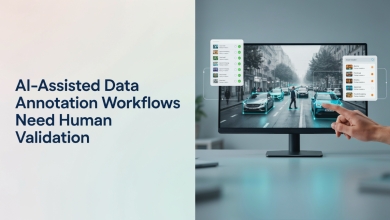
The goal is not full AI autonomy, but a model where automation applies approved changes consistently across environments, AI supports analysis and humans decide when action is needed. AI cansurface policy issues, flag risky access paths and show how proposed changes could affect access, exposure, or compliance. Human oversight is the most critical layer, with security teams reviewing recommendations, weighing risk and making the final call before action is taken.
This balance reflects the reality of modern network security. Faster execution and more intelligent decision-making are only valuable when organizations can maintain complete control over how decisions are reviewed, approved and implemented. As agentic AI becomes more capable, its success depends on defined accountability and governance models that clarify the role of AI and humans in each decision.
The rise of agentic AI increases the value of a network security team’s time and expertise. As automated systems handle more of the execution layer, security teams can focus on the work that requires judgment, such as validating recommendations, setting guardrails and ensuring AI-driven actions align with business and security priorities. The organizations best positioned for this next phase will not be the ones that move fastest toward autonomy, but the ones that build the governance foundation needed to use it responsibly.