



The first AI video generation tools were released in 2023. What followed afterward among creators was a buzz about “prompting” and “prompt engineering”. The popular belief was that the more detailed your prompt was, the better the video output would be—and that is mostly true to this day. The competition that ensued among creators was over who would write the best prompts. It opened up a new economy where creators taught upcoming talents how to write good video prompts.
Fast-forward to 2026, and the current generation of tools has become more powerful and commonplace. The quality of video output, even from relatively simple prompts, is light-years ahead of what early tools could create. Consequently, writing good prompts is becoming less of a competitive edge for creators.
We are gradually entering an era where anyone with the right tools can create great videos. Also, the trend in generative videos is shifting from one-scene shots to storytelling. In this era, the competitive advantage that will make a creator’s voice stand tall from the sea of explorative creatives will not be prompting. It will be the mastery of the art of creative direction, or what is now fondly called “Vibe Direction”
How does Creative Direction Differ from Prompting?
In the first phase of AI video development, creators judged a tool by how well it could generate objects, actions, or visual details from text prompts. Part of the reason for that was that early tools could only generate videos that were 15 seconds or less in length.
Therefore, the focus of creators was on using prompts to decide what should appear on screen. Tools that could bring more of their ideas to the screen in that single shot received higher praise and recommendations.
With Vibe Direction, the focus and praise are moving back to the creator, rather than dwelling entirely on the tool. Once again, the role of creators is changing from prompt engineers to creative directors. They are no longer bystanders but play an active role in the outcome of every project.
Just like in real-world filmmaking, AI video directors must decide if a story should be suspenseful, romantic, comedic, animated, futuristic, or fantastical. The creator is also in charge of dictating the emotional relationship between characters, the visual tone of different scenes, the pacing of the story, and the consistency of the overall world.
A Structured Approach to AI Filmmaking
The concept of AI filmmaking was birthed by modern tools that can create longer videos (some up to 50 minutes in length). In this era, the new challenge for creators is not identifying the most powerful tools or writing the best prompts; it is maintaining control over the tone, atmosphere, visual language, characters, settings, and overall world of the entire project.
Instead of requesting an isolated output at a time, creators may need to direct a broader production workflow where characters, settings, props, scripts, and visual choices remain connected from start to finish.
Consequently, creators need the right environment to articulate the multi-shot scenes into a compelling story. The emergence of platforms like CapCut Video Studio – Director Mode is proving to be the game-changer for creators.
The Right Environment Simplifies AI Filmmaking
CapCut’s Director Mode allows creators to work around a shared subject, story, world, and visual direction while continuing to manage important production elements throughout the creative process.
Creators can begin by leveraging AI agents in CapCut’s Director Mode for concept development, script generation, and content planning. Director Mode also supports multi-shot and multi-scene creation, allowing users to move beyond isolated clips and develop longer, more connected narratives.
Building on that planning stage, Director Mode brings scripts, characters, scenes, props, and visual direction into a single workflow that gives creators better control over their videos, especially in long-form storytelling. As a result, creators can make continuous adjustments around the same creative direction instead of treating every scene generation as a separate task.
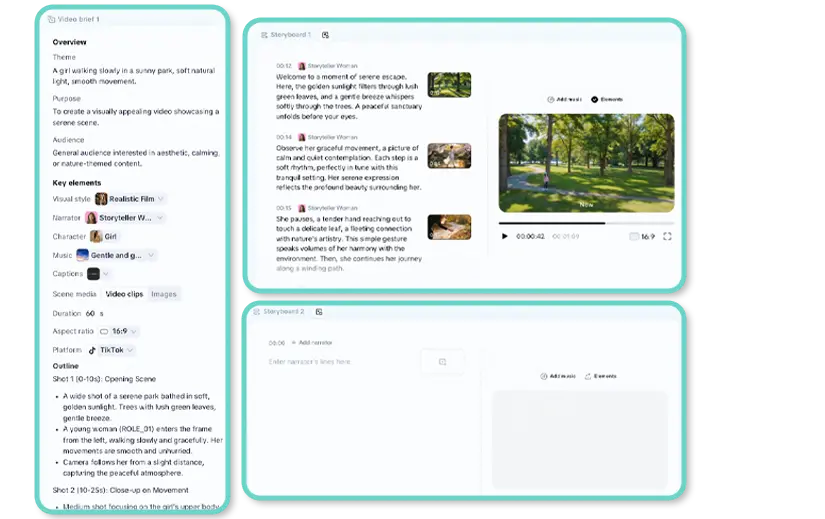
This is also where local refinement becomes important. If one shot feels slightly off—for example, the lighting is wrong, a character’s expression does not match the scene, or a camera angle breaks the intended mood—creators do not have to regenerate the entire sequence from the beginning. With Director Mode, they can adjust a specific shot or scene while keeping the broader story, character setup, and visual direction intact. This helps reduce the trial-and-error cost of production and makes the creative process feel closer to directing: correcting the part that needs attention without losing the world that has already been built.
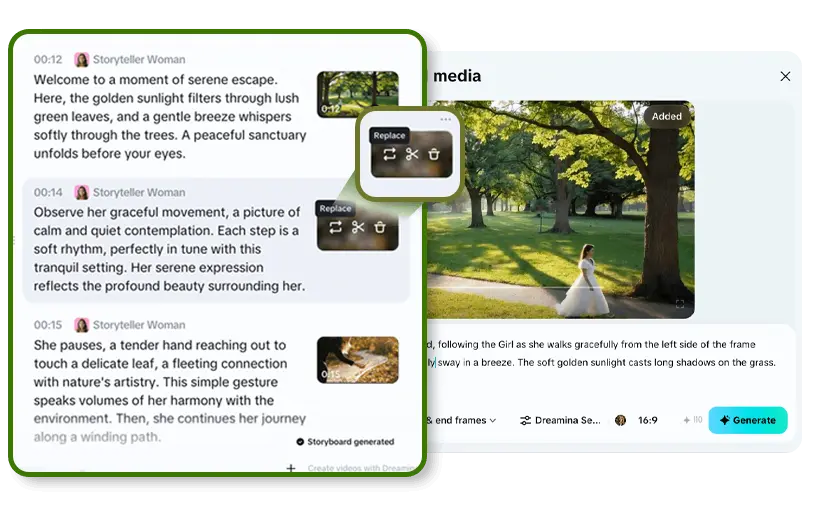
Within the same creative environment, characters, scenes, and props can also be managed together, helping reduce fragmented outputs and support greater consistency across different scenes.
For serialized or long-form content production, another useful feature is the ability to retain characters, scenes, and story elements as reusable creative assets. This can reduce repeated setup and improve production efficiency across multiple episodes or connected projects.
Creators that will Stand Out in the AI Filmmaking Era
As generative AI tools become better and more accessible, anyone can make great videos with simpler prompts. Although this is an interesting and inevitable future, the danger to creators who rely on these tools for storytelling is the risk of sounding like everyone else. Creators who will stand out are those who master creative direction.
Access to tools like CapCut Video Studio is an important part of gaining that mastery, especially for creators who want to maintain creative authenticity. In a world where everyone can create good videos, it is not the tool, but the creator behind it that determines which videos will be memorable.