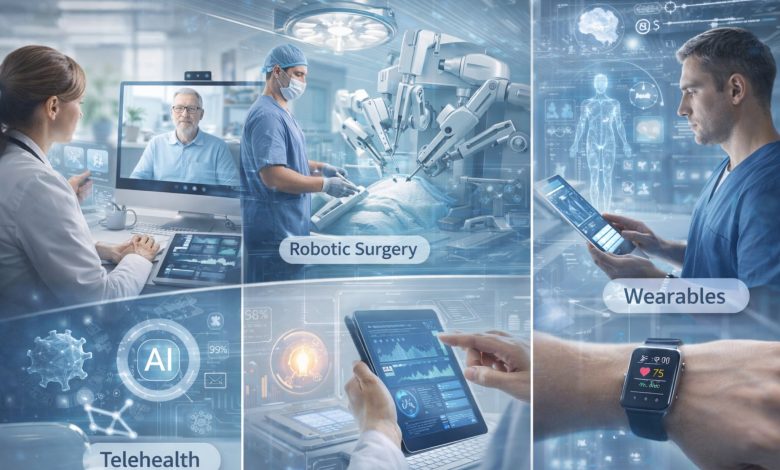
New technologies have greatly changed the healthcare industry.
Modern healthcare made diagnosis, treatment, and patient care faster, more accurate, and easier to access. AI in diagnostics, telehealth services, and advanced surgical tools are all examples of how technology is changing healthcare.
In this blog, we explore the key ways in which modern healthcare is evolving through technology, its impact on patient care, and the challenges that come with these advancements.
1. Revolutionizing Diagnostics and Treatment
# AI and Machine Learning in Diagnostics
AI and machine learning have significantly improved diagnostic accuracy. AI tools can now analyze modern healthcare images like X-rays and MRIs, identifying early signs of diseases such as cancer and heart disease, enabling earlier, life-saving interventions.
# Precision Medicine
Precision medicine tailors treatments based on a patient’s genetic makeup. By analyzing genetic data, doctors can prescribe more effective, personalized treatments, especially in fields like oncology, where therapies are designed for specific tumor mutations.
# Robotic-Assisted Surgery
Robotic surgery enhances precision, control, and flexibility, allowing for minimally invasive procedures. These systems reduce recovery time and complications, and are used in specialties like urology, cardiology, and orthopedics.
2. Telehealth and Remote Patient Monitoring
# Telehealth: Expanding Access to Care
Telehealth has become a cornerstone of modern healthcare, especially after the COVID-19 pandemic. Patients can now consult with healthcare professionals remotely through video calls, chat, or secure messaging platforms.
This has been especially beneficial for those in rural or underserved areas where access to healthcare facilities is limited.
# Remote Monitoring Devices
Wearable devices and mobile health apps are increasingly being used to monitor patients’ vital signs in real-time. For instance, heart rate monitors, blood pressure cuffs, glucose trackers, and fitness bands collect data that can be shared with healthcare providers.
This allows for continuous monitoring of patients with chronic conditions, enabling early intervention before serious complications arise.
3. Enhancing Patient Engagement and Education
# Patient Portals and Mobile Health Apps
Patient portals are a great example of how technology is improving patient engagement. These secure online platforms allow patients to access their medical records, track their health metrics, book appointments, and communicate with their healthcare providers.
Mobile apps, on the other hand, help patients manage their treatment plans, set reminders for medication, and stay informed about their health condition.
# Personalized Care Through Digital Tools
Digital tools help healthcare providers deliver personalized care. Mobile apps and wearables allow patients to actively participate in their healthcare by providing real-time data, educational resources, and notifications about upcoming appointments or medication schedules.
This level of engagement leads to better outcomes as patients become more informed and empowered to manage their health.
4. Improving Operational Efficiency
# Electronic Health Records (EHR)
EHRs have transformed how medical data is stored and accessed. These digital systems allow healthcare providers to have instant access to a patient’s full medical history, including past treatments, allergies, test results, and medications.
EHRs reduce the risk of errors, improve coordination among healthcare providers, and streamline the overall healthcare process.
# AI for Administrative Efficiency
AI and automation are also making healthcare administration more efficient. From scheduling appointments to managing insurance claims, AI systems are helping reduce the administrative burden on healthcare staff.
Automated systems can handle routine tasks, leaving more time for healthcare professionals to focus on direct patient care.
5. Ensuring Patient Safety and Hygiene
# Infection Control Technologies
Infection prevention is a top priority in modern healthcare settings. With the help of technology, hospitals can now better monitor hygiene compliance among healthcare workers.
Automated hand hygiene stations track handwashing frequency, and ultraviolet (UV) light robots are used to disinfect patient rooms and surgical suites, significantly reducing the risk of hospital-acquired infections.
# Use of Disposable Medical Supplies
Disposable medical supplies, such as disposable gloves, play a crucial role in maintaining safety and hygiene in modern healthcare settings. These products are designed to protect both patients and healthcare workers from contamination.
Digital inventory management systems help track the usage of supplies like disposable gloves and KN95 masks, ensuring they are available when needed and reducing waste.
6. Data Security and Privacy
# Protecting Patient Data
As healthcare becomes more digitized, the amount of sensitive data being generated is growing exponentially. Protecting this data from breaches and unauthorized access is critical.
Modern healthcare providers are investing heavily in cybersecurity measures such as encryption, multi-factor authentication, and secure data-sharing platforms. Ensuring the privacy of patient data is not only an ethical responsibility but also a regulatory requirement.
# Blockchain for Data Integrity
Blockchain technology holds potential for improving data security in modern healthcare. By creating immutable, decentralized records, blockchain could help ensure that medical data is accurate and secure.
It also provides a transparent audit trail, which is vital for maintaining patient trust and complying with regulations.
7. Challenges in Implementing Modern Healthcare Technology
# Cost and Accessibility
While healthcare technology promises many benefits, its implementation often comes with high costs. Modern healthcare practices may find it challenging to invest in expensive software or hardware. Additionally, there is a disparity in access to advanced technologies between urban and rural areas, which can result in unequal care.
# Integration and Interoperability
A major hurdle in healthcare technology is ensuring that various systems work together. Many modern healthcare institutions use different software platforms for managing patient records, lab results, and insurance claims.
# Training and Adaptation
Healthcare professionals must be trained to use new technologies effectively. Without proper training, there is a risk that new tools will be underutilized or misused. Technology vendors must work closely with healthcare providers to ensure smooth adoption and ongoing support.
8. The Future of Healthcare Technology
# Artificial Intelligence in Healthcare
AI will continue to shape the future of healthcare by enhancing diagnostic capabilities, automating administrative tasks, and improving treatment personalization. As AI models become more advanced, they will be able to assist healthcare providers in making more informed decisions, reducing human error, and increasing efficiency.
# The Rise of Virtual Health Assistants
Virtual health assistants, powered by AI, are set to become an integral part of modern healthcare. These tools can help patients manage their health, remind them of medication schedules, and provide instant access to medical advice.
Conclusion
The integration of new technologies into healthcare is undeniably transforming the way care is delivered. From more accurate diagnostics to better patient engagement and improved operational efficiency, the impact is vast and ongoing.
However, some challenges must be addressed, including costs, data security, and ensuring that all patients have equal access to technological advancements.
New tools and systems will not only improve clinical outcomes but also enhance the patient experience, making modern healthcare more accessible, efficient, and effective.