Marketing is changing fast, and brands can feel it. Customer journeys are less predictable, search behavior is shifting, and content is being created at scale. That is exactly why the Future of digital marketing now depends on how well businesses combine speed, relevance, and trust.
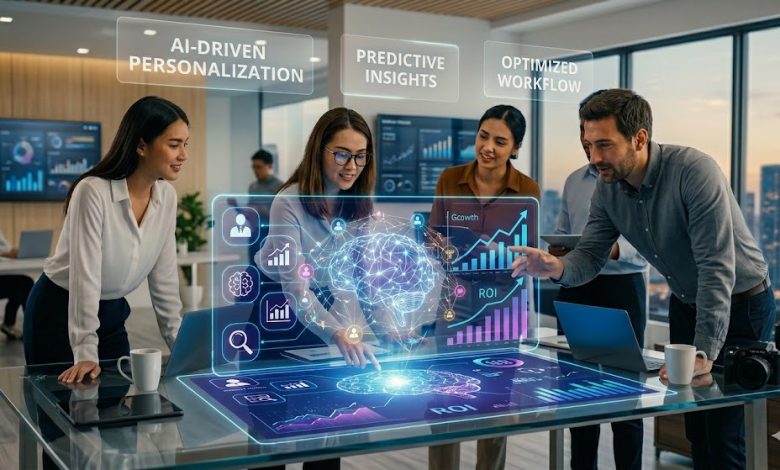
AI is no longer a side tool for large enterprises only. It is helping teams write smarter campaigns, predict customer intent, improve targeting, personalize content, and measure results with better accuracy. Recent industry reporting from Adobe, Salesforce, and HubSpot shows marketers are moving beyond testing and toward practical AI adoption across content, search, personalization, and workflow efficiency.
Why AI Is Becoming the Core of Modern Marketing
AI matters because marketing has become too complex for manual execution alone. Customers move across search, social, email, paid ads, websites, marketplaces, and AI assistants. Businesses need faster decisions and cleaner execution.
From guesswork to smarter decision-making
The real value of AI in digital marketing is not just speed. It is a better judgment. AI can analyze patterns from user behavior, campaign performance, and customer actions to help teams make stronger decisions in less time. Reports from Google, Adobe, and Salesforce all point to AI becoming central to personalization, automation, and customer experience strategy.
A business that once needed days to review campaign results can now spot winning content, weak landing pages, budget waste, and audience shifts much faster. That gives companies a real edge.
Quick fact: HubSpot reports that more than 92% of marketers plan on or are already using SEO for traditional and AI-powered search engines.
What AI is improving right now?
Here is where AI is already creating value:
- Audience segmentation
- Content ideation and optimization
- Predictive analytics
- Email personalization
- Ad targeting and bidding
- Lead scoring
- Search visibility planning
- Performance reporting
How Automation Is Changing the Daily Work of Marketers
Marketing teams are under pressure to do more with less. That is where Digital marketing automation becomes a business advantage.
A short way to think about it: automation handles repetition, while people focus on strategy, creativity, and quality.
What businesses can automate without losing the human touch
Automation works best when it supports marketers, not replaces them. Businesses can use it to:
- Trigger email flows based on behavior
- Schedule cross-channel messaging
- Route leads to the right sales teams
- Pause poor-performing ads faster
- Build reports automatically
- Send personalized follow-ups at scale
Mailchimp notes that omnichannel marketing is becoming harder to manage manually, and automation helps brands stay timely and consistent across touchpoints.
Pro tip: Use AI to draft faster, analyze faster, and test faster. But always keep a human review step before publishing, sending, or scaling a campaign.
The New Competitive Advantage Is AI-Driven Personalization
Customers notice relevance. They also notice lazy automation. The brands that win will be the ones that make personalization feel helpful, not robotic.
Why AI-driven marketing is more than smart recommendations
Modern AI can adapt messaging based on user behavior, funnel stage, channel preference, and past interactions. That means businesses can serve more relevant content without creating every asset manually from scratch.
What does better personalization look like
Before using AI, many campaigns looked like this:
- Same email for every subscriber
- Same ad copy for every audience
- Same offer for every buyer stage
After AI-guided personalization, businesses can create:
- Product recommendations based on behavior
- Dynamic email content by segment
- Smarter retargeting journeys
- Landing page copy aligned with search intent
- Better timing based on engagement patterns
What the Future of Search Means for Business Growth
Search is evolving from blue links to answers, summaries, and AI-assisted journeys. That shift changes how businesses earn visibility.
Search is becoming more conversational
The Future of digital marketing is closely tied to how people search. Users now ask longer, more detailed questions. They expect quick answers and trusted recommendations. Recent research highlighted by Google and Search Engine Land shows AI-assisted search is reshaping the path from discovery to decision.
For brands, this means content must be:
- Clear
- Well-structured
- Credible
- Easy to extract
- Backed by expertise
Businesses that still publish vague, thin, or repetitive content will struggle to stand out. As brands expand their presence across multiple digital channels, DAM marketing can support more consistent use of approved content across campaigns and customer touchpoints.
What brands should focus on next
Let’s break down how marketing has transformed with the rise of AI.
A business working with a skilled Digital marketing agency can move faster here because strategy, content, automation, and measurement need to work together.
Risks Businesses Should Not Ignore
AI creates opportunity, but it also creates noise. That is why smart adoption matters.
The biggest mistakes brands are making
A short warning before the list: speed is useful, but careless speed hurts trust.
Common mistakes include:
- Publishing unedited AI content
- Ignoring fact-checking
- Losing brand voice
- Over-automating customer communication
- Treating AI as a shortcut instead of a system
- Measuring output instead of business impact
HubSpot’s 2026 trend reporting also notes that many marketers believe the internet is increasingly flooded with AI-generated content and that consumers are getting better at spotting it.
What responsible use looks like
Smart teams build simple guardrails:
- Review all public-facing content
- Use approved prompts and style guides
- Validate claims and data
- Monitor conversions, not just clicks
- Protect customer data
- Blend automation with human judgment
Key Takeaways
- AI in digital marketing is now a real business tool, not just a trend
- Digital marketing automation helps teams save time and improve consistency
- AI-driven marketing works best when paired with human creativity and review
- The Future of digital marketing will favor brands that are useful, visible, and trusted
- Personalization, automation, and search adaptation should now be core priorities
Closing Words
The future of marketing will not belong to businesses that simply use AI. It will belong to businesses that use it well. The winners will combine smart automation, strong messaging, better data, and genuine customer understanding. AI can help brands move faster, but trust, clarity, and relevance will still decide who grows. Businesses that start building that balance now will be far better positioned for the next stage of digital success.
FAQs
What is the biggest benefit of AI in marketing?
The biggest benefit is better decision-making at scale. AI helps teams analyze behavior, improve targeting, personalize experiences, and save time on repetitive work.
Will AI replace digital marketers?
No. AI can automate tasks, but strategy, creativity, emotional insight, and quality control still need people. Most leading marketing research points toward augmentation, not full replacement.
Is automation only useful for large businesses?
No. Small and mid-sized businesses can use automation for email workflows, lead handling, reporting, and ad optimization. It often helps lean teams work more efficiently.
How should businesses prepare for AI-powered search?
They should publish clear, structured, expert-led content, improve technical foundations, and focus on intent, trust, and user value.
AI is reshaping how businesses attract, engage, and convert customers. Now is the right time to audit your strategy, improve your workflows, and build a smarter marketing system that is ready for what comes next. If your brand wants stronger visibility, better efficiency, and more meaningful growth, this is the moment to act.