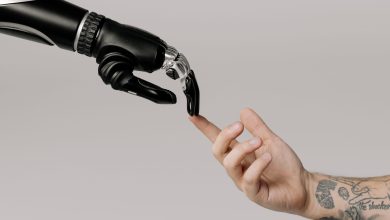
We spend plenty of time asking which jobs intelligent machines will replace. The more important question may be who owns those machines, and who receives the income they generate
Picture if you will a worker. Let’s call him Waylon. Waylon works long days. Waylon wears many hats. He is a driver for hire. He delivers goods across the city. He cleans and serves and fulfills tasks for several businesses before winding down his day, and plugging in to charge.
Waylon is not a human. In theory, Waylon could be an autonomous vehicle. A humanoid robot. Embodied AI. Waylon works without complaint. Customers pay. Revenue is generated. But who earns?
Most conversations about AI and robotics focus on labor. Never-ending debates rage about which jobs machines will replace, which workers will need to retrain and how governments should respond. Those are important questions. But they overlook another issue that may ultimately matter just as much.
As embodied AI and robotic commercialization accelerates, who will own the machines performing the work?
The rise of embodied AI
Artificial intelligence is moving beyond screens and into the physical world. AVs, delivery robots, inspection systems and other intelligent machines will not merely produce information. They will become assets capable of generating revenue. That creates an enormous ownership question.
If these machines (many of which are prohibitively expensive for the everyday individual) are owned almost exclusively by a small number of corporations, the economic benefits of automation will come first to those corporations and their investors.
But that doesn’t have to be the case. Individuals and small businesses could also own and earn from intelligent machines. The next generation of entrepreneurs may not build factories or hire large teams. They may own one autonomous vehicle, several service robots or a small portfolio of specialized machines that perform work throughout their communities.
Technology should not simply replace people. It should create new ways for people to participate in the value it produces.
Centralized ownership is the default
Large institutions have obvious advantages in the embodied AI future. They have greater access to capital, data, software and customers.
As such, the easiest robotics economy model to imagine is a centralized one. Large companies own the machines, technology platforms control demand and everyone else participates as an employee, contractor or customer.
This concentration should not be treated as inevitable simply because intelligent machines are expensive or technically complicated. The purpose of technology should be to remove unnecessary gatekeepers, not replace old ones with more powerful digital versions.
Micropreneurship > Gig work
This is where the idea of micropreneurship becomes useful. A micropreneur is not just a gig worker or someone pursuing a side hustle. A gig worker sells time through another company’s platform. A micropreneur owns or controls a productive asset and uses shared infrastructure to operate it.
That asset could be an autonomous vehicle, a delivery robot, an agricultural machine, an inspection device or a specialized robot serving local businesses. A person may own one. A family business may operate five. A local entrepreneur may manage a small fleet tailored to the needs of a particular community. That is a different economic relationship with technology.
I have seen the benefits of ownership in my work in electric mobility. Many electric vehicles are expensive, software-enabled machines that sit idle for much of the day, offering no value to their owners. At the same time, many drivers want access to an EV for work, errands or work without buying one themselves. By creating a peer-to-peer platform for EVs, my company has connected those two sides. Individuals can monetize their assets, while drivers can rent directly from owners and experience the benefits of EV technology without taking on the full cost of ownership.
The same principle can apply to robotics and embodied AI. Individuals do not need to build a robot or write the autonomous software to participate in the economics. They just need a practical way to own, manage and monetize the machines.
Building an ownership economy
A few things need to happen if individuals and small businesses are going to participate meaningfully in physical AI.
First, we need financing designed around productive assets. Traditional credit will remain important, but lenders will also need to understand how a machine performs, from its utilization, operating history, maintenance profile and revenue potential.
Second, we need shared operating infrastructure. A small owner cannot independently build the systems required to insure, secure, monitor, maintain and monetize an intelligent machine. Those capabilities must become accessible without requiring the owner to surrender the asset itself.
Third, we need interoperability and owner control. The entrepreneurs taking the financial risk should retain meaningful control over their machines, data and marketplace relationships.
None of this guarantees success. Some machines will be poor investments. Some marketplaces will fail. Some operators will discover that the economics do not work. The goal is not to promise everyone effortless passive income. It is to ensure that ownership remains possible and that the automation revolution is not reserved exclusively for big companies.
The arrival of autonomous vehicles and robotics is often presented as something that will happen to ordinary people. In my opinion it’s something that can happen for them, if we just get it right.