The unemployment crisis
Conversations about AI’s impact on jobs and employment have been circulating for years. If you look at what’s been written so far, you’ll see that there’s very little consensus about the long-term impacts of AI on the world of work.
Goldman Sachs’ research, for example, says that 6-7% of the US workforce will be impacted if AI is widely adopted, but the impact will be temporary as new opportunities will arise because of AI.
In the UK, research by King’s College London found that the release of ChatGPT marked a turning point for employment. Firms with workforces highly exposed to AI reduced total employment by 4.5% on average, with junior positions most affected. These firms were also 16.3% less likely to post new vacancies.
Globally, the World Economic Forum reports that although AI will create new jobs, it is expected to displace 92 million jobs worldwide by 2030. The fastest-growing roles are projected to include farmworkers, delivery drivers, construction workers, salespeople, and food processing workers. In contrast, roles most at risk include cashiers and ticket clerks, administrative assistants, caretakers, cleaners and housekeepers.
This demonstrates that there is no clear answer. While there is broad agreement that AI will affect employment, there is no consensus on the scale or nature of that impact.
My view is that AI will inevitably displace millions of jobs. We’re already seeing the effects, and they will only become more severe over the next five years. Everyone knows it – but nobody wants to admit it.
The narrative that AI will enhance human capabilities and generate new jobs is overly simplistic and, in many respects, wishful thinking. Although some jobs will be enhanced, far more are likely to simply disappear.
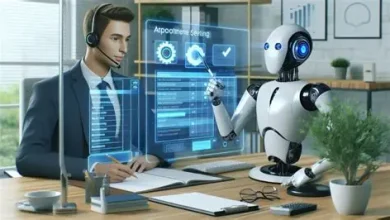
The new jobs that are created are also not going to directly replace those that are lost. Those newly created roles will be for prompt engineers, AI trainers and data curators, in other words, uniquely specialised roles. The first jobs to be lost will be repetitive, admin-heavy roles like data entry, customer service or administration. Simply put, those who lose their jobs will not be able to step directly into the new roles being created.
The answer? AI.
Ironically, the solution to the impending unemployment crisis is in identifying AI’s limitations. AI has extraordinary capabilities, and its rapid development is exciting – partly because no one knows exactly how far it can go.
But AI does have several key weaknesses:
Cultural bias
It’s well known that AI suffers from a bias problem. So much of its development has relied on a narrow, limited view of the world, meaning it operates within very defined parameters. There are literally hundreds of examples, including the well-documented gender-bias of Amazon’s recruitment tool, which favoured male candidates because it had been trained on CVs submitted predominantly by men.
Inability to create novelty
AI’s cultural bias reflects a fundamental limitation: it does not “think” independently. AI systems generate outputs based entirely on the data they are trained on. As the available real-world data is exhausted, synthetic data is being used to expand training sets. The trouble is, the synthetic data is based on existing data, so we are simply repackaging knowledge we already have; AI is not learning anything truly new.
Lack of human traits
AI is good at mimicking human language and behaviour, but there are many human traits that it cannot replicate. Empathy, creativity, judgment, and intuition are all things that are not based on data, and are therefore things that AI hasn’t been taught.
These weaknesses are limiting AI’s development, and in turn, limiting our own. The next step is to move beyond AI that simulates intelligence to AI that understands and can meaningfully collaborate with humans by addressing the limitations outlined above.
Progress toward Artificial General Intelligence (AGI) can only be achieved by leveraging uniquely human traits and intelligence, and it is precisely this approach that can help us address the looming unemployment crisis.
New systems are being developed in which people from diverse backgrounds are paid to teach AI: filling data gaps, correcting cultural bias, and adding emotional, ethical, and cultural understanding. By learning from voices across ages, professions, cultures, and perspectives, AI moves beyond a narrow viewpoint and begins to truly reflect humanity.
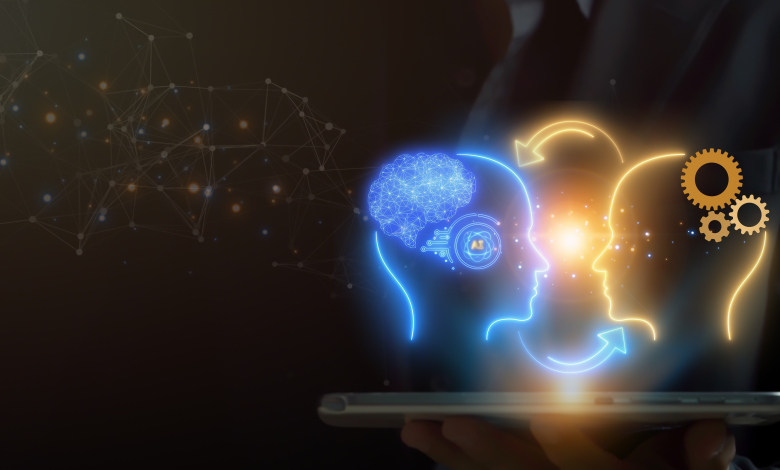
These solutions work like a reverse ChatGPT: a curiosity engine that identifies gaps in its knowledge and fills them by learning directly from humans. Crucially, the humans imparting that knowledge are meaningfully compensated for their contributions.
By bringing humans and AI together in this way, people become essential partners in building responsible, ethical AI. This approach catalyses the development of truly intelligent systems, while managing the employment transition, protecting workers from the negative effects of job displacement, and creating more human-aligned AI.