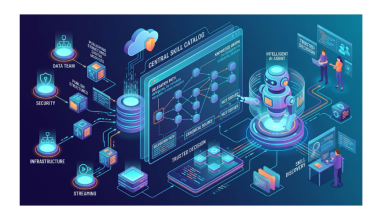
The modern digital landscape is shifting at an unprecedented velocity, driven by rapid advancements in artificial intelligence, frequent search engine algorithmic updates, and rapidly evolving consumer behaviors. For growing enterprises and mid-market organizations, managing fragmented marketing operations across separate agencies often leads to misaligned messaging, inflated operational costs, and sluggish strategic execution. To navigate this increasing operational complexity, forward-thinking executive leadership teams are turning toward a unified growth model by partnering with a dedicated full stack marketing agency that can seamlessly integrate strategic vision, creative content execution, technical search engine optimization, and data-driven acquisition channels under one unified operational umbrella.
The Evolution of Unified Growth Architecture
In traditional digital marketing models, growing businesses frequently hired specialized niche agencies for distinct individual functions—one vendor handled organic search engine optimization, another managed paid pay-per-click advertising campaigns, a third produced editorial content marketing assets, and a standalone web development team maintained site code and server infrastructure. While individual specialized skills are essential for tactical execution, this compartmentalized vendor strategy creates substantial operational friction over time. Critical data silos emerge, strategic priorities become fragmented across teams, and core brand messaging loses consistency across key customer touchpoints. Furthermore, strategic organizational agility suffers significantly when cross-channel campaign updates require extensive, multi-party coordination between competing third-party service providers.
An integrated growth architecture directly addresses these fundamental operational challenges by aligning every digital marketing discipline under a single, data-informed strategic roadmap. When technical infrastructure, brand messaging, performance advertising, and conversion rate optimization work in complete harmony, organizations experience powerful compounding efficiencies across their entire growth funnel. For example, real-time keyword performance and conversion metrics gathered from paid advertising campaigns can immediately inform organic content development strategies, while technical speed enhancements and user experience optimization benefit every inbound traffic channel simultaneously.
Core Pillars of a Modern Full-Stack Marketing Strategy
Achieving predictable, scalable revenue growth in today’s highly competitive digital environment requires a comprehensive, multi-faceted methodology. A complete modern growth strategy balances long-term brand equity with aggressive short-term customer acquisition objectives across four fundamental operational focus areas:
- Technical SEO and Digital Infrastructure: Building high-speed, secure, and mobile-responsive website architectures that deliver exceptional user experiences while maximizing indexation and semantic content understanding by modern search engine algorithms.
- High-Intent Content and Authority Building: Crafting authoritative, research-backed editorial content assets optimized for target customer search queries, supported by high-quality contextual backlink profiles to systematically establish domain authority and industry leadership.
- Performance Media and Precision Targeting: Designing and deploying targeted paid search, programmatic display, and paid social campaigns focused strictly on critical financial metrics such as customer acquisition cost, payback periods, and overall return on ad spend.
- Conversion Rate Optimization and User Analytics: Utilizing advanced behavioral analytics, visual heatmaps, and iterative A/B testing methodologies to systematically remove friction from conversion funnels and maximize bottom-line revenue per visitor.
Integrating Advanced Data Analytics and Marketing AI
The widespread introduction of artificial intelligence and machine learning technologies has fundamentally transformed how modern corporate marketing campaigns are optimized, executed, and scaled. Contemporary analytics frameworks extend far beyond basic historical web traffic reporting. Modern predictive data science enables growth teams to model customer lifetime value, forecast customer churn probability, and uncover emerging market opportunities with high statistical confidence well before competitors notice them.
By implementing automated data pipelines and specialized AI modeling tools, strategic growth teams can quickly analyze broad audience sentiment, dynamically test ad creative variations, and deliver hyper-personalized user experiences at scale. Relying on an experienced full-stack partner ensures that expanding companies can implement these cutting-edge analytics capabilities without bearing the immense overhead of building and managing an internal data engineering division.
Strategic Considerations for Enterprise Business Scaling
As customer acquisition channels evolve and digital media markets become increasingly saturated, strategic alignment and operational execution speed represent major competitive advantages for scaling businesses. Organizations seeking to expand market share and accelerate revenue should prioritize agency partnerships that offer end-to-end capabilities, transparent multi-touch attribution modeling, and scalable operational workflows. By consolidating core marketing functions within a cohesive, expert-driven framework, enterprise companies can effectively streamline campaign execution, maximize long-term return on investment, and secure lasting market leadership.