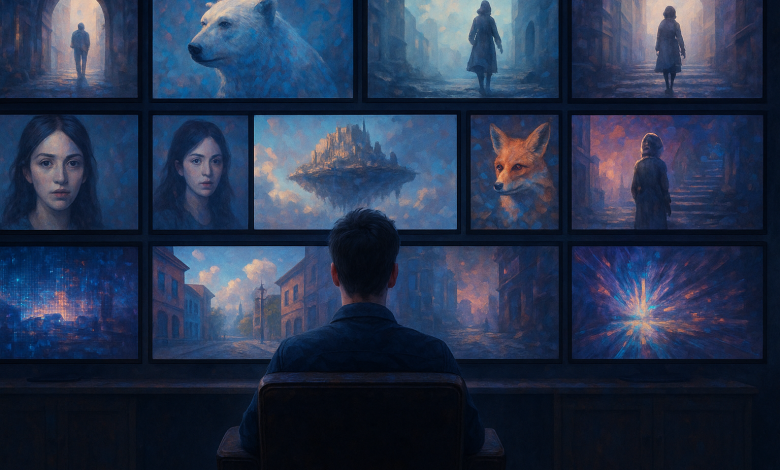
Admittedly, Sora 2, OpenAI’s new prompt-based video generation platform, is impressive. Beyond its visual quality, Sora 2 lowers the barriers to entry for people to participate in video-based storytelling. It significantly lowers the cost, time, and difficulty involved in developing video content, and, while not yet perfect, Sora 2 also represents a huge leap forward in AI’s video capabilities, setting a new benchmark for the next wave of AI-based video innovation.
However, Sora 2 rekindles an urgent question: are AI companies releasing new tools faster than the rules needed to govern them? There are some significant concerns raised regarding how Sora 2 has generated content that simply cannot be ignored. While Sora 2 represents a new frontier in AI competence, it also raises questions that, if left unanswered, could cause irreparable reputation damage for the AI industry at large.
Privacy & copyright in the age of AI
Models like Sora 2 don’t truly create anything from scratch; they replicate and remix vast datasets to generate new outputs. Without explicit consent from real users to have their video data train models like Sora 2, privacy and copyright concerns are embedded in every frame it can produce.
Models like Sora 2 only exist because they’re trained on massive collections of public data, but “publicly available” does not equal consent or permission to use. OpenAI’s new ‘opt-out’ feature offers partial accountability, but doesn’t untrain models on what has already been scraped. People’s likenesses, voices, and gestures are already being used to train these models without their explicit consent or knowledge. As content generation scales, so do the associated privacy risks and challenges. Technological innovation has continually chiseled away at the privacy of the individual, but is this a step too far?
Copyright currently sits in a legal grey area when it comes to AI-generated content, quietly blurring the line between inspiration and imitation. This poses huge risks for creators and the creator economy as a whole. The more these kinds of models train on copyrighted material, whether intentionally or not, the more at risk the creator economy is of becoming a black box of invisible and unaccredited use of content. If this is not addressed, Sora 2 could be holding OpenAI’s hand right into their next major challenge – one that the AI industry overall may not be prepared to face.
Misinformation Management: Crisis of truth
The World Economic Forum’s Global Risks Report identified misinformation and disinformation as the most pressing global risk for the next two years, with almost 75% of people in the US alone stating that they are worried about being able to distinguish between what is real and fake online. Beyond privacy and copyright, Sora 2’s potential to supercharge misinformation is perhaps one of its most alarming features.
The world is in a fragile place when it comes to trust in information. From pandemic-era misinformation to social media-driven unrest, public confidence in information available online has already eroded significantly. As tools like Sora 2 make it easier to create lifelike video content, the risk of fabricated realities also increases significantly. From propaganda and fake endorsements to deepfaked content, which is defamatory in nature, the increase in such content reveals just how fragile truth becomes when creation is effortless and accountability optional.
Misinformation is ripe in the current media landscape, and generative AI tools are quickly becoming the weapon of choice for disseminating it. If AI-backed creativity isn’t accompanied by verification, truth itself becomes indistinguishable from deception. Authenticity must be deliberately engineered when everything looks real, not just assumed.
The Path Forward
AI is beginning to blur the lines of reality, and this sets a dangerous precedent. Creativity without proof is just imitation and thievery masqueraded as something new, and unchecked AI developments risk redefining what originality means. If AI is distorting our perception of reality, the next frontier shouldn’t be more tools for creativity and content. It should be checks and balances that ensure verification and authenticity.
The next chapter of digital storytelling will belong to technologies that can prove authorship, consent, and context. Crucially, this verification needs to be built into the creative architecture of these tools, not just retrofitted as an afterthought.
Digital provenance is paramount, ensuring that every AI-generated asset carries a transparent, tamper-proof record of authorship, ownership, data sources, and explicit consent. On top of this, robust identity verification is critically important for ensuring that every AI-generated video, scene, or character can be traced back to a verified human creator, the real person who authorized its production. Implementing measures that address these issues could drastically reduce privacy, copyright, and misinformation risks, but only if the validity of the data is guaranteed. Tamper-proof verification secured through distributed ledgers offers a clear path to transparency and trust. Instead of relying on post-fact corrections or community policing, proof of authorship and consent can be made visible from the moment content is created, a crucial capability offered by blockchain technology.
Engineering trust back into creativity
AI tools like Sora 2 are unlocking human creativity like never before, but technology earns its worth through trust, and these systems haven’t earned it yet. The next challenge isn’t making machines more creative, but rather exploring ways to make this creativity more human, verifiable and authentic.