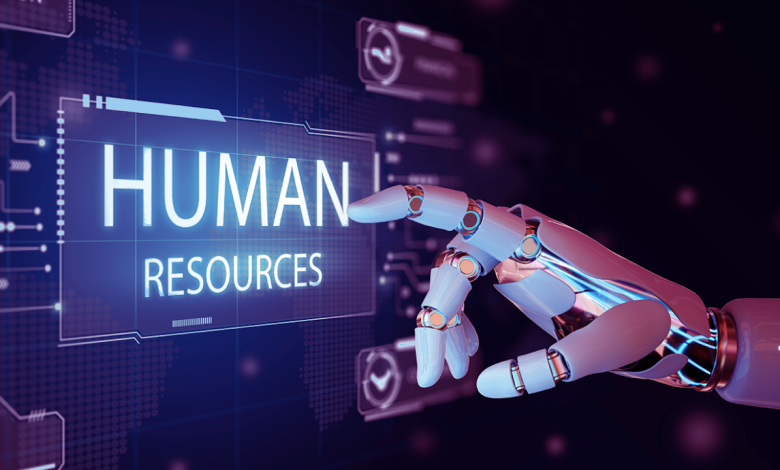
HR, as the custodian of people strategy, sits at a crossroads: there is an enormous opportunity to use AI to streamline and enhance the employee experience, but also a responsibility to ensure technology never erodes the very thing HR stands for; human connection.
For HR leaders, the challenge isn’t whether to adopt AI, but how to do so responsibly. It requires a delicate balance: capturing efficiencies and insights while safeguarding culture, compliance and trust.
The practical benefits of AI in HR
AI is already proving its worth across the HR lifecycle. In recruitment, algorithms can scan hundreds of resumes in seconds, flagging candidates with the right skills and experiences. Automated scheduling tools reduce the endless back-and-forth emails of interview organization. Chatbots can answer basic candidate questions, creating a smoother candidate journey and freeing HR professionals to focus on building relationships.
Beyond recruitment, AI is enabling new approaches to training and development. Adaptive learning platforms can assess how employees learn best, tailoring modules to individual needs. This means employees don’t waste time on irrelevant training and can progress at their own pace, a boost for both productivity and morale.
AI can also identify skills gaps across the organization and recommend tailored upskilling initiatives, helping companies futureproof their workforce.
In day-to-day HR administration, AI supports error reduction by spotting anomalies in payroll data or flagging compliance gaps before they become risks. Workforce analytics powered by AI can uncover hidden trends, such as attrition hotspots or performance bottlenecks, giving HR leaders actionable insights that would be hard to detect manually. These insights can inform decisions on retention strategies, wellbeing programs and succession planning.
The potential is clear: AI isn’t about replacing HR professionals; it’s about freeing them from repetitive tasks so they can focus on higher-value work, from developing talent pipelines to strengthening organizational culture.
Where things can go wrong
Yet the very strengths of AI can become weaknesses if deployed without thought. Take recruitment. Left unchecked, AI systems can amplify bias if they are trained on historical data that reflects existing inequalities. Instead of opening doors, poorly designed AI could reinforce barriers for underrepresented candidates.
Similarly, while chatbots may offer quick answers, over-reliance risks depersonalizing the employee experience. A system that always directs staff queries to an automated tool can leave employees feeling unheard or disconnected from their HR team.
Data privacy is another major concern. HR leaders handle highly sensitive employee information, from health data to compensation. Deploying AI solutions without robust data governance risks not only non-compliance with regulations like GDPR in the UK, but also the loss of employee trust, which can be far harder to rebuild than any regulatory fine.
Even more subtle is the risk of over-automation. When every task, from onboarding to exit interviews, is delegated to algorithms, HR can lose the oversight and empathy that underpin strong workplace relationships. A miscalculated algorithm might recommend an unsuitable candidate, or misinterpret employee sentiment, with significant consequences.
Ultimately, AI is a tool. Like any tool, its value depends on how it is implemented and monitored. Poor adoption strategies risk creating inefficiencies, reputational damage, or even ethical missteps.
Keeping the human touch
So, how can HR leaders ensure AI serves people, rather than the other way around? The answer lies in remembering that HR is first and foremost about people. AI should be used to enhance, not replace, human decision-making and empathy.
That starts with transparency. Employees should know when and how AI is being used in processes that affect them, whether during recruitment or performance evaluations. Openness fosters trust and reduces fears of a “black box” making life-changing decisions.
Equally, HR must remain a visible and accessible function. AI can provide first-line support, but employees should always have the option to escalate to a real person. Ensuring a balance of automation and personal interaction maintains the sense of care and connection that is vital for employee engagement.
Finally, HR professionals should be involved in continuous monitoring of AI outputs. Just as finance teams audit systems, HR must audit people processes to ensure AI decisions align with organizational values and DE&I commitments. This is not a “set and forget” exercise; it requires ongoing vigilance to ensure fairness and accuracy.
Identifying where AI adds real value
Not every HR challenge requires an AI solution. Leaders should start by mapping pain points and considering where automation or analytics would make the biggest impact.
For example, if your HR team spends hundreds of hours on manual resume screening, AI screening tools may provide a clear return on investment. If employees are frustrated by slow responses to routine policy questions, a chatbot could be a valuable addition. But if the goal is to nurture leadership skills or resolve workplace conflicts, AI has far less to contribute — and may even be counterproductive.
The key is intentionality. Ask: will this technology make HR more effective, more efficient and more human? If the answer isn’t a clear yes, it may not be the right tool. HR teams must remember that AI is at its best when it complements human strengths, not when it tries to mimic them.
Looking ahead
AI is not a passing trend; it is a transformative force that will continue to shape HR and the wider workplace for years to come. The organizations that succeed will be those that embrace AI thoughtfully, leveraging its strengths while guarding against its risks. But in every case, the guiding principle must be clear: technology should support human connection, never substitute it.
The reality is that employees don’t remember whether a process was efficient; they remember how they were treated. A recruitment journey, a performance review, or a conversation about career aspirations all leave a lasting impression. If those moments feel cold, automated, or transactional, culture suffers, no matter how advanced the system behind it.
This is why empathy, fairness and trust must remain at the heart of HR practice. AI can streamline, flag patterns and suggest solutions, but only people can listen with compassion, resolve conflict with nuance, or inspire with leadership. The future of HR will not be measured only by efficiency gains but by the quality of human relationships that organizations cultivate.
Ultimately, the future of HR is not AI versus people. It is AI and people, working together. When deployed responsibly, AI can elevate the role of HR professionals, freeing them to do what they do best: create workplaces where individuals feel valued, supported,and heard.
That is how organizations will build resilience, retain talent and nurture cultures that stand the test of time.