

Salesforce Q2 Earnings Preview: Can Agentforce Finally Accelerate Growth?
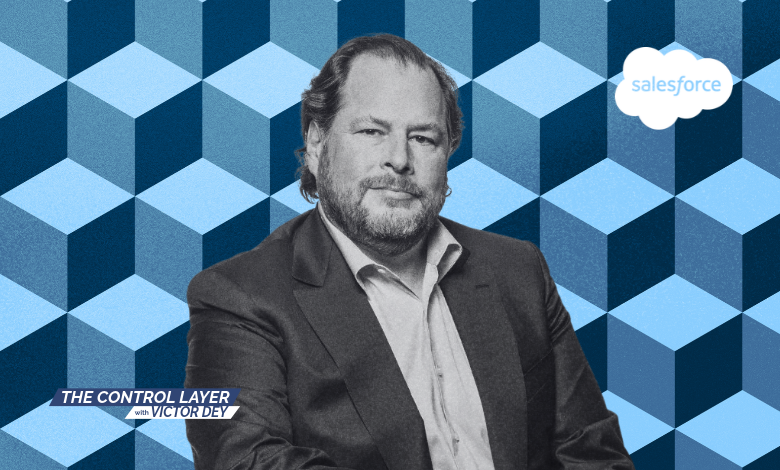
Salesforce reports its second-quarter fiscal 2027 results today after the market closes, bringing investors another quarterly update on a company that increasingly sees AI as more than a new product category. Marc Benioff has spent the past year making a much larger argument about Agentforce, saying that AI agents will eventually become a new form of digital labor that changes how companies organize work, how employees interact with software and, eventually, how businesses measure productivity.
Salesforce has given investors plenty of evidence that customers are buying into that vision. Agentforce ARR reached $1.2 billion in the first quarter, up 205% year over year, while Agentforce and Data 360 together approached $3.4 billion in ARR. The difficulty is that Salesforce is competing against the market’s demand for proof that AI can materially change the financial trajectory of a software company that generated $41.5 billion in fiscal 2026 revenue and expects to reach roughly $46 billion this year.
That makes today’s earnings report a test of whether Agentforce can move from being Salesforce’s fastest-growing business to becoming a force that changes the company’s overall growth trajectory. Its production numbers suggest that adoption is moving in that direction, with Agentforce accounts in production increasing nearly 50% sequentially in the first quarter after rising at a similar pace in the previous quarter.
Agentforce growth faces a bigger question than ARR
Agentforce ARR grew 205% year over year in the first quarter, while Salesforce’s total revenue increased 12% on a reported basis and current remaining performance obligation (cRPO) grew 14% in constant currency. The widening gap matters because Salesforce is asking investors to view Agentforce as a major indicator of where enterprise software is headed, even as the broader business continues to expand at a much slower pace.
Another sharp increase in Agentforce ARR would reinforce the strength of the product itself, but an acceleration in cRPO would offer a more consequential signal about whether that demand is beginning to affect Salesforce’s overall growth trajectory. The metric gives investors a view into contracted subscription revenue expected over the coming year, and it grew 14% in constant currency during the first quarter after reaching 16% in the fourth quarter, with management guiding to roughly 13% growth for the second quarter.
That gap may persist for a while as Salesforce moves AI toward pricing models that differ from the subscription commitments behind its traditional software business. Agentforce can involve consumption-based pricing and Flex Credits rather than the annual subscription commitments traditionally associated with Salesforce seats, allowing customers to increase their use of AI without creating the same immediate visibility in cRPO that investors have historically relied on when assessing subscription growth.
The distinction gives Salesforce some room to explain the gap, but it also creates a test for the company’s AI thesis.
If Agentforce is genuinely changing how much work customers perform through Salesforce, additional activity should eventually translate into a stronger financial trajectory, even if the accounting arrives with a delay. The company has already urged investors to look toward the second half of fiscal 2027 for a reacceleration in organic revenue growth, giving the market a defined window in which to decide whether Agentforce is beginning to change the economics of the broader business.
AI pricing shift could change the SaaS business model
Salesforce helped establish the per-seat SaaS model as a defining structure of enterprise software, allowing businesses to pay according to the number of employees who needed access to an application. That model worked particularly well when the employee represented the primary source of software usage.
A rapid rise in agentic AI innovation, however, has complicated the relationship between people and software. An agent can perform a task without requiring another employee to receive a Salesforce license, which means the amount of work performed through the platform can grow without a proportional increase in the number of software seats. The platform’s early experience suggests that customers themselves are still deciding which model they prefer. It initially pushed Agentforce through a per-conversation approach before expanding its pricing structure and introducing consumption-based credits, while customers have continued to show demand for predictable seat-based pricing.
If Salesforce believes AI agents will perform work that previously required employees, it eventually needs a pricing system that captures the economic value of that work rather than simply charging for access to an application. The company has not yet demonstrated that it has found the final answer.
Will AI agents change the enterprise software interface?
Salesforce increasingly wants its data and capabilities to remain valuable even when the user never opens the traditional application. Headless 360 allows agents and other software to access Salesforce capabilities through APIs and MCP tools, and Salesforce said the system had processed 4.5 million MCP calls since its April launch.
OpenAI and Anthropic are increasingly positioning their models and agents as interfaces through which people can perform work across enterprise applications. OpenAI’s Frontier strategy allows agents to operate applications such as Salesforce and Workday, while Anthropic has demonstrated agents accessing information stored in enterprise systems.
The bet is that the interface can disappear without diminishing the platform underneath it. An agent can pull customer data, update an account and trigger a workflow without anyone opening Sales Cloud, potentially making the infrastructure more valuable even as the application itself becomes less visible.
But that logic breaks if agents become capable of replacing the application logic itself. The company could keep the data while losing control of the higher-value layer built on top of it. Headless 360 therefore represents a much bigger bet on where enterprise software will live when humans stop being the primary interface.
AI strategy faces pressure from ServiceNow and Sierra
ServiceNow’s second-quarter results showed subscription revenue of $3.877 billion, up 24.5% year over year, while AI annual contract value had crossed $1 billion and agentic production deployments had increased ninefold over nine months. While Salesforce has a larger AI revenue figure, ServiceNow currently has the stronger overall growth trajectory. The company has provided a live example of a company connecting AI demand to contracted revenue growth.
Likewise, Sierra, co-founded by former Salesforce co-CEO Bret Taylor, has built a rapidly growing AI agent business focused heavily on customer service. The company has reached roughly $200 million in ARR and a valuation of about $15.8 billion following its latest financing. Its platform charges according to successful customer-service resolutions rather than simply charging customers for software seats.
Salesforce has moved closer to that model through its planned acquisition of Fin, formerly Intercom’s AI agent business, for approximately $3.6 billion. Benioff is asking investors to see his company not simply as software that employees use, but as infrastructure for a growing digital workforce. Those businesses may sit on the same platform, but they carry very different economics.
Moreover, Benioff says the company has reduced its customer-support organization from roughly 9,000 employees to about 5,000, while AI now handles roughly half of its support calls. The company continues to add salespeople because he believes AI can augment that work without replacing the human relationships that drive complex enterprise deals.
That distinction offers a useful measure of where agentic AI stands inside the enterprise. Agents can now take over meaningful portions of the work, particularly where the process is structured and repeatable. However, companies still rely on people when judgment and relationships carry more weight. The question is how quickly that boundary moves, and whether Salesforce’s financial results begin to show the shift.
The Control Layer Verdict
Agentforce ARR will provide the clearest measure of whether the AI business itself remains on its current trajectory. The $1.2 billion first-quarter figure represented 205% year-over-year growth, compared with roughly $800 million at the end of the previous quarter. Pricing will determine how investors interpret that growth, particularly as customers move between seats, Flex Credits and consumption-based models. If buyers begin settling into a more predictable pattern of AI spending, the company gains greater visibility into future revenue.
Continued experimentation would leave investors with a harder question about how much of the current demand represents durable commitments. Salesforce has shown that enterprises will pay for AI agents and that those agents can perform work once handled by employees. The next step is proving that this shift can become large and durable enough to reshape the economics of the business itself, giving the company a credible path into the next era of enterprise software.

Victor Dey is a tech analyst and writer who covers AI, data science, startups, and cybersecurity. A former AI editor at VentureBeat, his work also appears in New York Observer, Fast Company, Entrepreneur Magazine, HackerNoon, and more. Victor has mentored student founders at accelerator programs at leading universities including the University of Oxford and the University of Southern California, and holds a Master's degree in data science and analytics.
More from Victor Dey
See all Future of AI
Cysic CEO Says Paying for an AI Model Doesn’t Prove Your Host Ran It
 Future of AI
Inside Indeed’s AI Hunt For Fake Employers Before Anyone Applies
 Future of AI
Databricks Co-Founder Explains How Genie Tackles the Blind Spot In Always-On AI
 Enterprise AI
What Happens to Enterprise Software When AI Does the Work?
Recommended for you
More stories Future of AI
PuppyGraph Raises $10M to Tackle the SQL Problem Stalling AI Agents in Production
 AI Leadership & Perspective
AI Is Creating a New Kind of Technical Debt and Most Companies Don’t See It Coming
 Future of AI
The Future of AI May Be Open Even If the Models Aren’t
 Enterprise AI
Zendesk CEO Forecasts $400M in AI ARR With Outcome-Based Pricing
 Future of AI
What Investors Want From AI-Powered Investing
 Future of AI