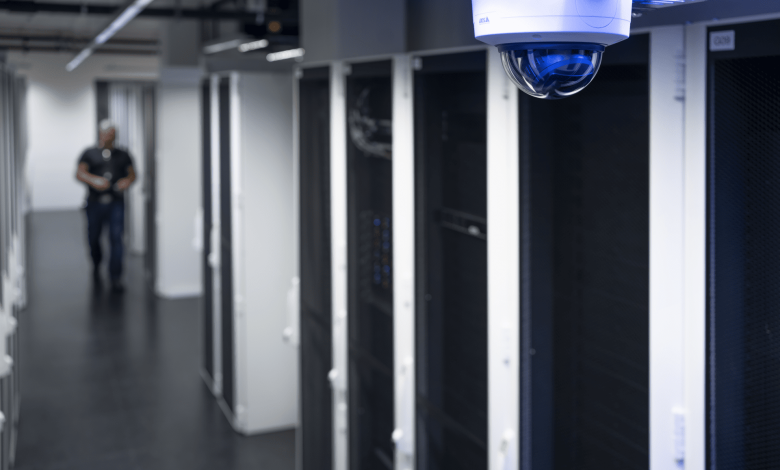
The data center has cemented itself as an essential service in modern society. Everything from AI services to global financial systems, healthcare records and government platforms depend on their availability. And as AI workloads grow, that dependency brings higher power density, more demanding cooling needs and far less tolerance for operational drift. Data centres must remain online, so it is clear that resilience must become a core design tenet.
This is not easy to build in. Data centers are far from simple; they must protect their availability but also manage energy use, maintain physical security, and support environmental goals at the same time. None of those requirements can feasibly sit in separate departments or on separate dashboards. They must be woven into the fabric of the data center and become part of operations.
The Nordic market offers a useful reference point for resilient design, because it puts integration first. Sweden, Denmark, Norway and Finland are attractive locations thanks to their cooler climates, low-carbon energy, political stability and digital infrastructure. The Nordics’ value to the data center market comes from what it can teach us about the way the environment is brought into the design of facilities, and vice versa.
The Nordic model of give and take
In Finland, data center heat reuse has become part of district heating strategy. Fortum’s work to recover waste heat from Microsoft data centers in Espoo and Kirkkonummi is intended to supply a significant share of district heating capacity in those areas1. In Espoo, atNorth’s FIN02 facility has also begun delivering recycled data center heat to a nearby retail site, showing how localised heat reuse can support wider energy planning2.
Denmark offers another example. In Odense, surplus heat from Meta’s data center is redistributed into the district heating network through a dedicated energy centre and heat pump installation3. In Norway, Green Mountain has worked with Hima Seafood to reuse waste heat from its Rjukan data center in land-based aquaculture4.
These examples are often discussed as sustainability projects, but they also represent a broader resilience model. The data center draws from local energy, climate and geography, then returns value to the infrastructure around it. The site becomes more resilient because it is planned in relation to its setting: how it interacts with weather, heat, power availability, transport routes, grid infrastructure, fibre routes, local disruption, and so on.
The internal environment matters too
The same principle can be mirrored inside the facility. There is no lack of data available; every data center contains a dense operating environment of systems, signals and events, all of which generate useful information. The problem is that those signals are often collected and considered separately. One system records an alarm, another holds the camera event, another logs access and another tracks environmental readings.
Individually, those signals may not appear particularly urgent. But viewed holistically, they may indicate the early stages of a serious operational issue. In AI-scale facilities, where rack densities and thermal loads leave little margin for error, the gap between early warning and outage is shrinking. The denser the compute, the less space there is between a small anomaly and a costly one.
Beyond perimeter-led security
Meeting this mark does require a change in perspective. Data centers have traditionally invested heavily in visible security: gates, guards, cameras and access control systems that deter intrusion, structure access and show that the site is protected. All important, all required, but it is dangerous to treat that visible layer as the whole security model.
A strong perimeter does not help explain why a cooling anomaly has appeared, nor does it show whether an access event relates to maintenance, or whether an equipment alarm, camera alert and environmental reading are part of the same incident.
This is where the Nordic analogy really reveals itself: just as a data center can draw from and contribute to its external environment, it can do the same internally with its security environment. The systems installed to protect the building must be there regardless. They can also help run it more intelligently, returning operational value to the facility rather than sitting idle until an alarm sounds.
Building management systems gain value when they are supported by physical and visual context: a camera can help confirm whether a person is in a restricted area, whether smoke is visible, whether water is present, whether equipment is obstructed or whether a worker is wearing required PPE. Access control can connect a person, place and time to a maintenance event or alarm. Audio can support targeted communication during an incident.
What connected systems can detect
Connected security infrastructure can help identify issues before they escalate. In high-density AI-scale facilities, heat detection is highly important. A cooling anomaly can become an availability incident if the reason for it is not understood quickly. A visual or thermal alert can help an operator confirm whether the problem is localised, whether people are nearby and whether escalation is needed.
Fire and smoke detection benefit from the same approach. Traditional alarms are vital, but visual verification can help response teams understand what is happening before they arrive. In a facility where downtime is costly and safety is critical, faster confirmation has clear operational value.
The same applies to ingress and access events. A forced door, a tailgating incident or an unauthorised presence in a sensitive area can affect everything from safety to compliance and customer trust. A physical event easily turns into a wider operational issue if it is not properly understood; the environment that data centers build for themselves can, and should, contribute to that understanding.
Automation, within reason
Automation suggests a lowering of accountability, but that should not be the case. It should primarily be used as a way to support human decision-making. Its role is to reduce delay, surface weak signals and trigger the right response faster. The strongest systems do not simply create more alerts. They reduce noise by adding context.
If a restricted door opens unexpectedly, a connected and automated security system can use that one alert to flag the event, pull up nearby video and notify security staff. If a camera detects smoke or water in a plant area, it can alert operations and provide visual context. If a person enters an area without required PPE, the system can issue a warning or notify a supervisor.
Automation also supports auditability. Verified incident records, incorporating access logs, video evidence, environmental data and response timelines, help unequivocally to demonstrate the way a facility is being managed. Customers, insurers, regulators and internal stakeholders increasingly expect that level of evidence.
Resilience beyond the fence line
Data centers’ move toward critical infrastructure, and the growth of AI, makes them prime targets for disruption. Inadequate perimeter defences might invite physical attacks, but blind spots in operational visibility, delayed responses, siloed systems and manual processes can prove just as damaging.
In practice, these blind spots tend to look the same way. A camera might flag an issue, but an alarm system could record something separate. An access log may show a maintenance visit, but it might not be connected to the equipment fault logged an hour later. A system could do its job perfectly, but none of them, alone, tells the whole story. By the time the pattern is reconstructed, the disruption has already happened.
So if a facility may look protected from the outside while still being slow to understand what is happening inside, a change is needed. The Nordic market shows a stronger path: data centers designed as connected environments, drawing from geography, energy and infrastructure while contributing back to the systems around them. The same principle applies to the security and surveillance systems inside every facility.
Global operators do not need Nordic geography. A data center in London, Frankfurt, Singapore or Virginia faces different climate, energy and planning conditions from one in Helsinki, Odense or Norway. But the principle of integration carries through.
Building the data center that AI needs
AI depends on data centers that manage rising energy demand, higher operational complexity and deeper dependence from businesses and public services – and that can prove resilience through evidence rather than appearance.
That proof comes from connected infrastructure. When all components of the data center contribute in some way towards energy strategy, environmental awareness, security and analytics, they become more resilient by design. Hardware at the edge of the facility, in corridors, in plant rooms and around sensitive areas can become part of a shared intelligence layer – much of which, like the Nordic heat networks described earlier, already exists on site and simply needs to be connected.
A data center that merely looks secure may still be fragile. A data center that can see, understand and respond to what happens at its perimeter and within its walls is far harder to disrupt.
Learn more about Axis solutions for data centers: