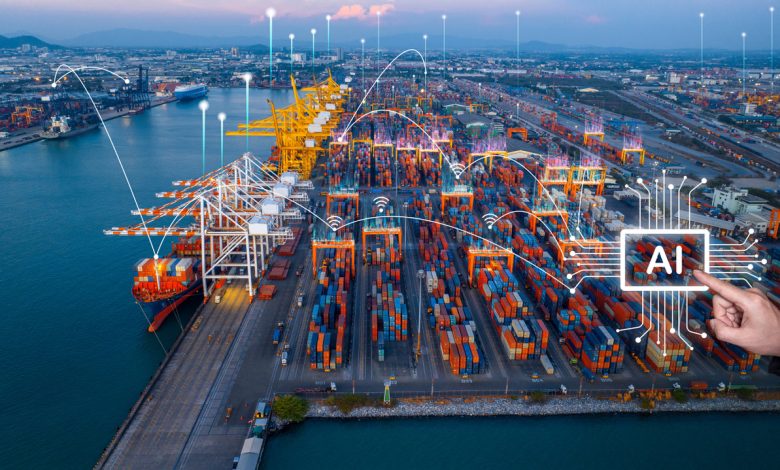
Heavy industry has kept the world running for decades, designing rail networks, operating factories, maintaining refineries, and building critical infrastructure. Yet the systems that underpin this work are fragmented, manual, and built for a different era. While most AI narratives focus on office productivity, the real leverage sits in modernizing the industrial base in the U.S. and EU so it can keep up with the next 50 years.
In the U.S., civil engineers estimate a $3.7 trillion infrastructure investment gap over the next decade, even after the $1.2 trillion Infrastructure Investment and Jobs Act. Bringing core assets into a basic “state of good repair” by 2033 would require roughly $9.1 trillion in total spending. About a third of the country’s 220,000‑plus bridges already need rehabilitation or replacement, a clear sign of mid‑20th‑century infrastructure under 21st‑century loads. Europe faces a similar strain: infrastructure needs amount to approximately 12 trillion euros by 2040, or roughly 800 billion euros per year (which is more than double historic investment levels) just to modernize transport, energy, and digital networks. Capital alone will not close that gap if the way work gets done inside industrial organizations does not change.
The industrial software gap
The backbone of America and Europe, which is made up of railways, grids, factories, construction projects, ports, etc., is designed and maintained by engineers managing complex systems, safety margins, and specialized workflows. Their constraint is not their own capability, but the limitations of the tools around them: fragmented software, poor integration, and operational systems that still lack the intelligence to support the scale and complexity of today’s work.
ERPs, MES platforms, bespoke engineering tools, paper forms, and Excel models coexist in silos, stitched together by human effort and “tribal knowledge” rather than shared context. When a rail operator tries to optimize maintenance or a manufacturer wants to redesign a line, they still rely on manual cross‑checking and homegrown tools that were never built for today’s scale and complexity.
The dominant software mindset has failed to recognize this reality. The standard playbook has been to ship horizontal SaaS or standardized vertical apps into environments where the most important problems are deeply specialized and operationally critical. In a consumer app, a broken API is an annoyance. In a factory, a broken integration can halt production, which can lead to millions in lost value.
Intelligence that runs on top of the industrial stack
The right question for industrial leaders is not “Which system do we rip out?” but “How do we add intelligence and automation on top of what already works?” That is where a new class of industrial AI platforms is emerging.
We at Nexxa are building specialized Ai for heavy industries and have developed Nitro, an industrial‑grade, cyber‑secure multi‑agent orchestration layer that plugs into the systems industrial companies already use, like planning tools, custom interfaces, legacy databases, and turns them into part of an intelligent, coordinated workflow instead of isolated islands.
Instead of a single generic assistant, Nitro coordinates industry‑specific AI agents that handle tasks such as analyzing network configurations, evaluating project plans, or reconciling data across multiple operational systems. A rule‑based management console keeps this AI‑driven work compliant, explainable, and aligned with operational standards, crucial in regulated environments where opaque decisions are unacceptable.
Equally important is the deployment model. Rather than a one‑size‑fits‑all SaaS product, Nexxa uses forward‑deployed engineering teams that build bespoke AI systems for each customer on top of a reusable toolbox. The platform provides shared building blocks, and the on‑site work tailors them to each plant, network, and workflow. For customers, it feels like “push‑button AI.”They work in familiar tools while orchestration, integration, and specialization happen behind the scenes.
Why is the timing different now?
Industry 4.0 promised connected sensors, digital twins, and smart factories, yet adoption remains slow and fragmented. Three shifts make this moment different for AI in heavy industry.
First, the technology has crossed a capability threshold. Foundation models and agent architectures can now handle unstructured data, domain‑specific rules, and dynamic workflows with enough reliability to reflect how engineers actually work. Industrial tasks involve exceptions, local constraints, and judgment calls. Properly orchestrated, industry‑specific AI agents can navigate that complexity instead of collapsing when reality deviates from a script.
Second, economic pressure has intensified. U.S. heavy industries face rising costs, workforce shifts, and surging infrastructure and energy demands, which make efficiency gains existential rather than optional. Across Europe, energy prices, supply‑chain disruptions, and global competition are forcing operators to do more with the same- or fewer – assets. In this context, AI that automates human‑heavy workflows and unlocks operating leverage becomes a core strategy.
Third, there is evidence that applied industrial AI delivers hard outcomes, not just prototypes. Companies are already demonstrating measurable ROI for rail, construction, and manufacturing customers – shorter project cycles, fewer manual hours, greater reliability – while integrating into existing tools and marketplaces. Once AI reliably delivers more capacity, fewer delays, and lower maintenance costs, it moves from innovation into business planning and operations.
From insights to automation to autonomy
Previous generations of industrial software focused on dashboards and analytics: they described what was happening but rarely acted on it. The next wave must prioritize workflow automation and, over time, autonomy.
Platforms like Nitro are toolboxes for specialized AI systems that can learn from engineers and gradually take over complex, repetitive work, drive end‑to‑end workflows across disconnected systems, and operate under strict, rule‑based governance so every action is auditable and compliant. That enables a pragmatic roadmap:
- Integrate legacy tools and add an intelligence layer across the existing stack.
- Automate key workflows via AI agents embedded in current systems.
- Rewrite and replace legacy components with AI‑native stacks over a five‑to‑seven‑year horizon, moving toward high‑margin autonomous enterprises.
Mission‑critical systems cannot simply be unplugged. Organizations must migrate from human‑orchestrated to AI‑orchestrated workflows while maintaining safety and reliability at every step.
The industrial mid‑market
Many large platforms historically targeted eight‑figure enterprise deals with national governments and Fortune 50 players. In between sits a vast industrial mid‑market -operators, suppliers, and project owners that rarely make headlines but collectively form the backbone of rail, construction, and manufacturing.
These companies are big enough to benefit from AI at scale but too small for highly customized mega‑platforms. They live in the gap between generic SaaS and bespoke eight‑figure deployments, which is why so many workflows remain trapped in Excel and email. AI makes it economically viable to build specialized systems for this segment so long as there is a reusable orchestration platform, forward‑deployed engineering capacity, and deep domain trust at the executive level.
In practice, this means selling bottom‑line impact, not abstract “AI.” Heavy industry earns revenue on hardware, physical assets, and projects; AI’s value lies in automating the human‑heavy workflows around those assets. The most productive conversations happen with P&L owners, general managers and business unit leaders, who care about margin, throughput, and risk.
Why industrial AI matters now
America and Europe are racing to rebuild and modernize the infrastructure that underpins their economies: rail networks, roads, bridges, manufacturing plants, and energy systems. Much of this infrastructure is aging; projects are slow and costly; and the workforce skilled in maintaining these systems is nearing retirement, even as electrification and reshoring increase demand.
If the industrial backbone does not become significantly more productive, the gap between what needs to be built and what can be delivered will continue to widen. Specialized industrial AI can help close that gap by accelerating engineering workflows, reducing the cost and time of designing and maintaining complex systems, extracting more value from existing assets through smarter planning, and capturing expertise before it walks out the door.
If this opportunity is seized, AI will not just write emails faster. It will help rebuild railways, modernize factories, and strengthen the core infrastructure that underpins prosperity in America and Europe. That is why now is the time to take industrial AI seriously. Not as a buzzword, but as the engine of a new industrial revolution.